GIANTDETOUR SOUTH
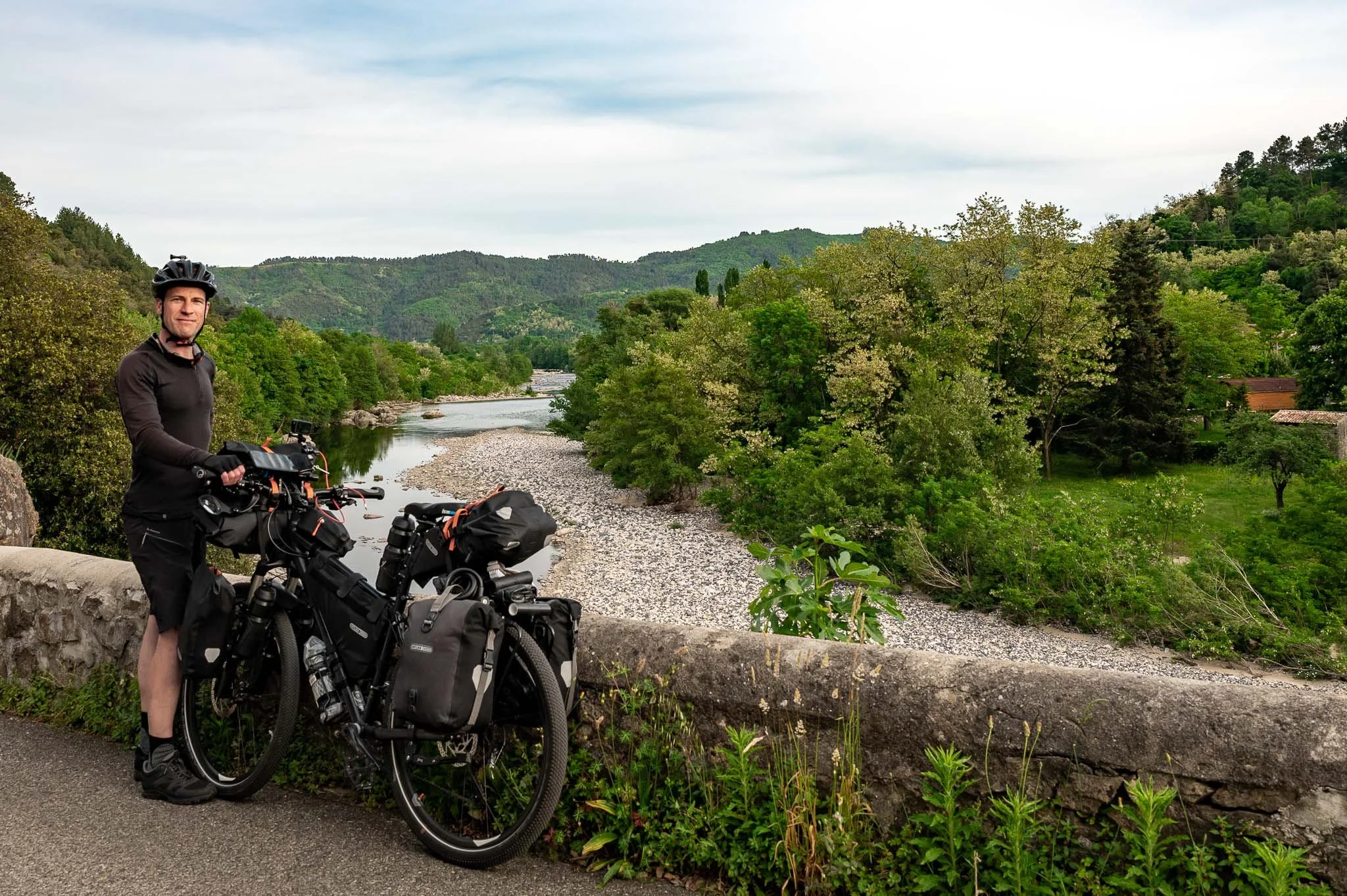
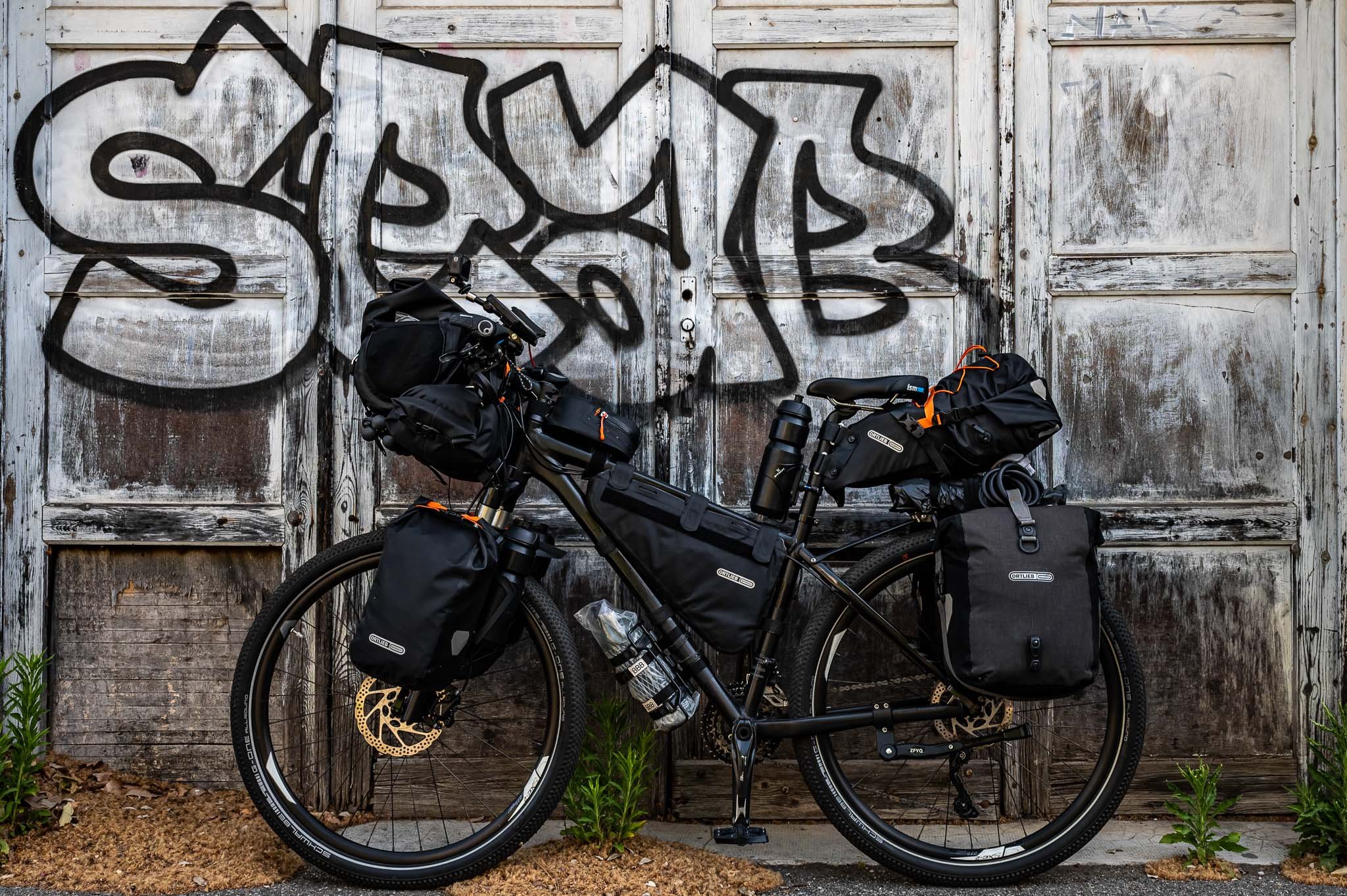
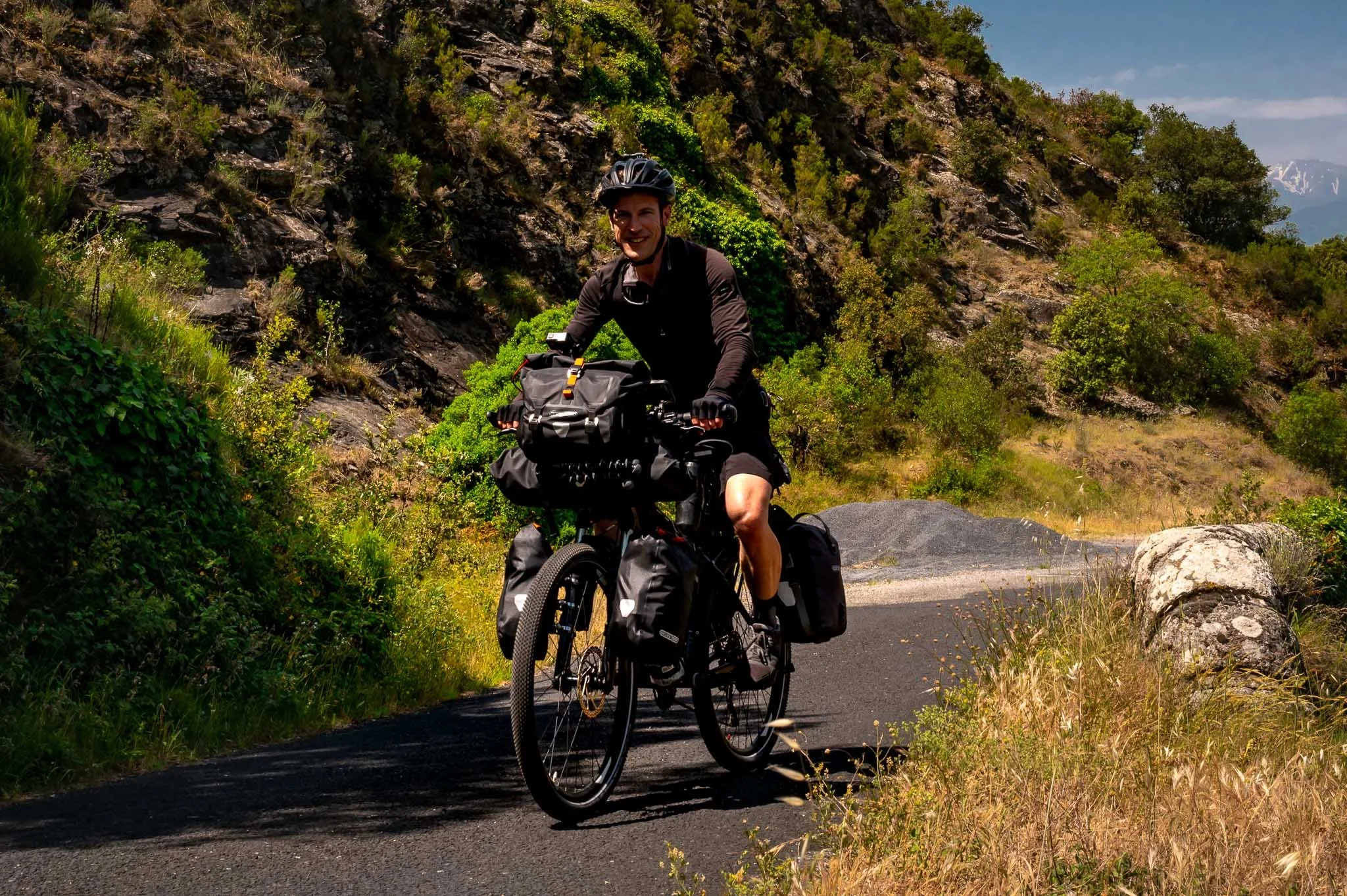
As I leave home by the end of April 2022, I don’t have an exact plan for where this year’s cycling tour will finish. What I do know is that I aim to cross the Pyrenees this time - having finished my last GiantDetour here in 2021 - and make it to Seville. When I visited the Andalusian capital in December of last year, I distinctly remember gazing out of the plane window at the landscape below and thinking, One day, I’m going to bike here. That day has arrived.
With Komoot’s help, I plot a route through France, tweaking it slightly from last year’s track. For the Spanish leg, I opt for a more inland route, navigating with GPX files of an existing track rather than sticking to the coastline.
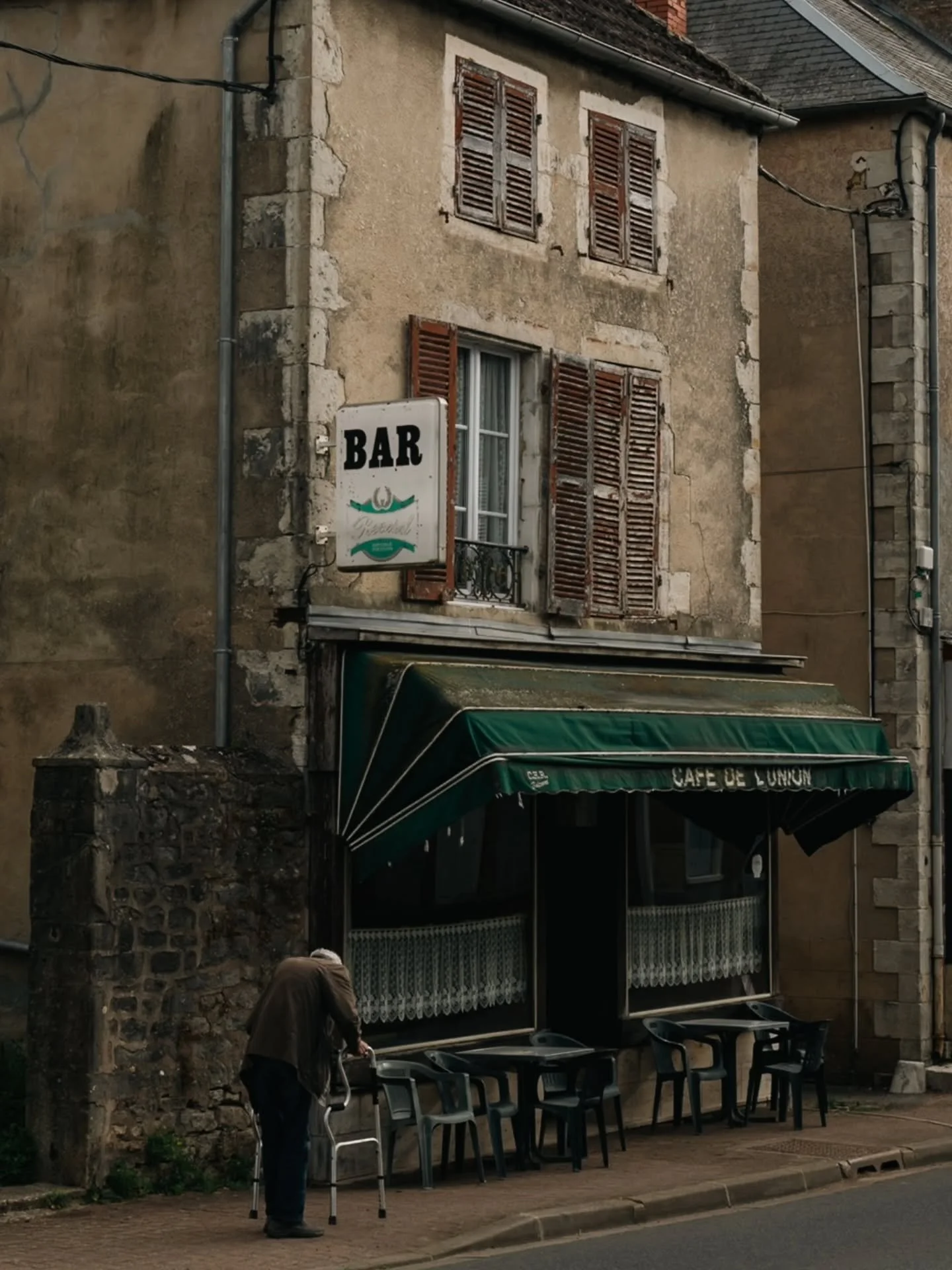
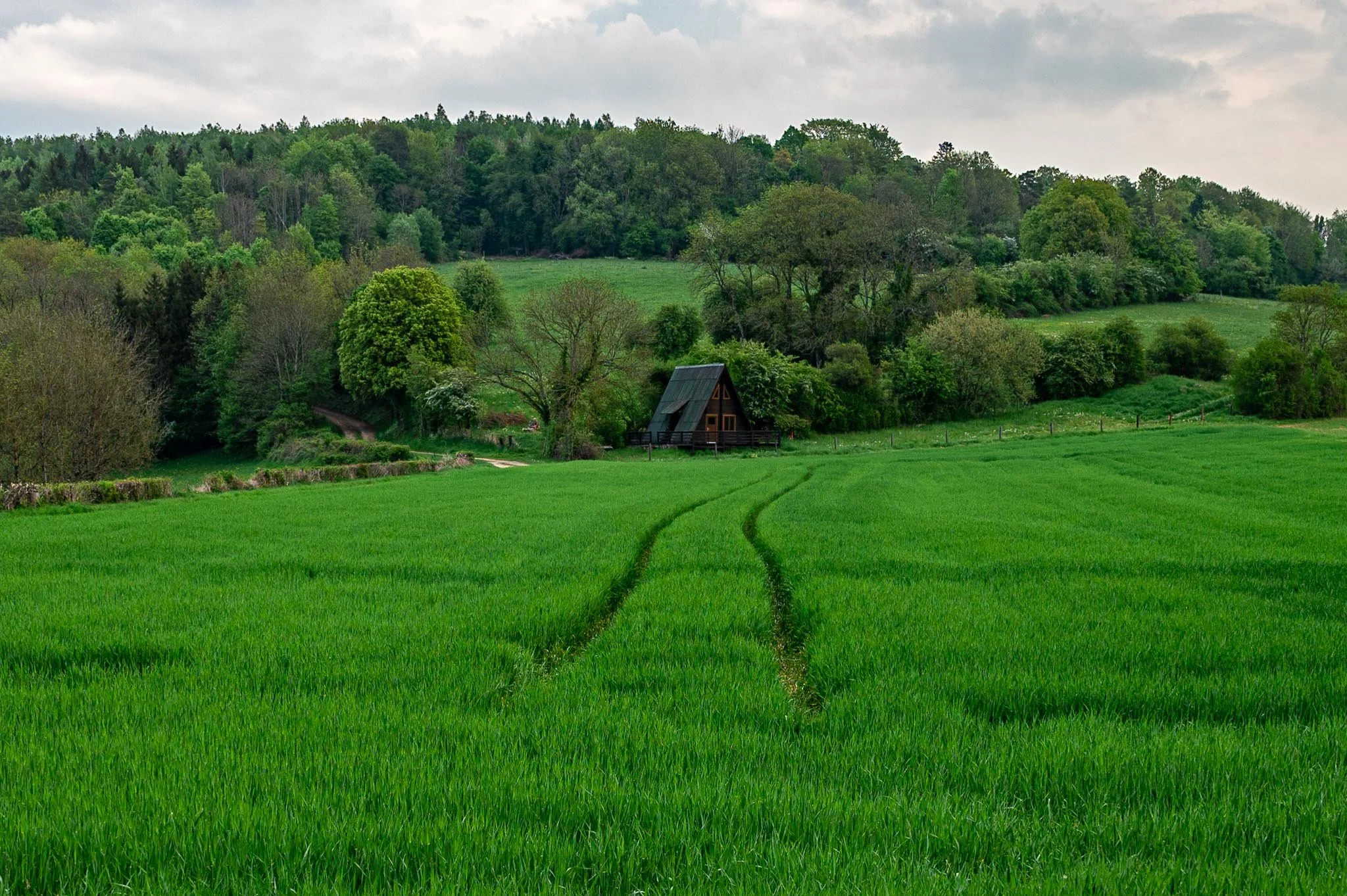
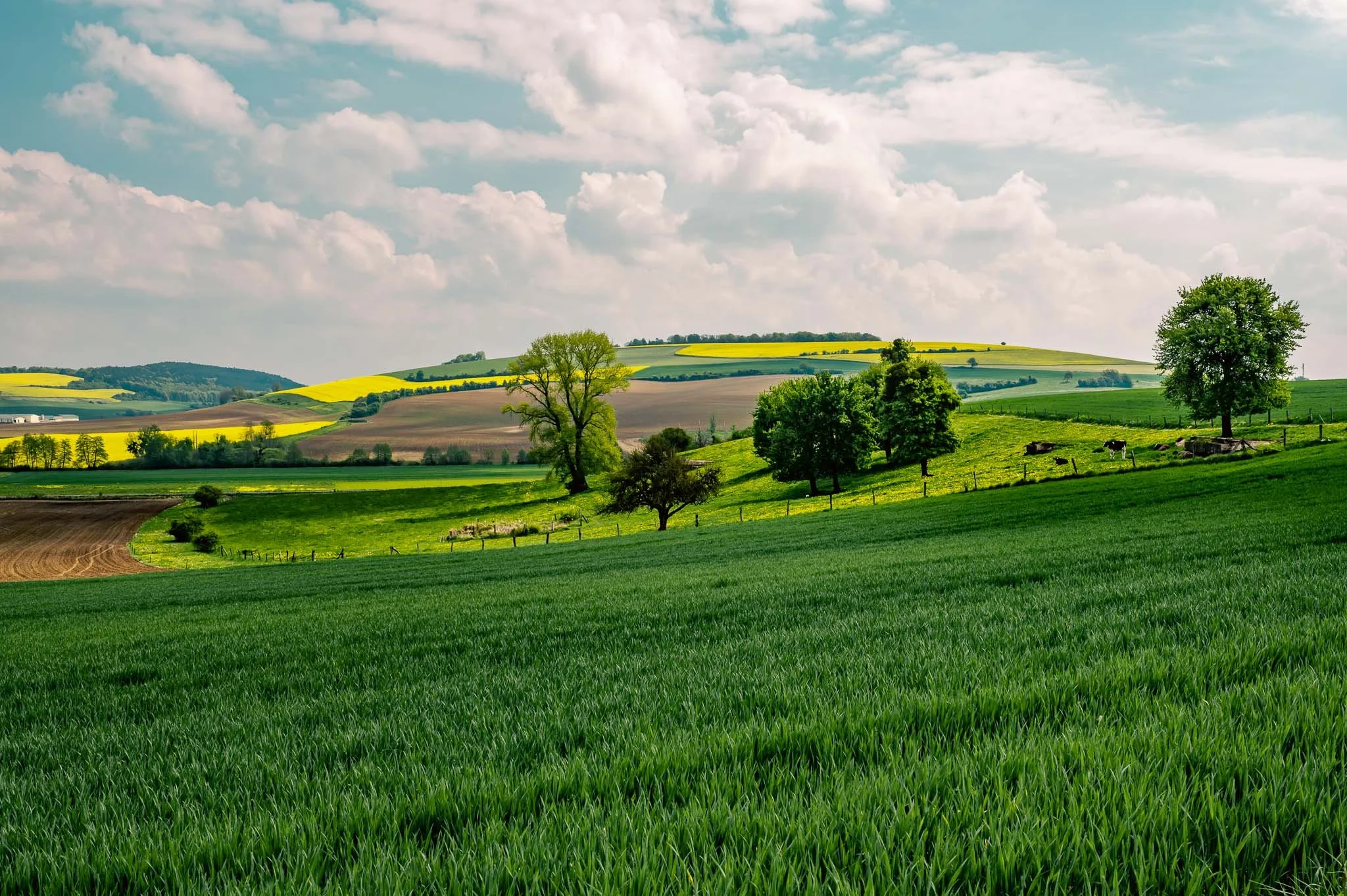
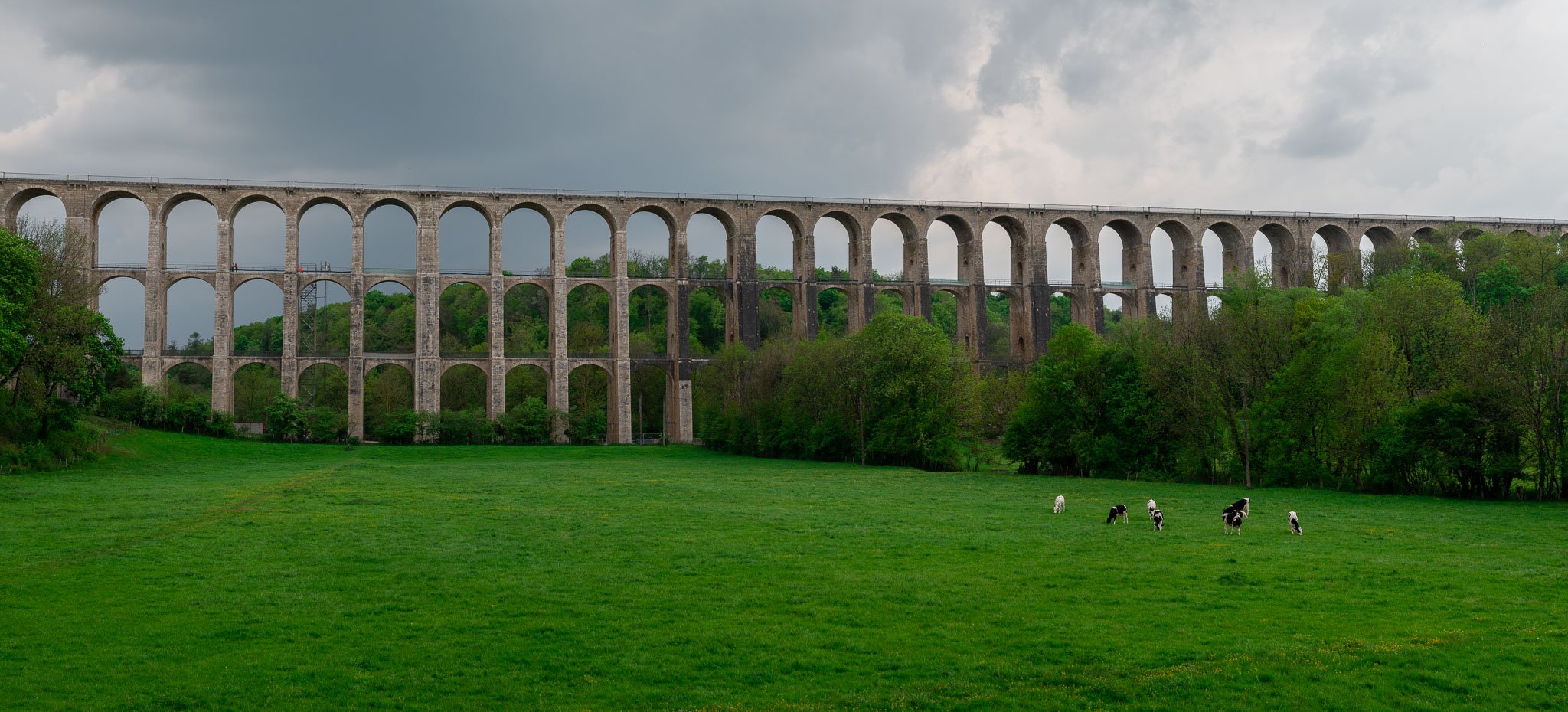
Starting in the Netherlands, I head south through Belgium, crossing the Ardennes and following the scenic Ourthe River. I enter France just north of Montmédy and make my way through Verdun and Saint-Dizier. My route is a blend of existing paths and my own creations - routes that catch my eye as being worth the detour.
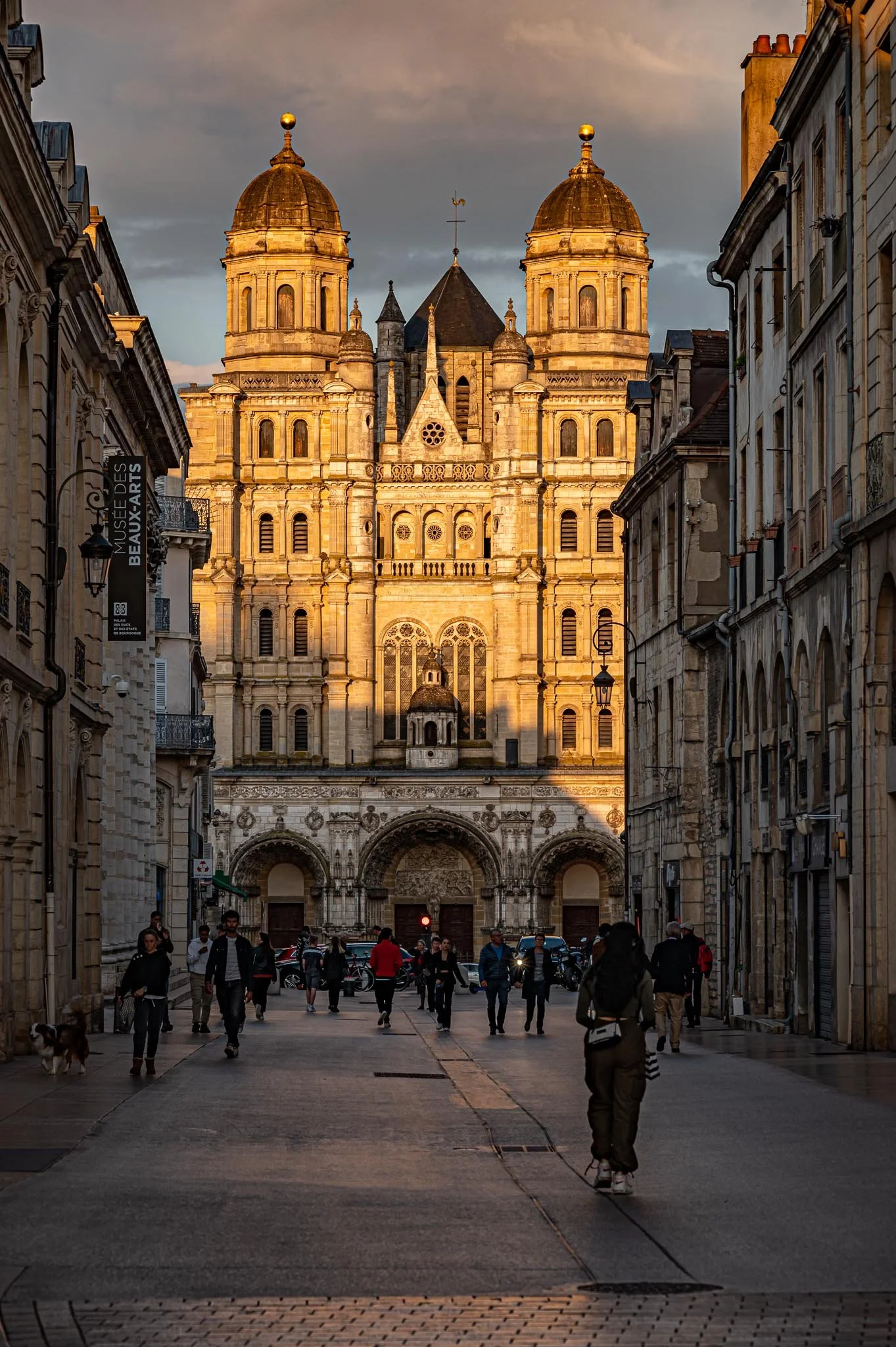
In Dijon, I take a well-earned day off to explore the city’s charming streets and enjoy some sightseeing. The ride through the Grands Crus vineyards of Burgundy is absolutely stunning - a highlight of the trip so far - and by the time I reach Roanne in France’s Loire region, I’ve clocked the first 1,000 kilometers of my ride. At this point, my plans for the remaining part are starting to take shape. From here, I plan to continue south, eventually making my way toward Portugal. My route spans roughly 4,000 kilometers across France and Spain.
The climbs ahead promise to be more challenging, but I’m ready for it.
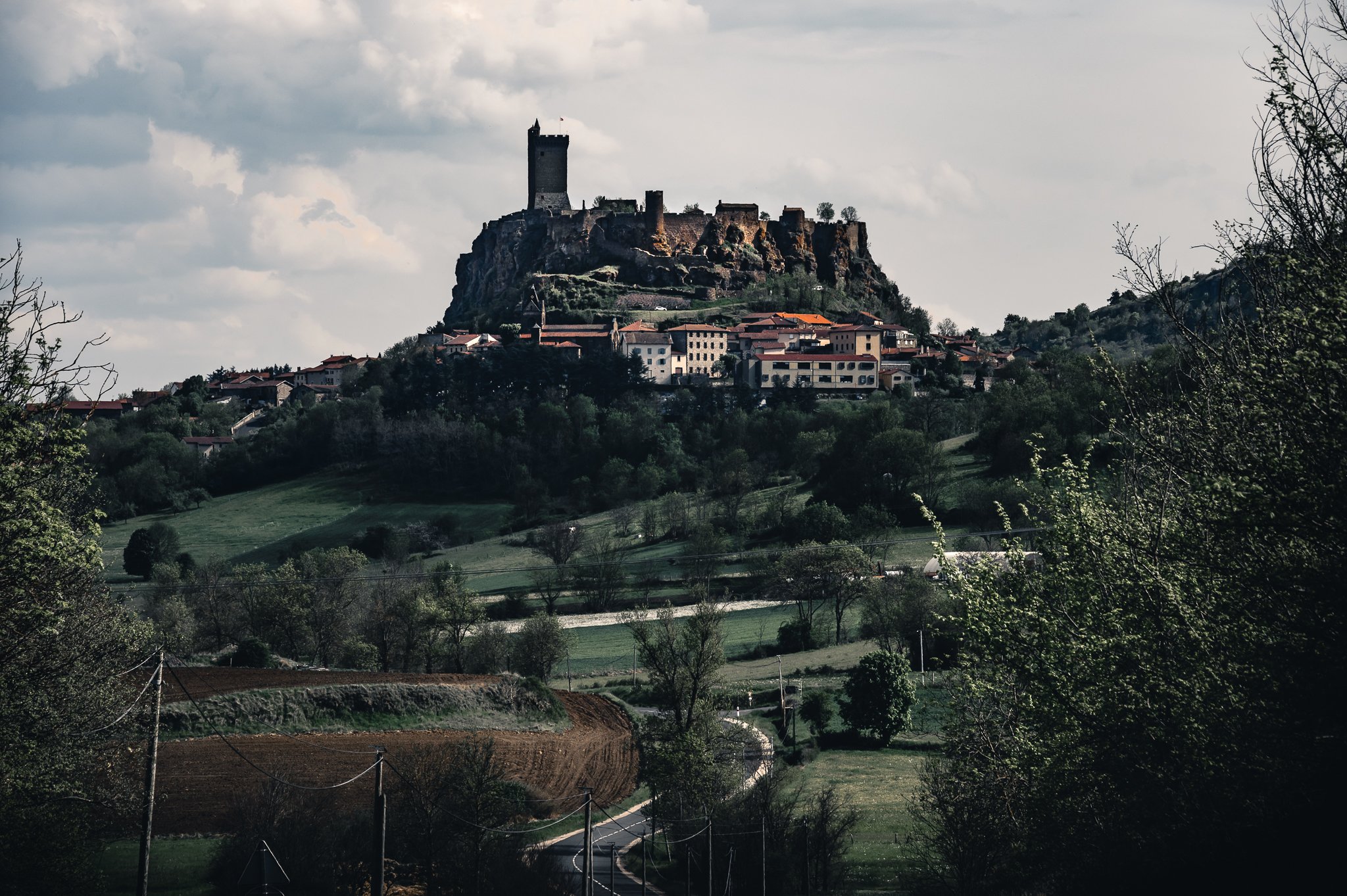
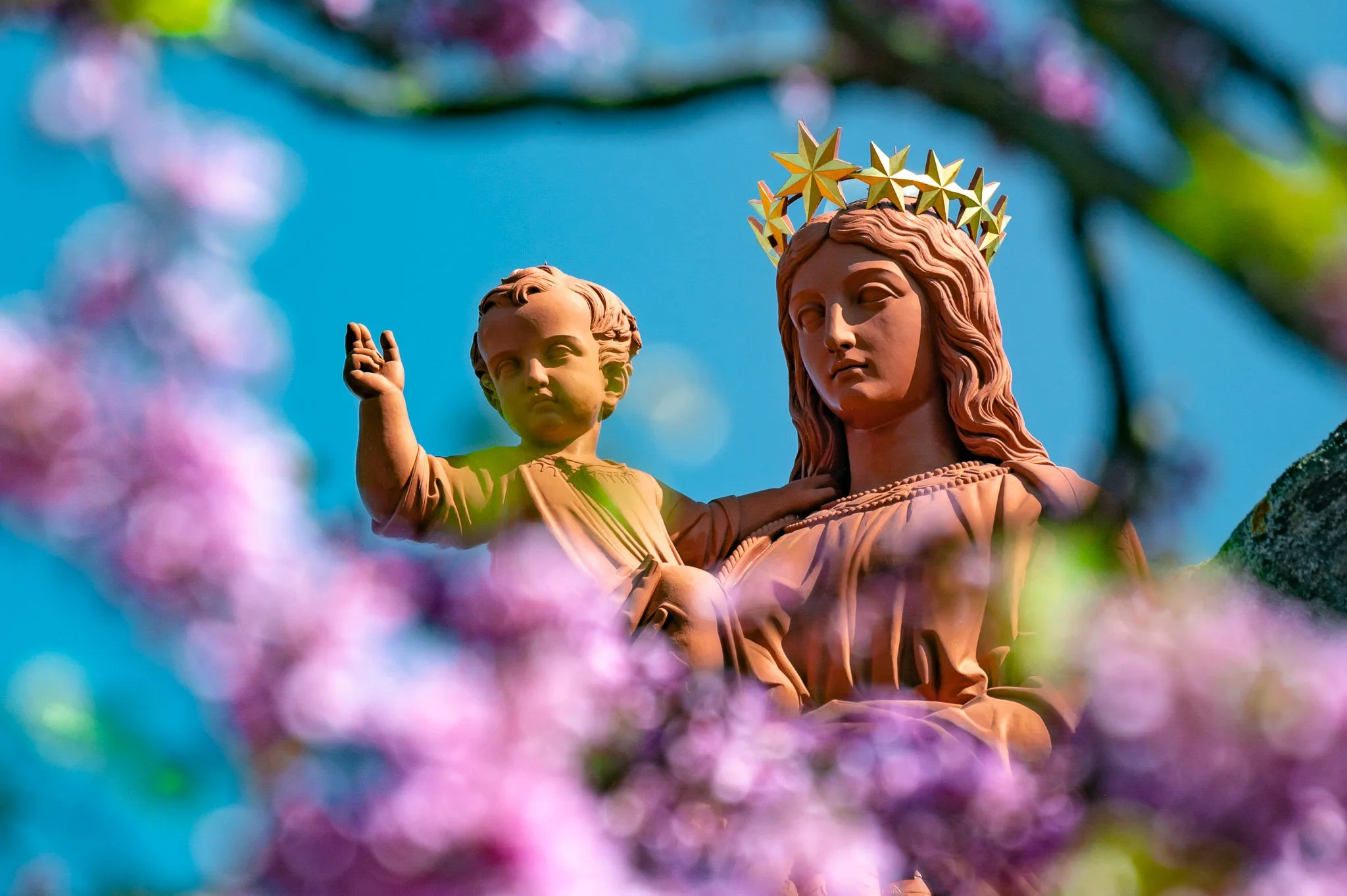
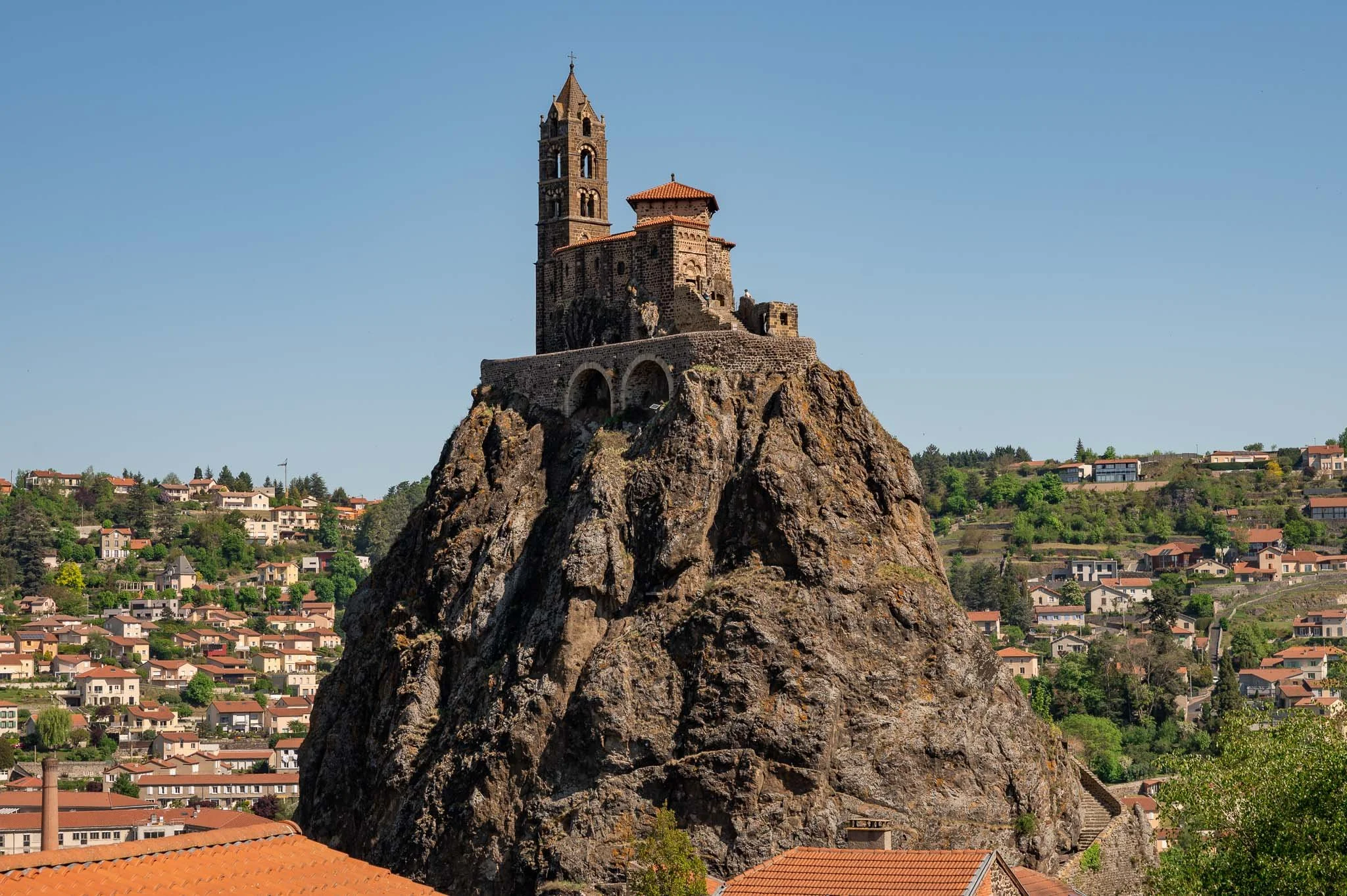
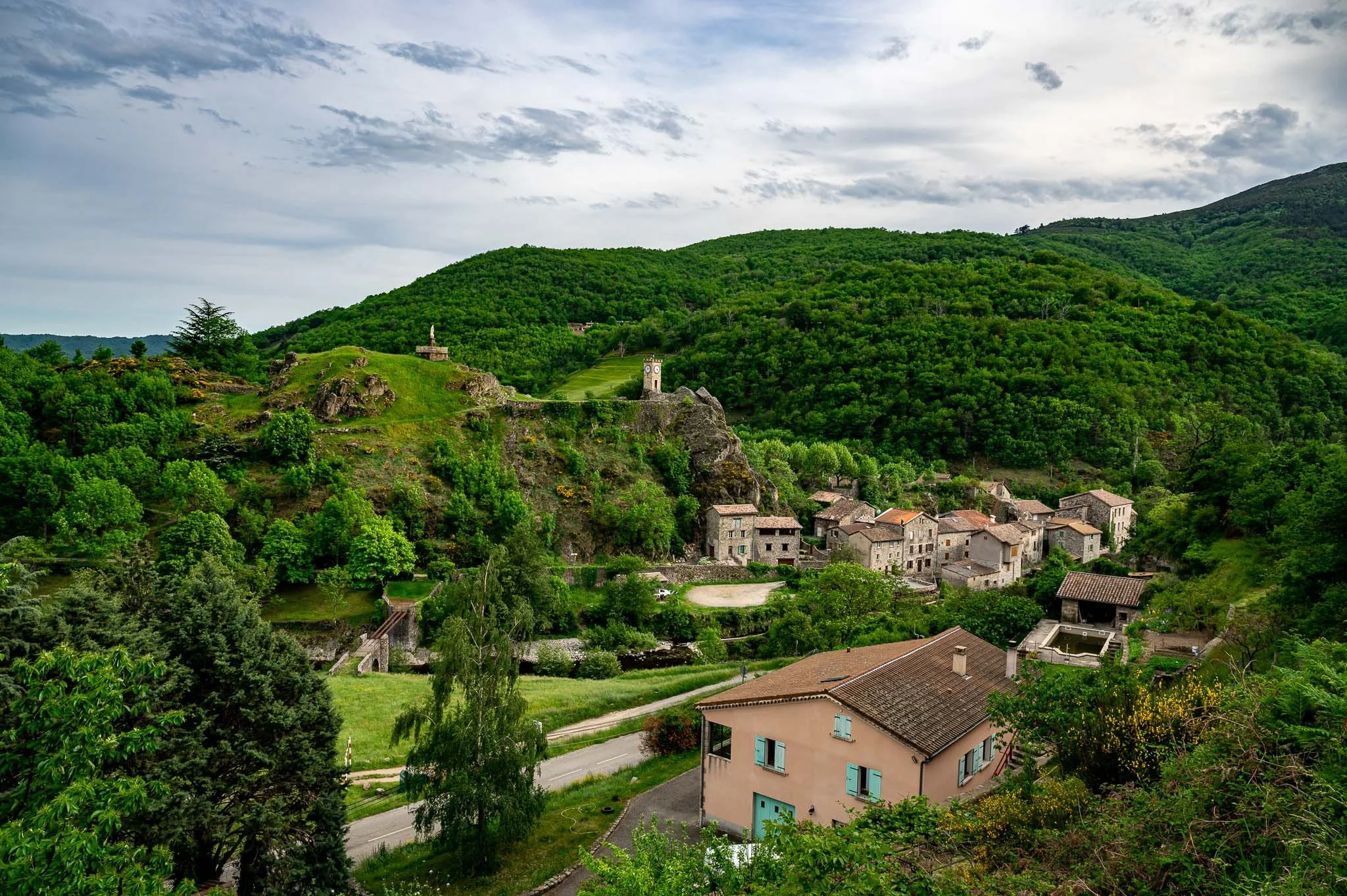
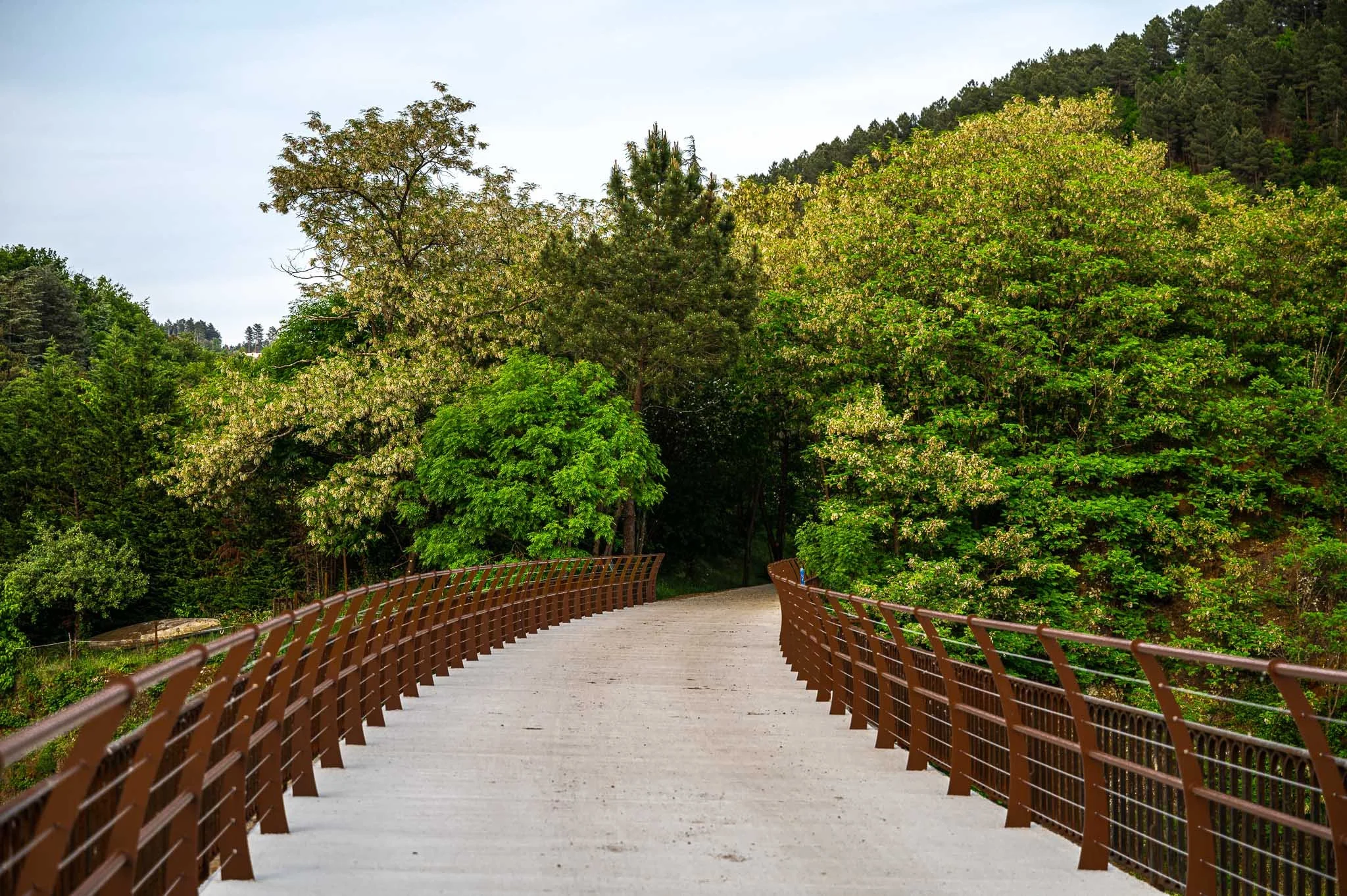
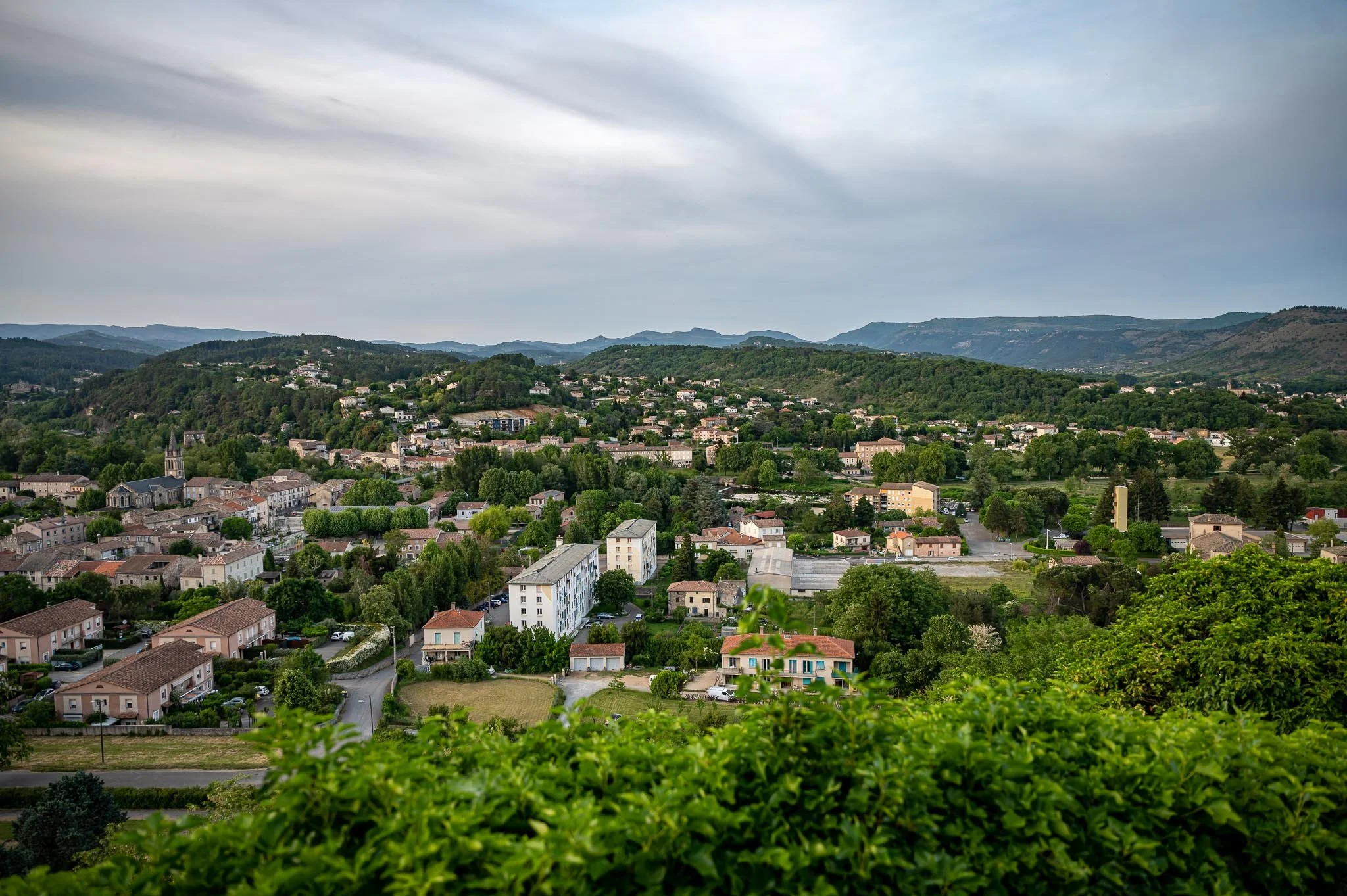
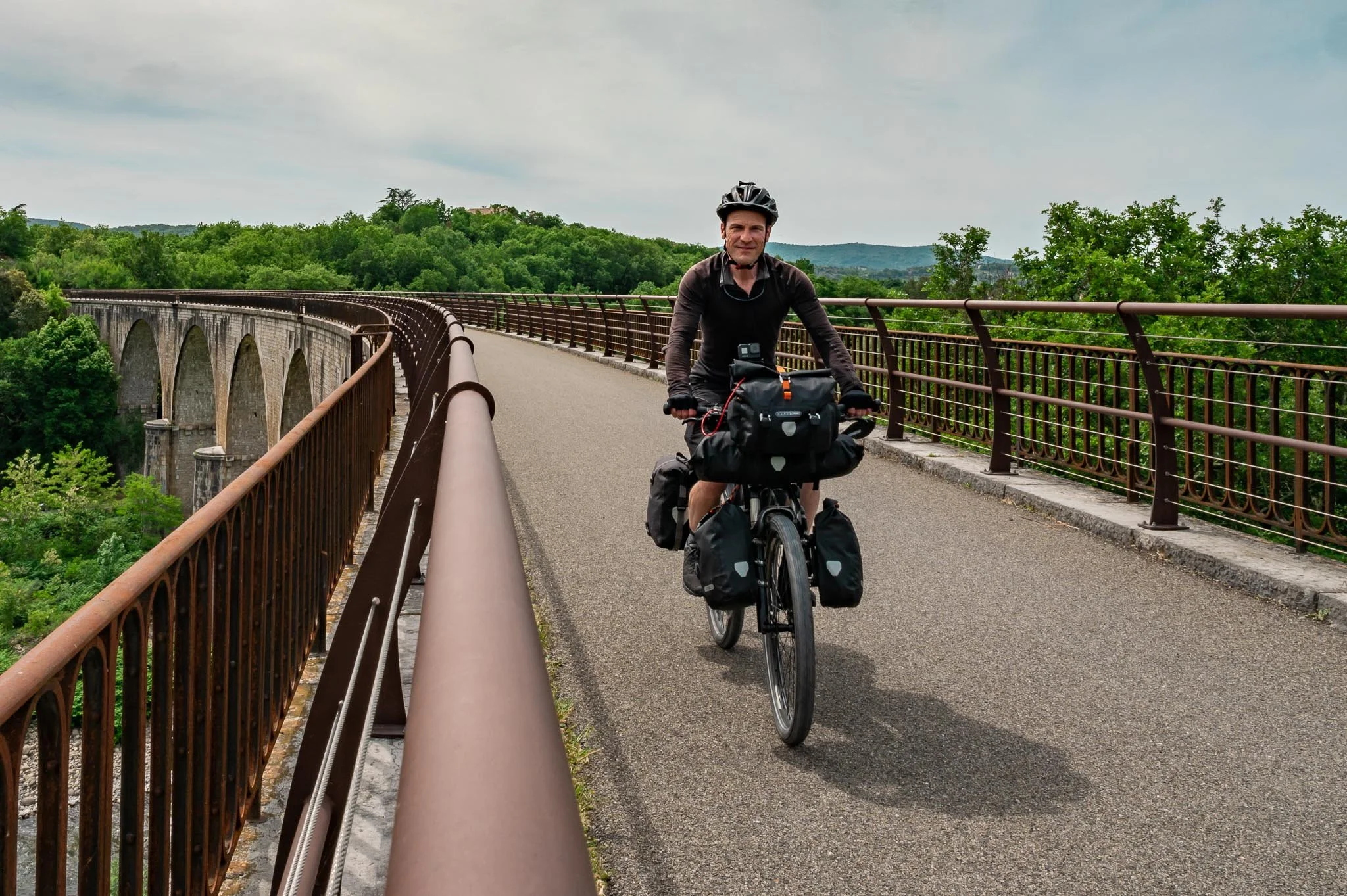
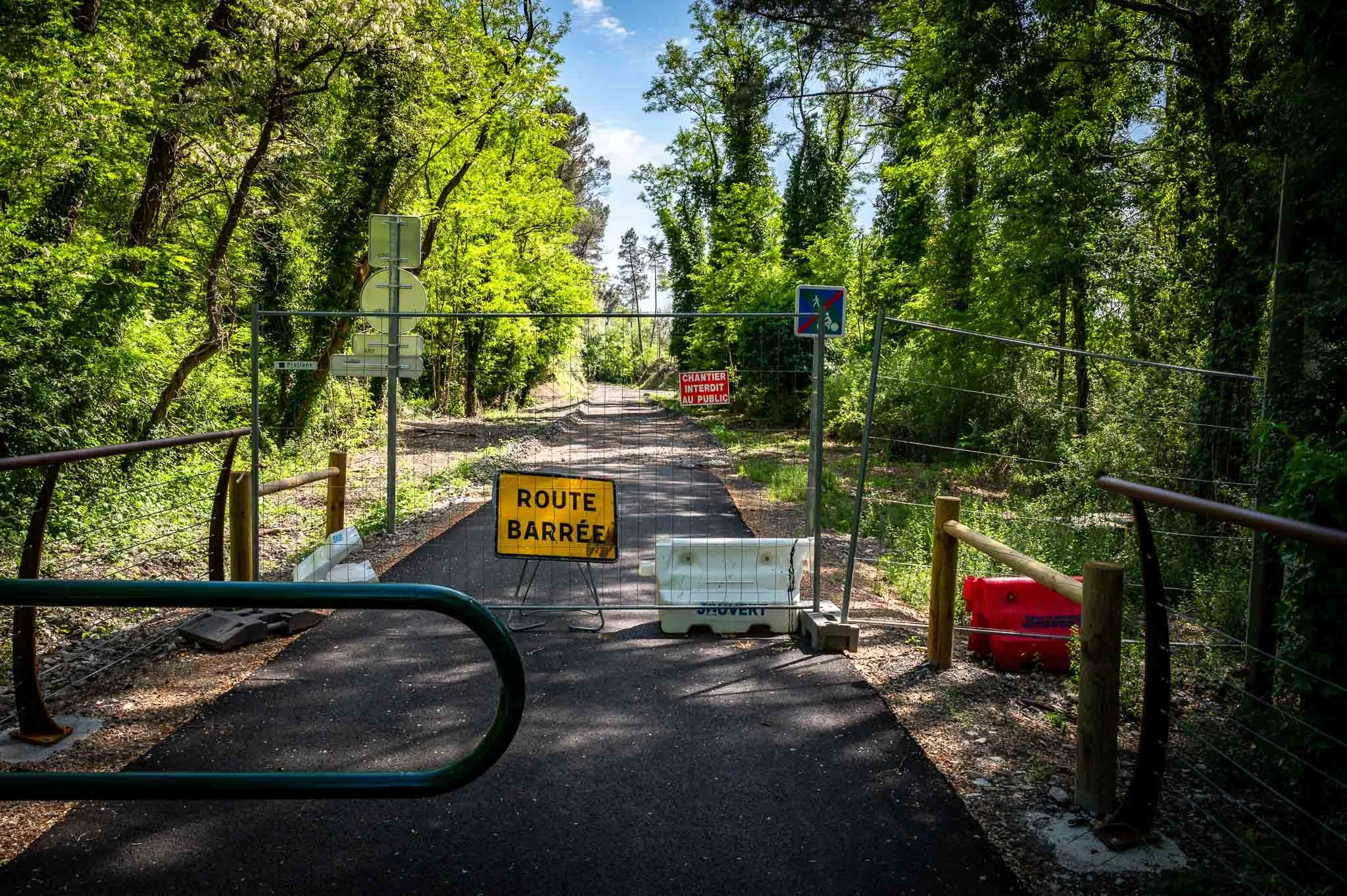
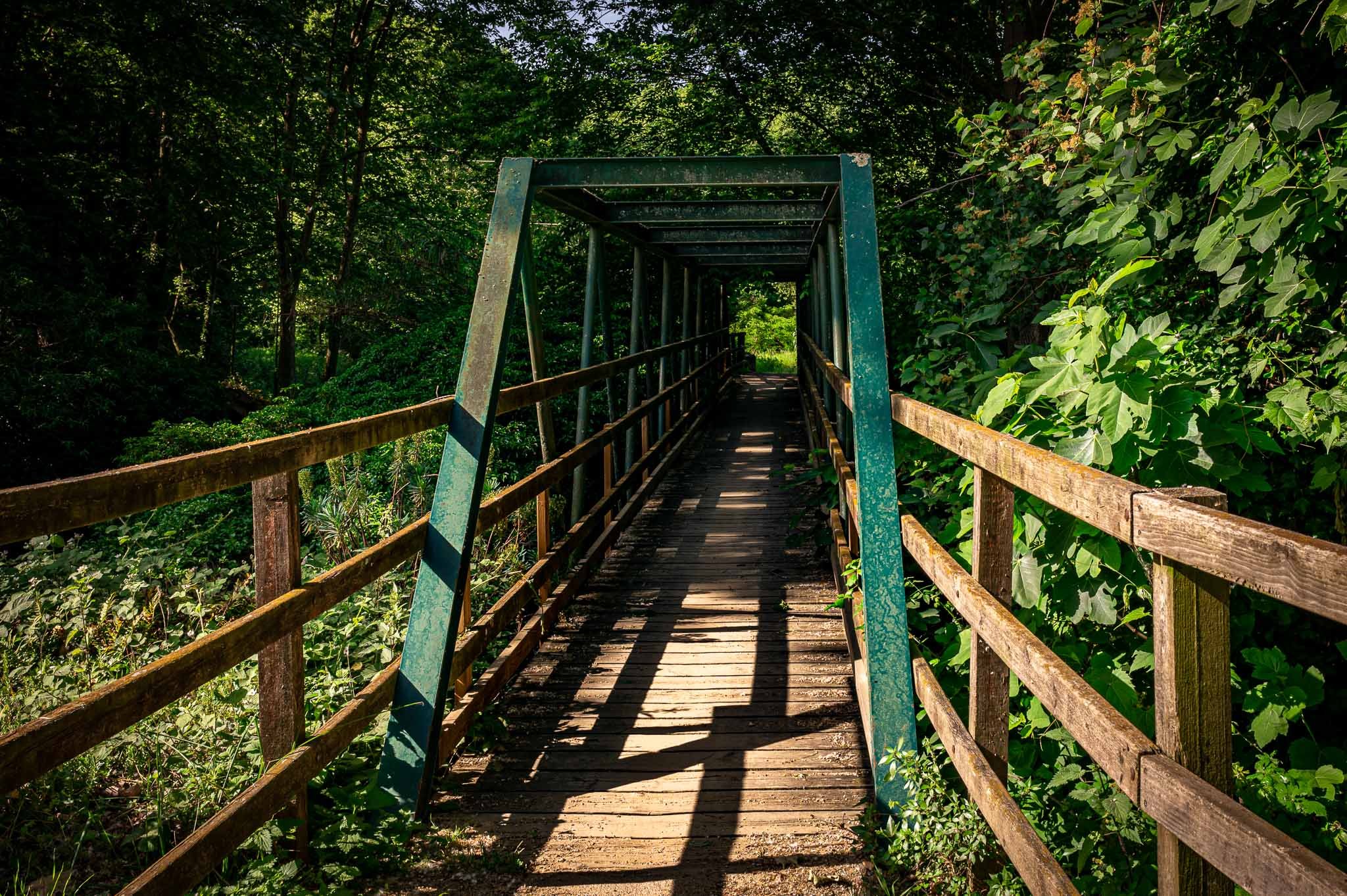
It's a tough but great ride to Le Puy en Velay, a well-known gateway to the Santiago the Compostela pilgrimage trail, with its main sites built on volcanic rock. From Le Puy I take an amazing route through the Ardèche region towards Aubenas, which starts on a peaceful Via Verde but 'quickly' turns into a fierce climb to a 1,350-meter plain, with astonishing landscapes carved by former volcanic activity and villages that look as if I'm travelling back in time.
Reaching the Pyrenées
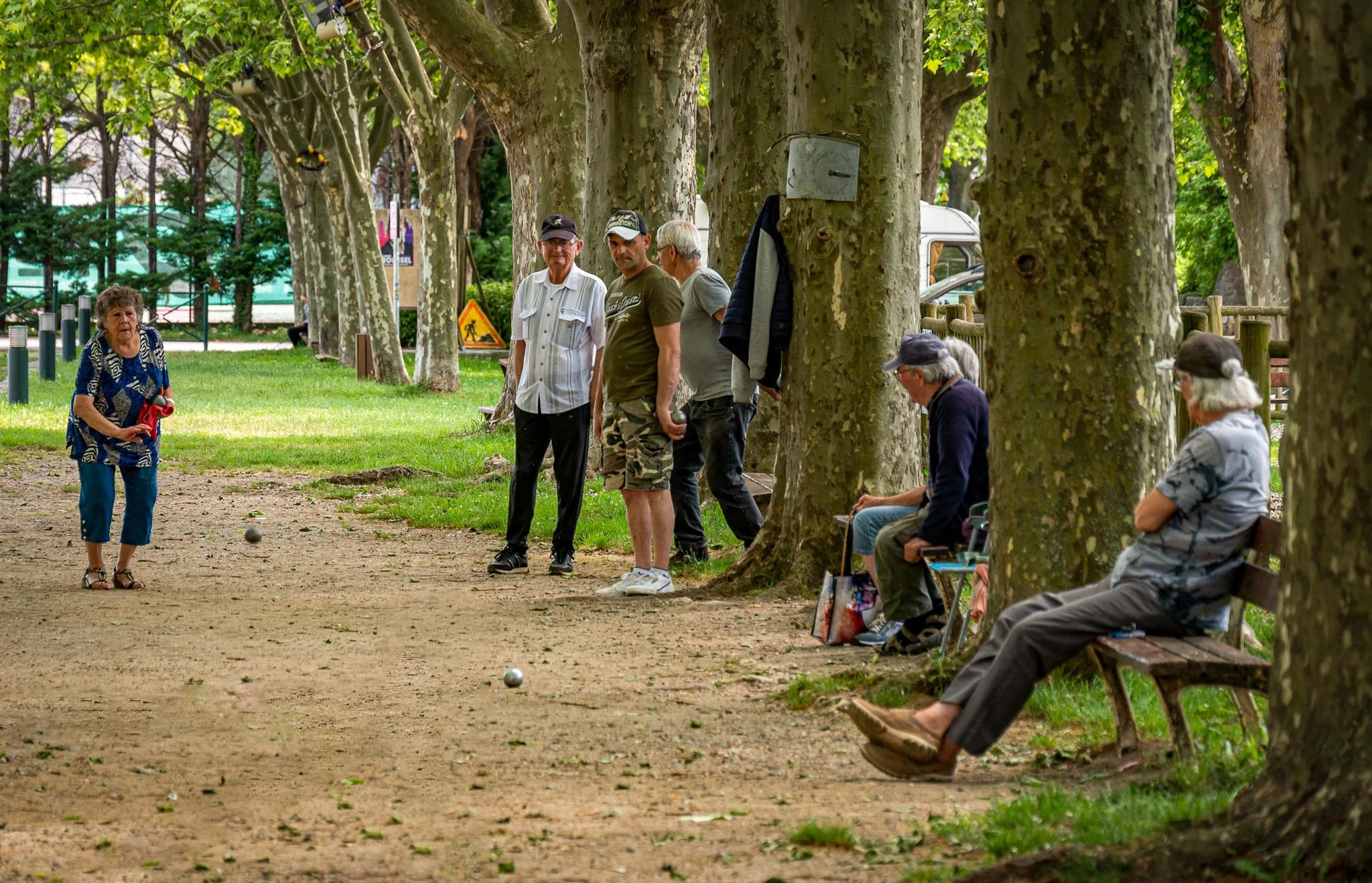
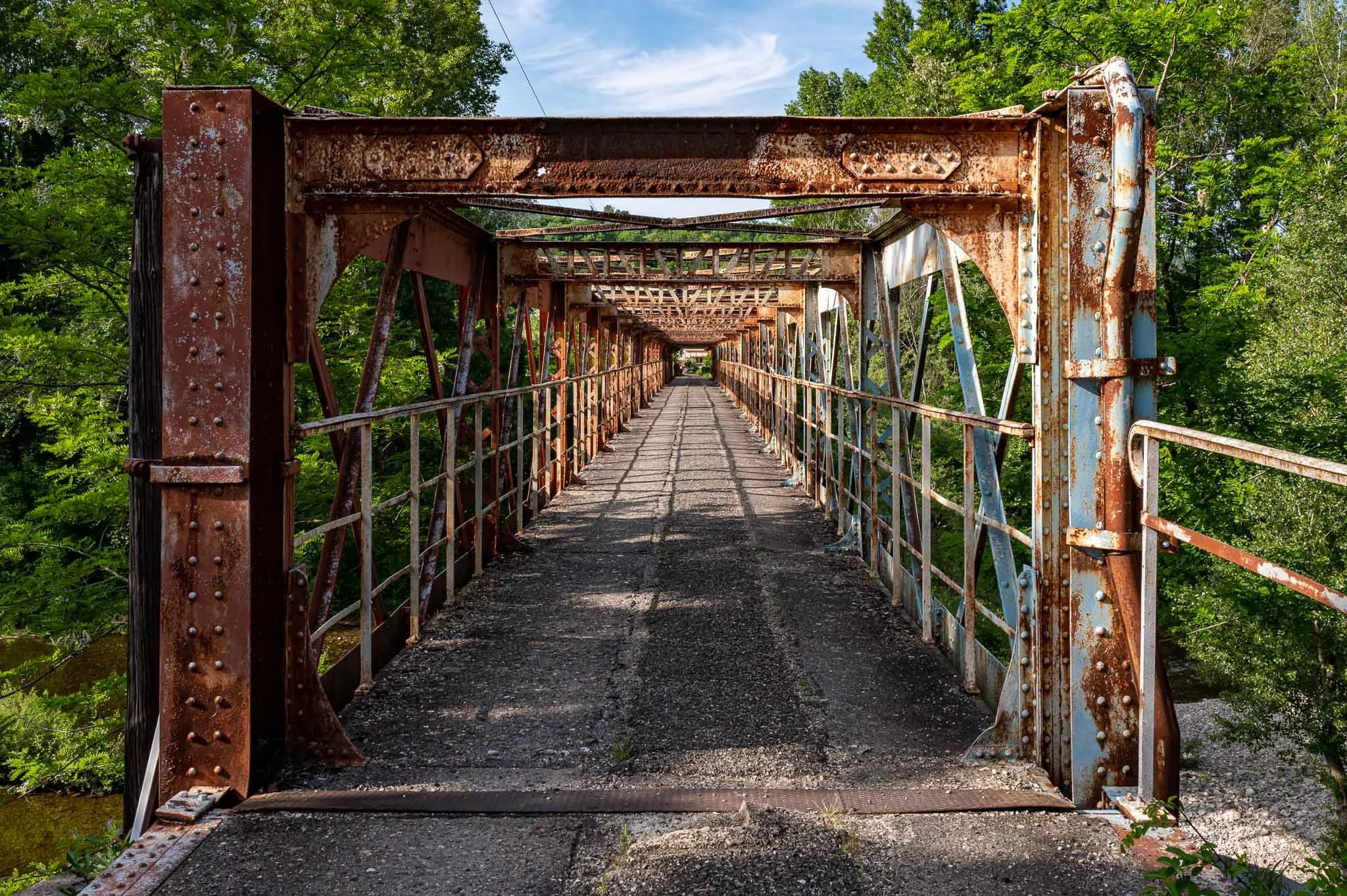
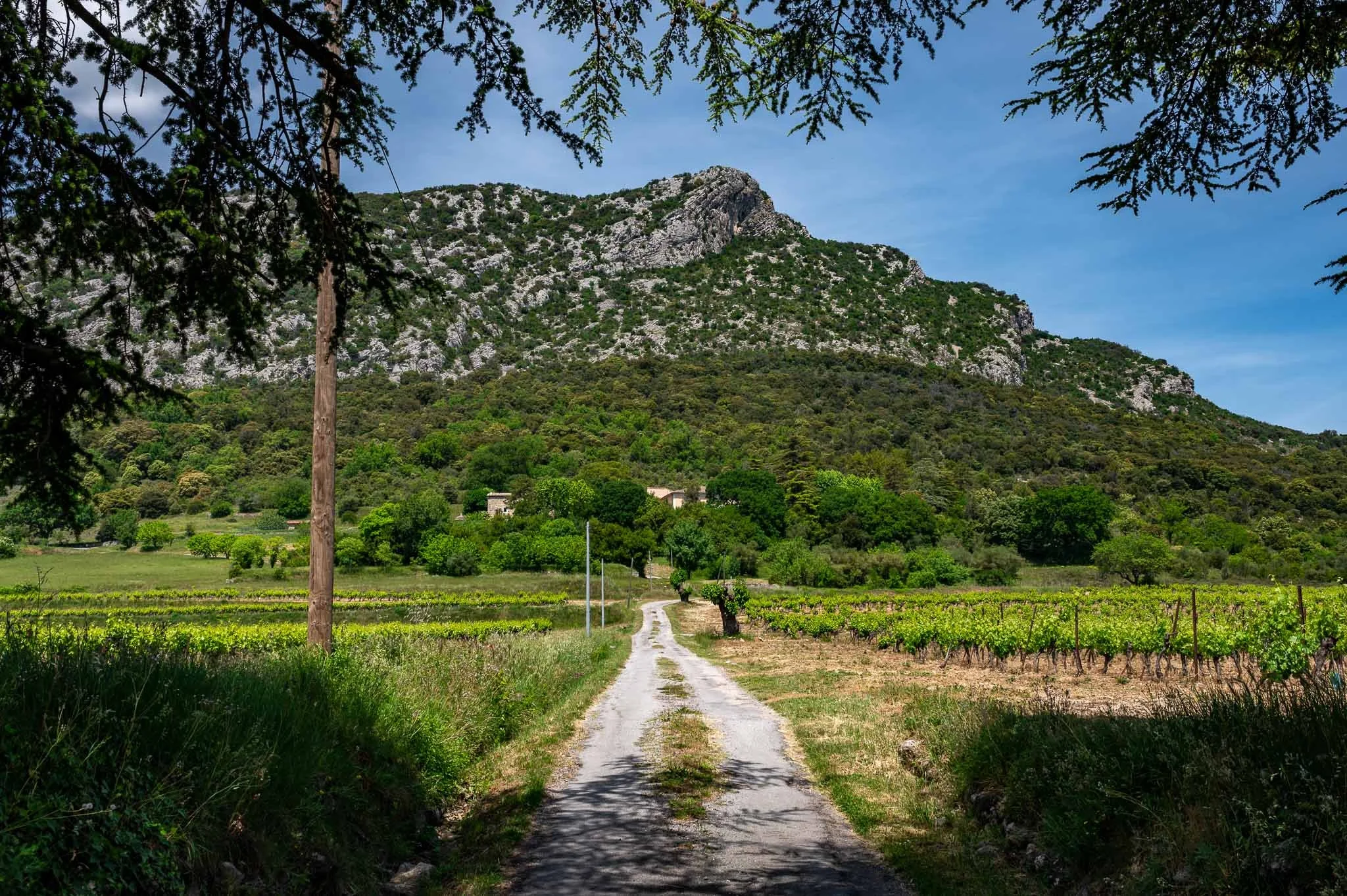
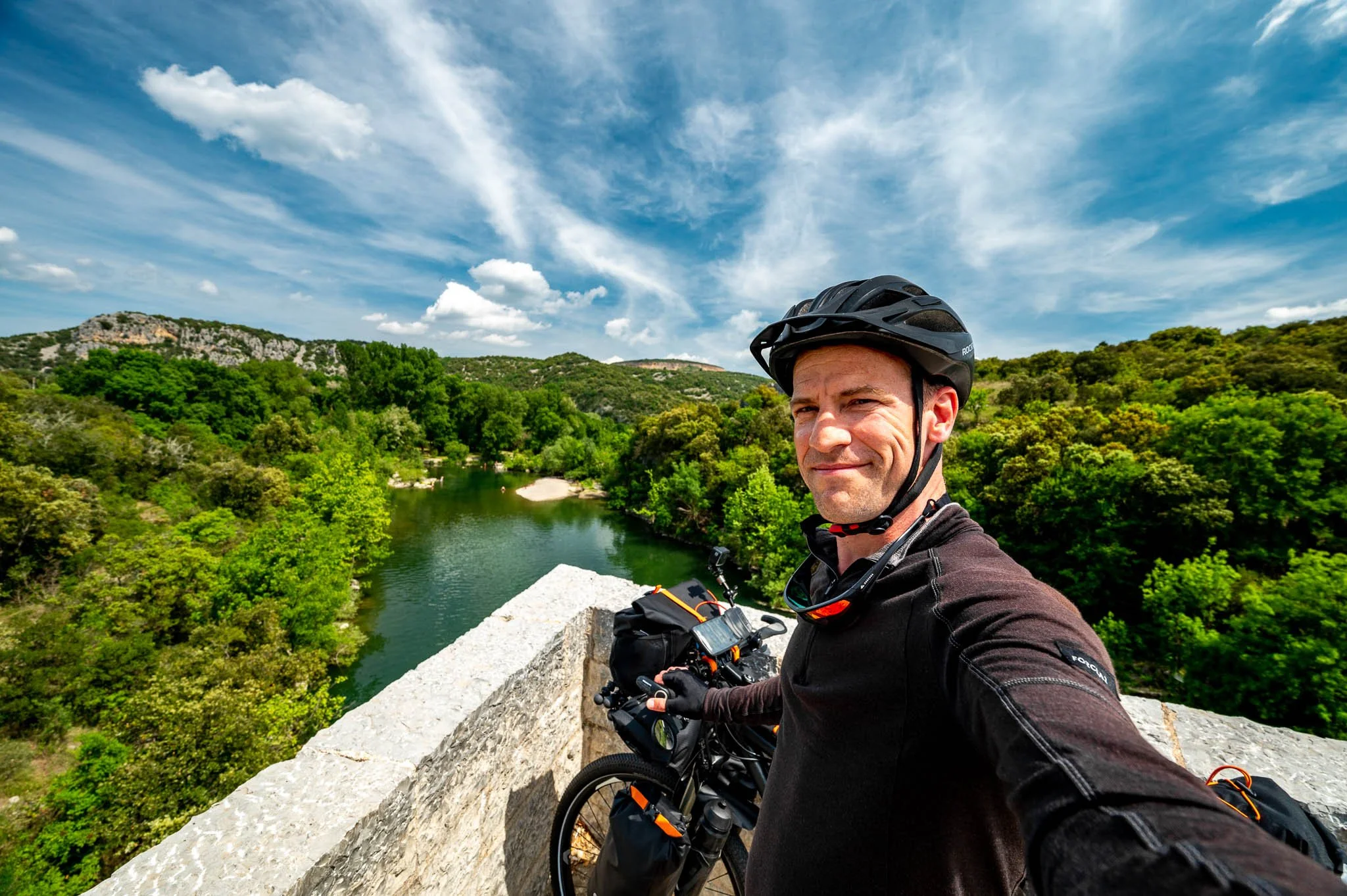
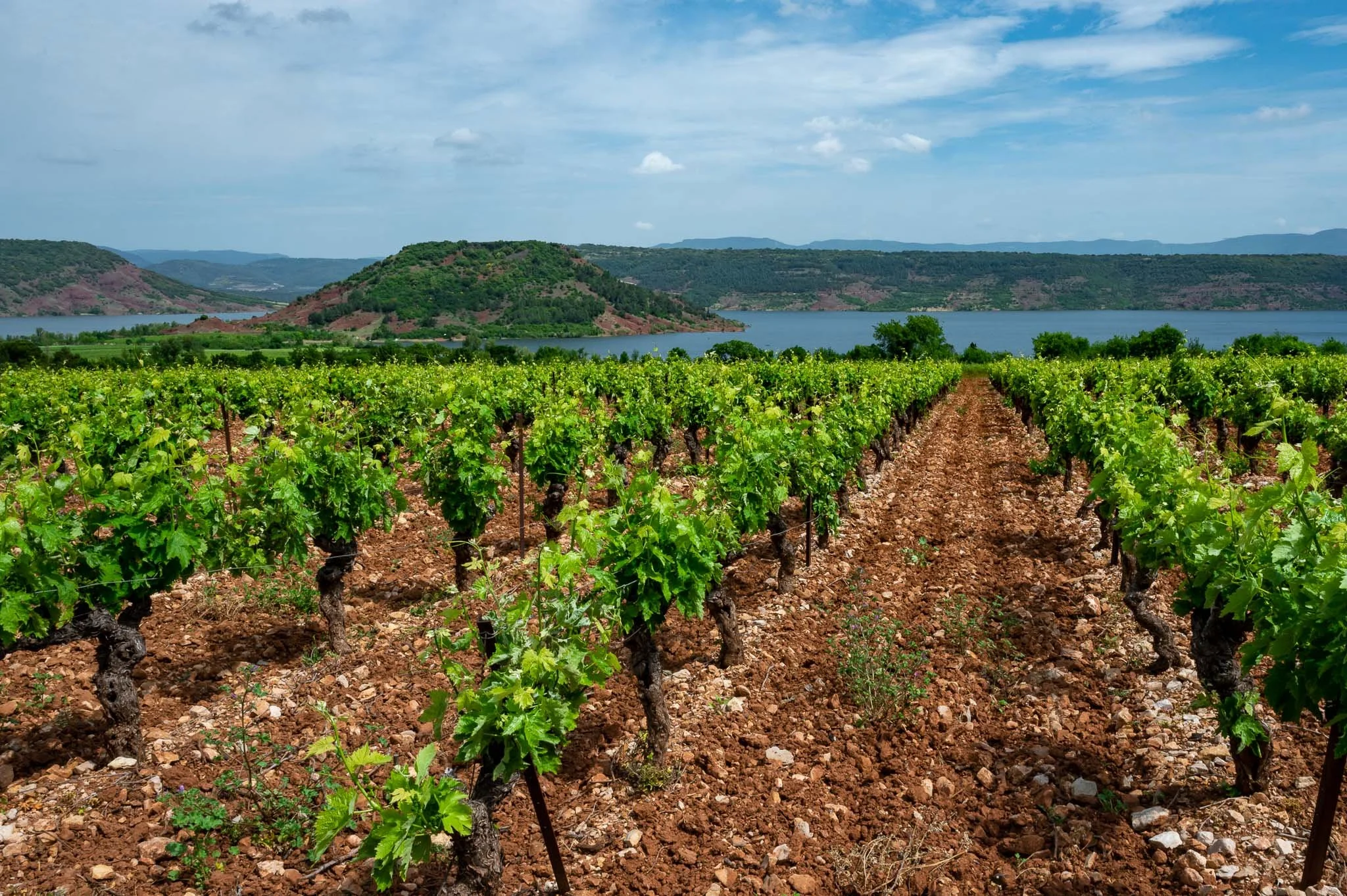
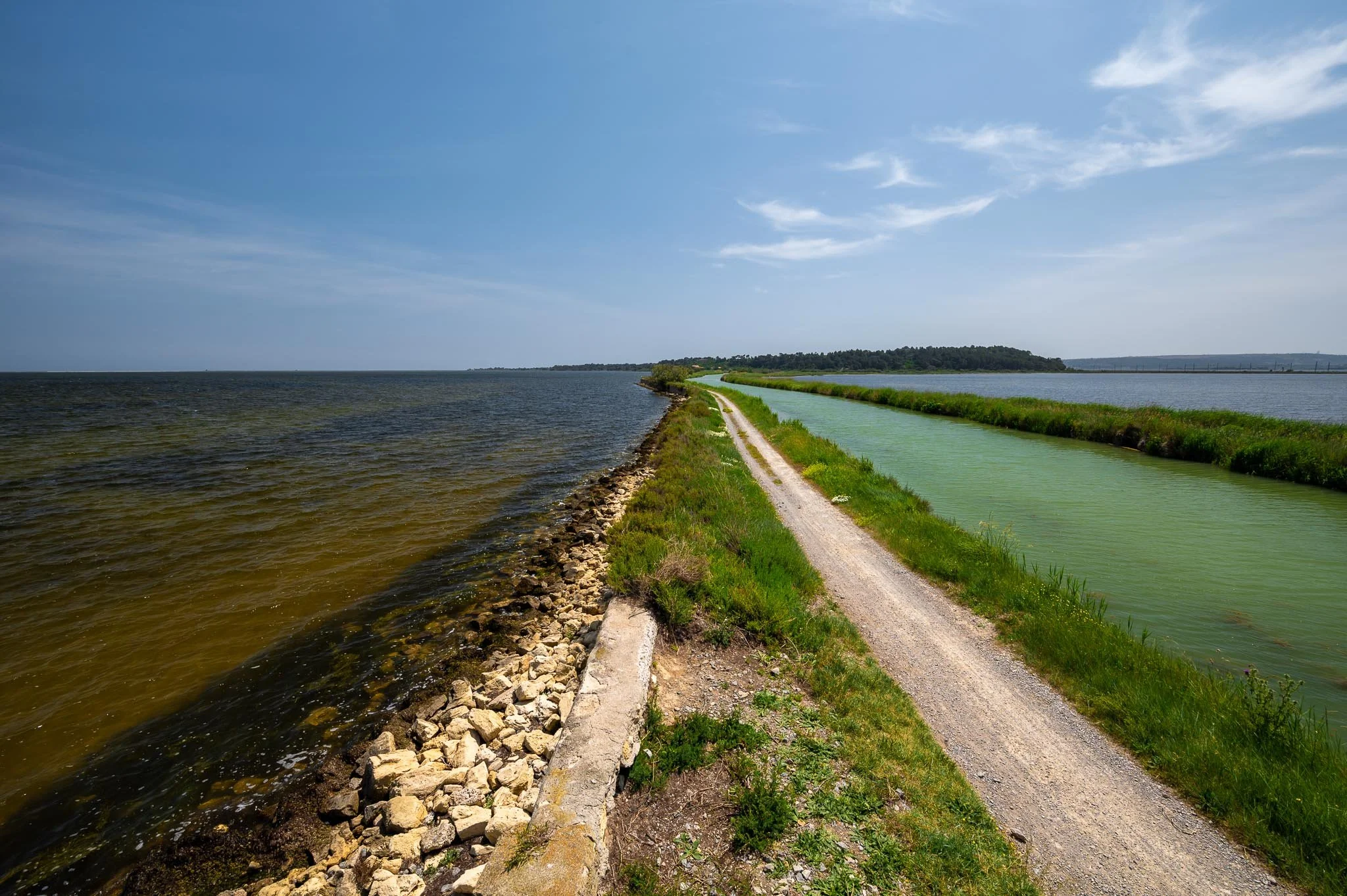
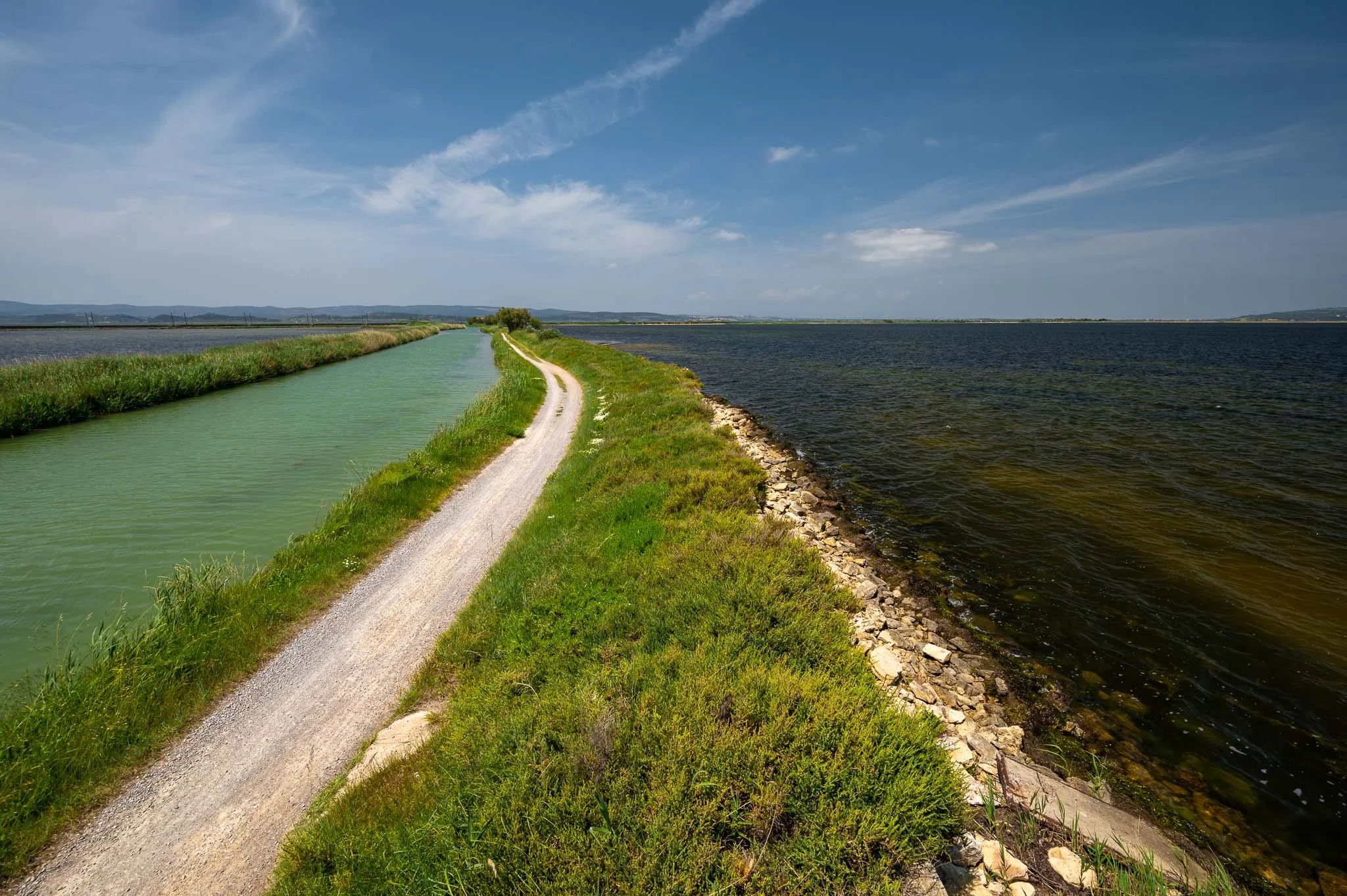
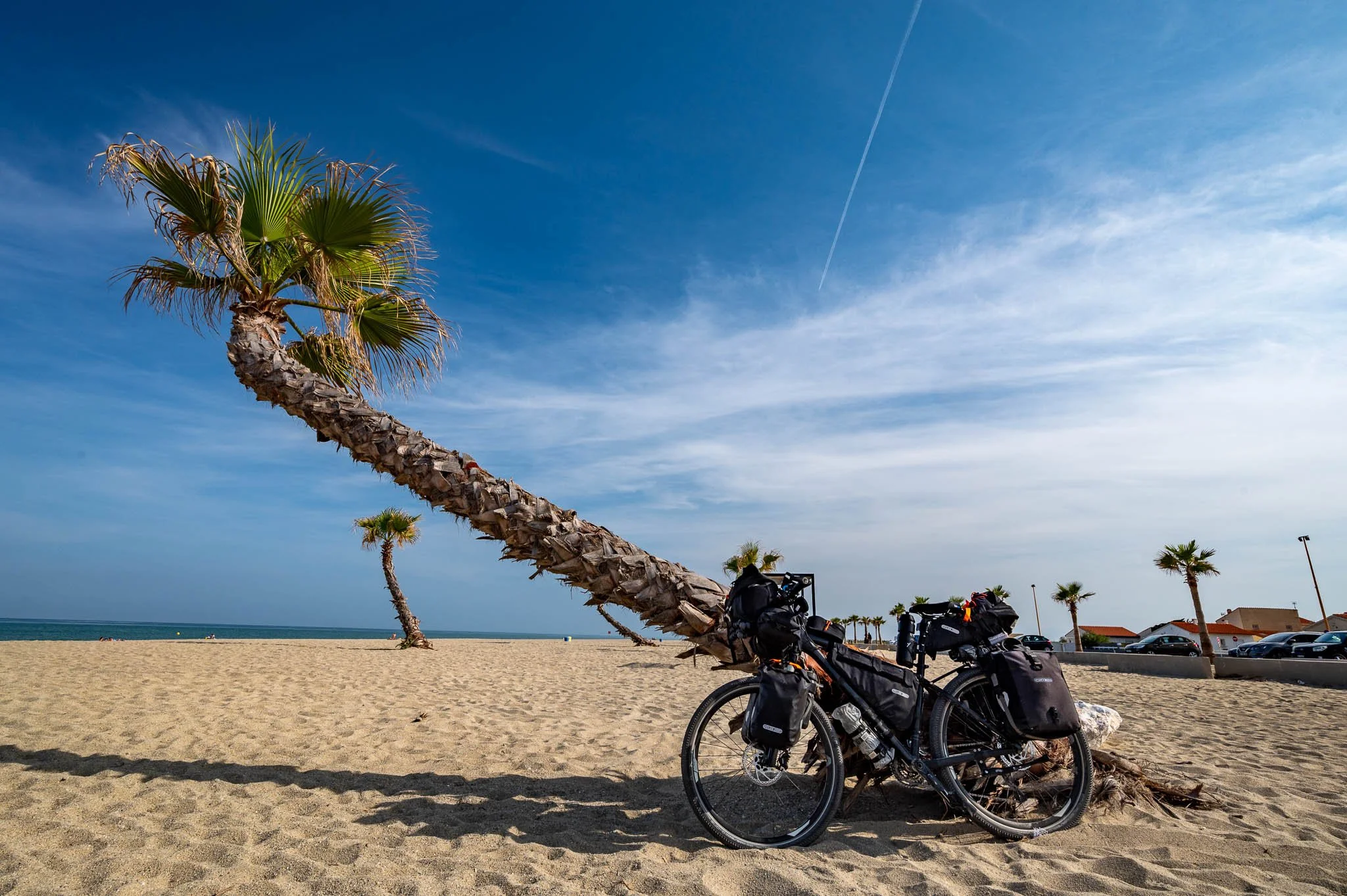
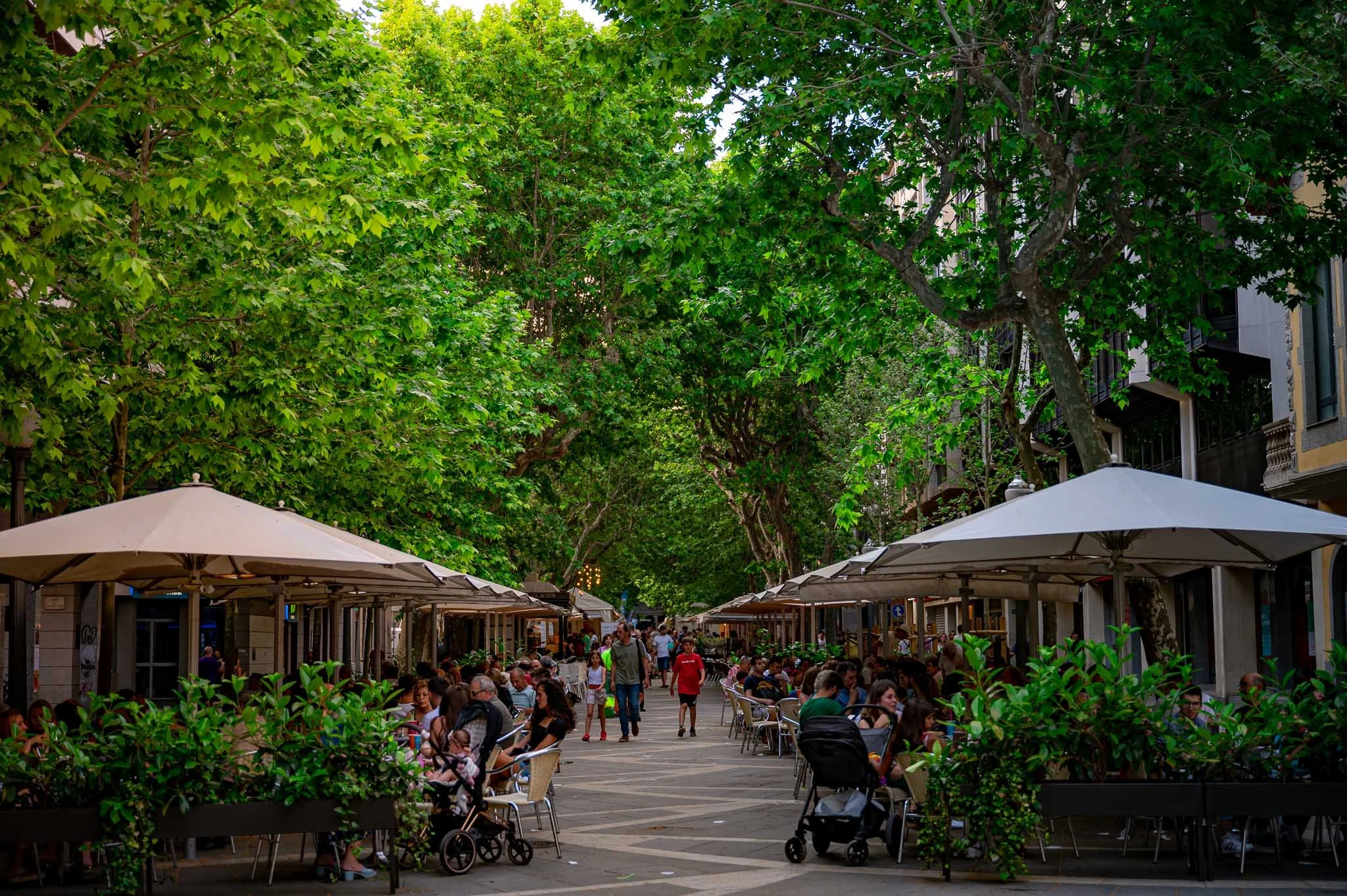
Via Alès I pedal through the vineyards of the Languedoc and the spectacular Gorges de l'Herault to arrive in a small hostel in medieval Saint-Jean-de-Fos. From there it is a relatively short ride to Le Lac du Salagou, a large water reservoir that was created in the 60s to irrigate the valley. I cycle onwards to Béziers, a town I passed only 8 months ago on another ride to the South of France. A strange feeling of victory to be back here once again on my bike. On my way down South, I also can't resist revisiting the beautiful city of Narbonne. From there, I jump on the EuroVelo cycling route towards the Mediterranean Sea. In Perpignan, I decide to give my legs (and butt) two days off from cycling, after averaging 10-12 hours in the saddle every day. Although there's nothing extremely spectacular to do here, it's a great place to prepare for the next leg of my journey. There's a relaxing vibe and around 7 pm people start coming together for drinks and (French) tapas on a terrace in the shade of large plane trees. It's been quite the journey since leaving my beautiful camp spot near Ambert.
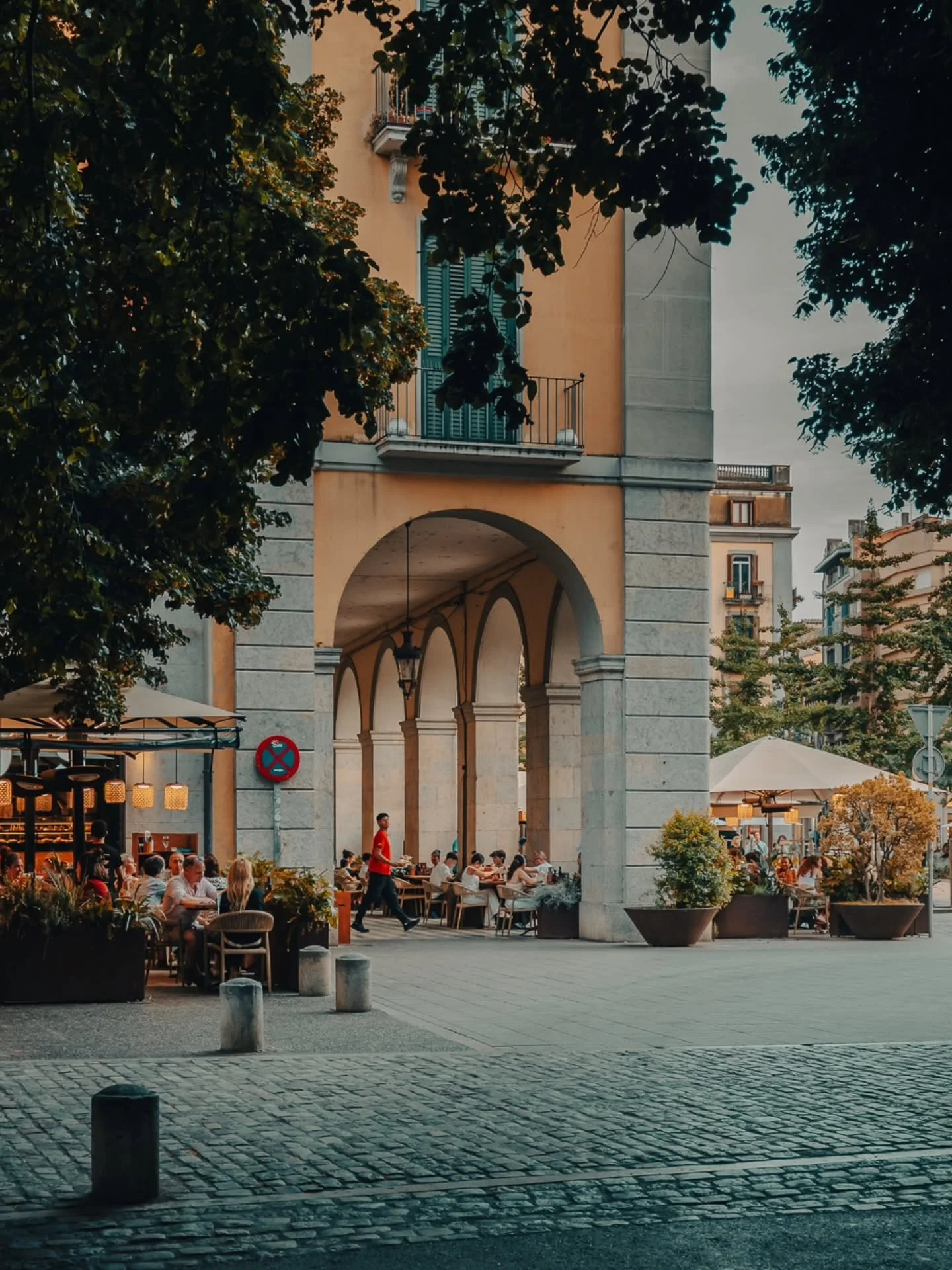
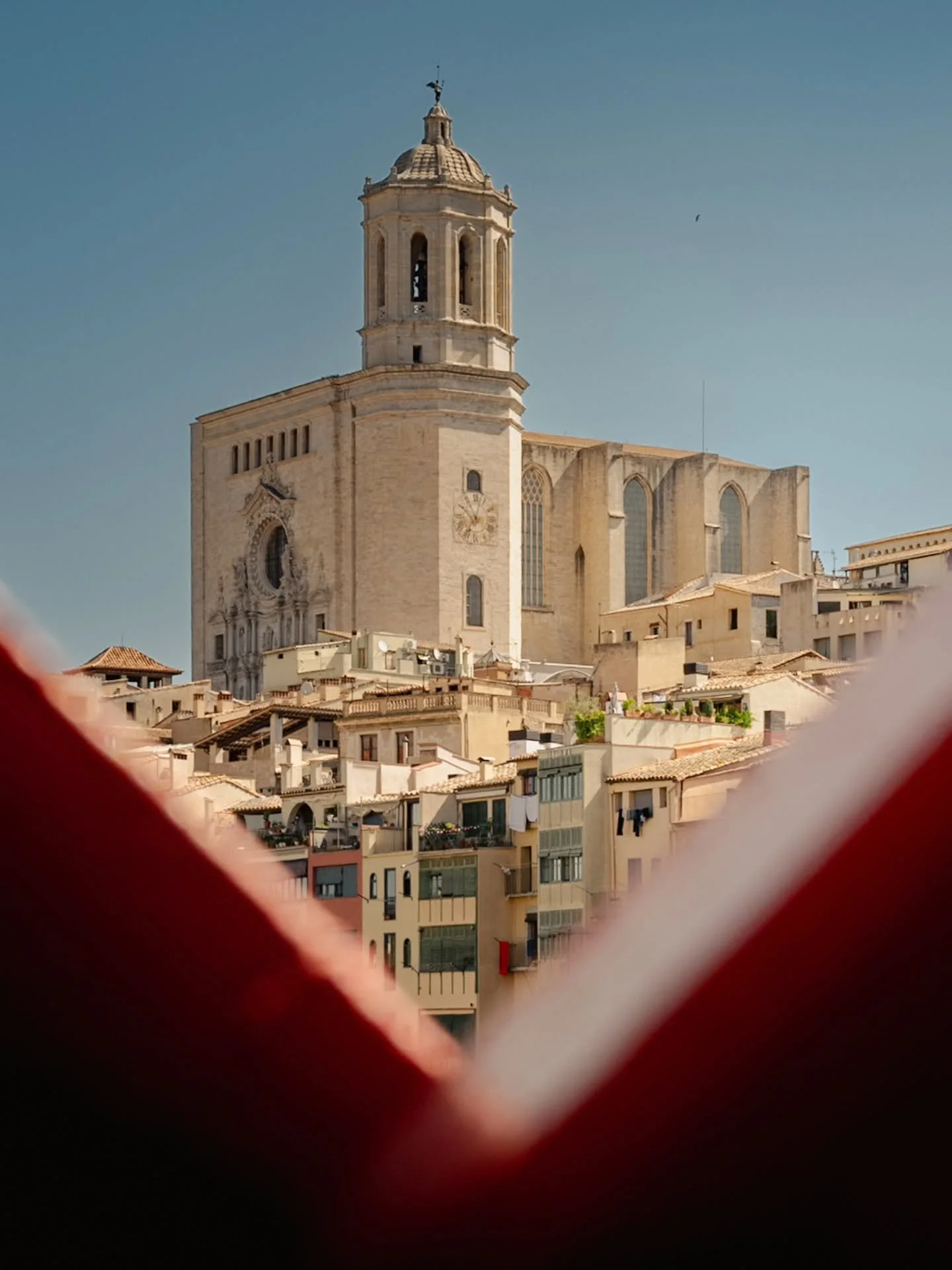
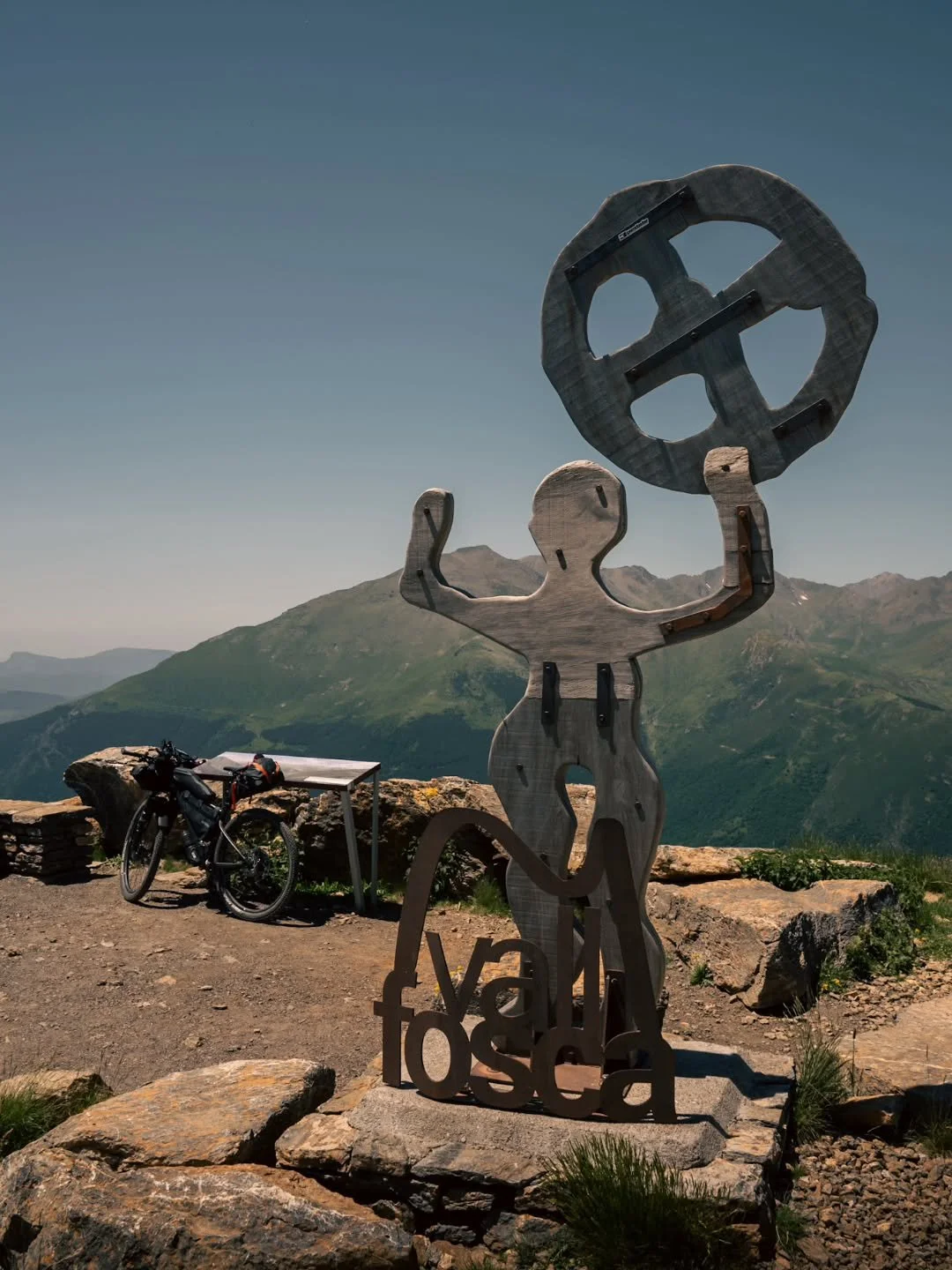
At 1,700 km I'm almost halfway on my journey to Portugal and about to cross the Pyrenees and enter a new country, Spain. I'm pretty excited as this will be my first time cycle touring here. The first stops will be Figueres and Girona.
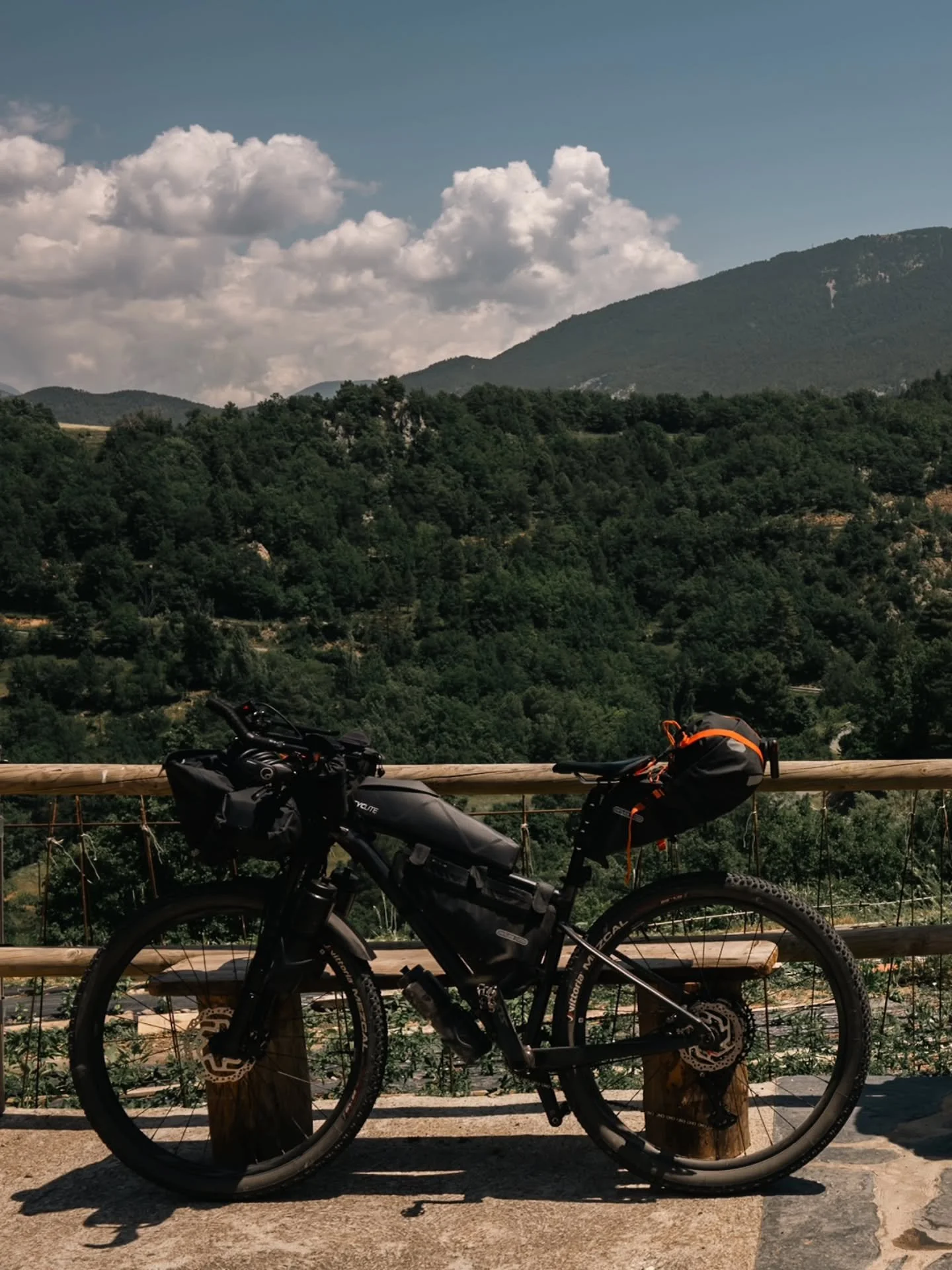
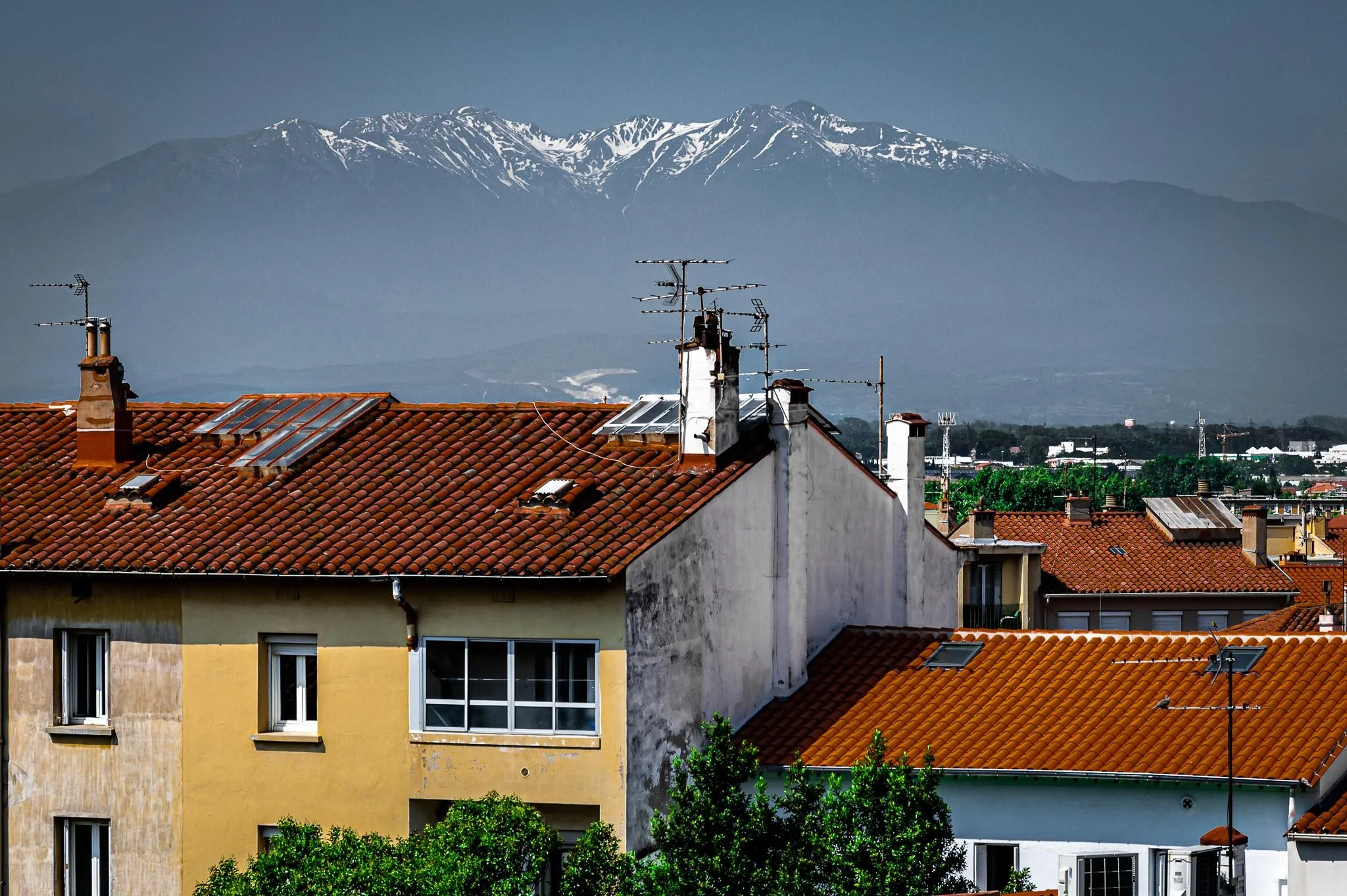
From Catalonia, I've plotted a route inland, all the way down to Seville. It's been very hot in the past two weeks, hoping to be able to keep riding in the Spanish sun. If not I'll have to change to early morning and late afternoon rides, finding someplace in the shade in between. But first the Pyrenees. It's going to be one of the lower passes, and not the one still covered in snow I can see from here.
Notes continue after the photos.


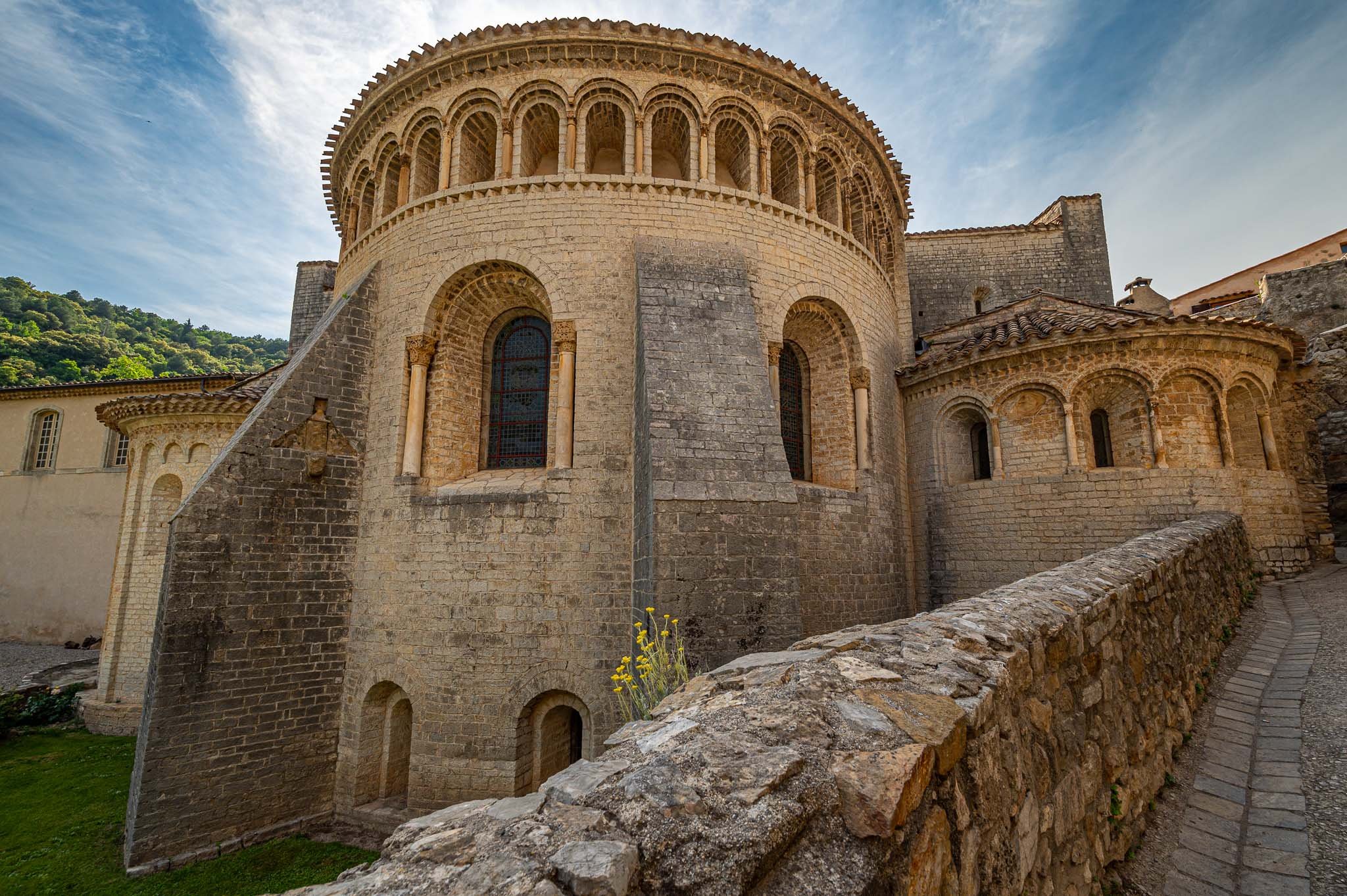
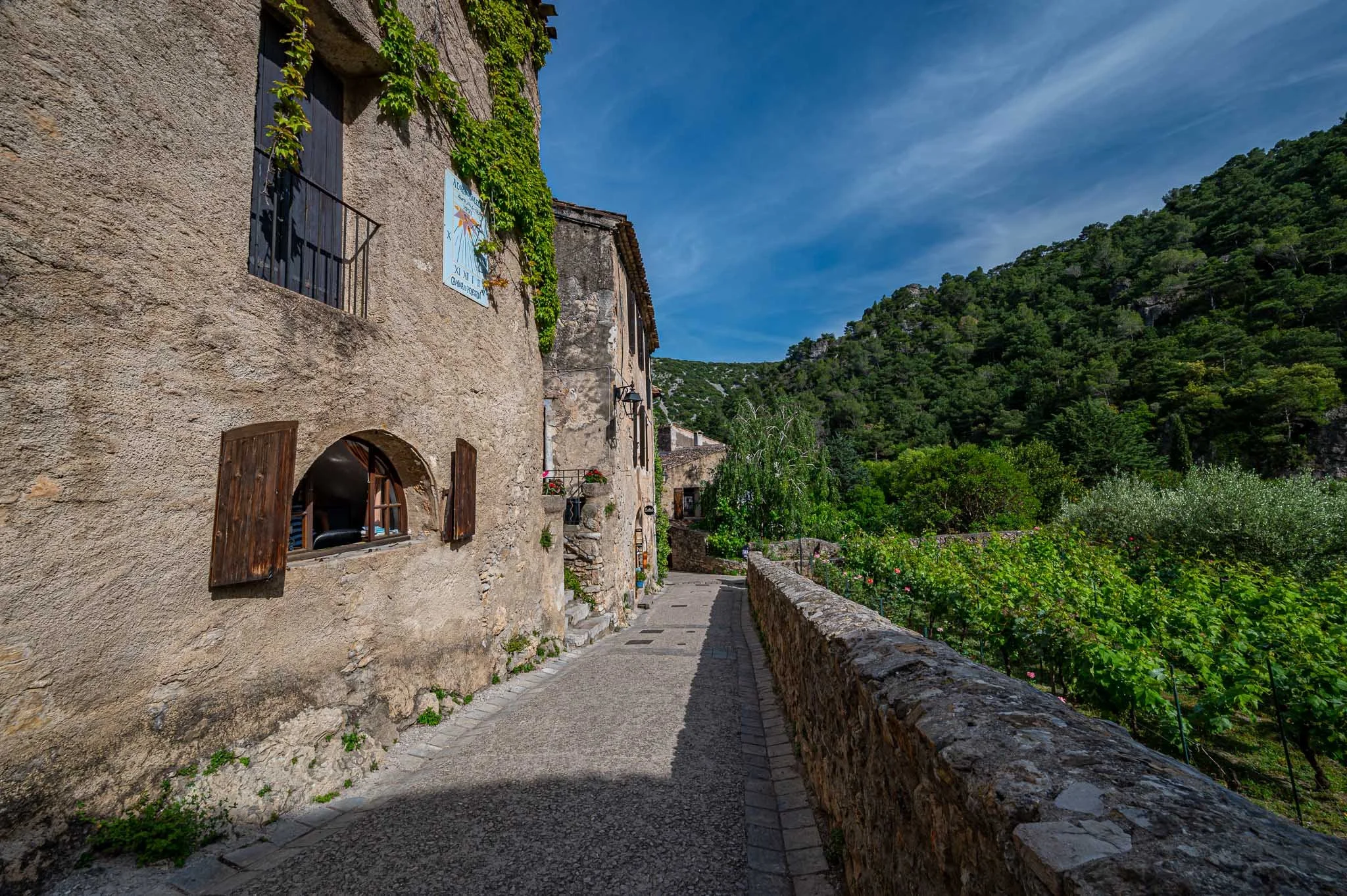
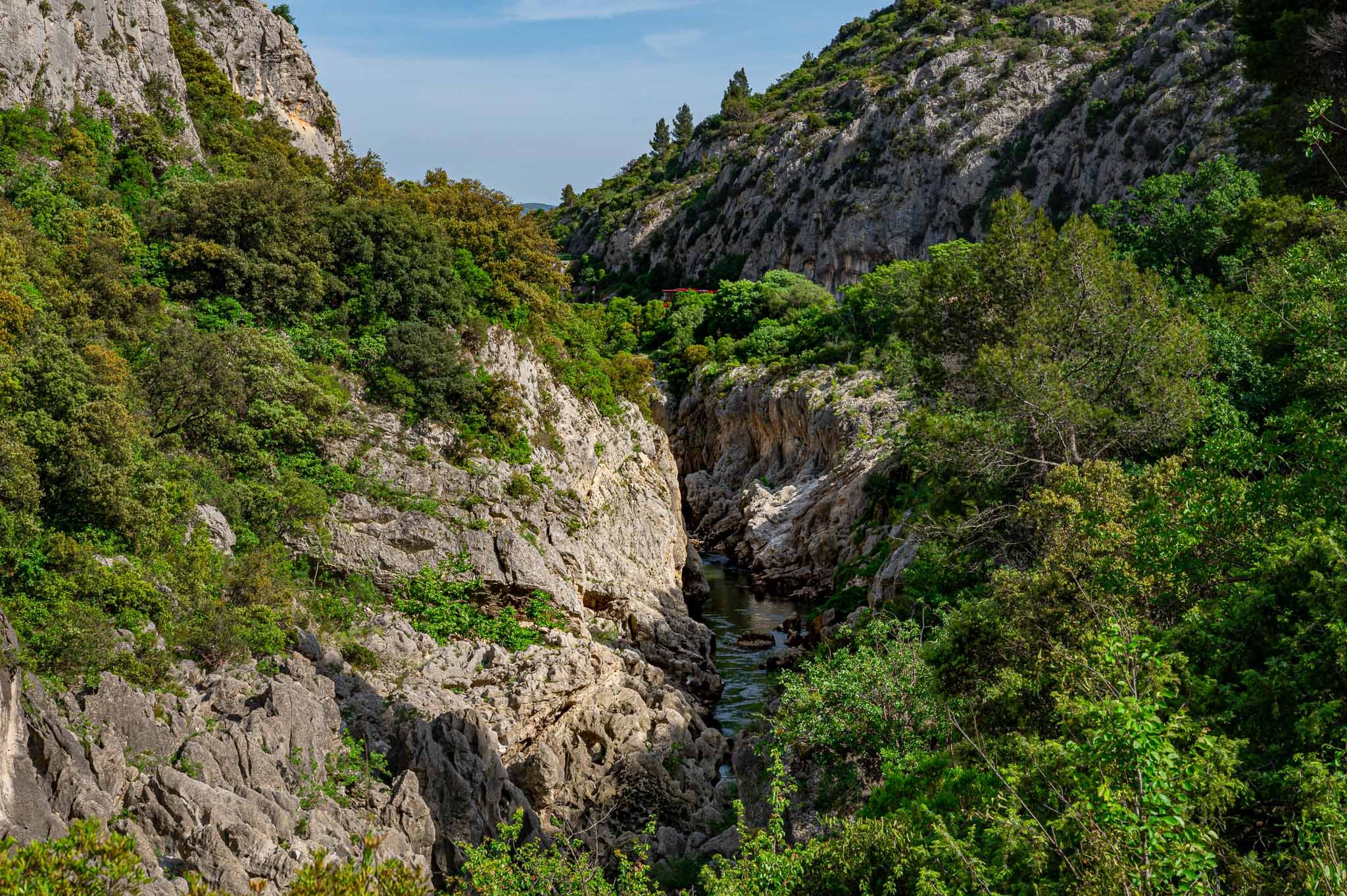
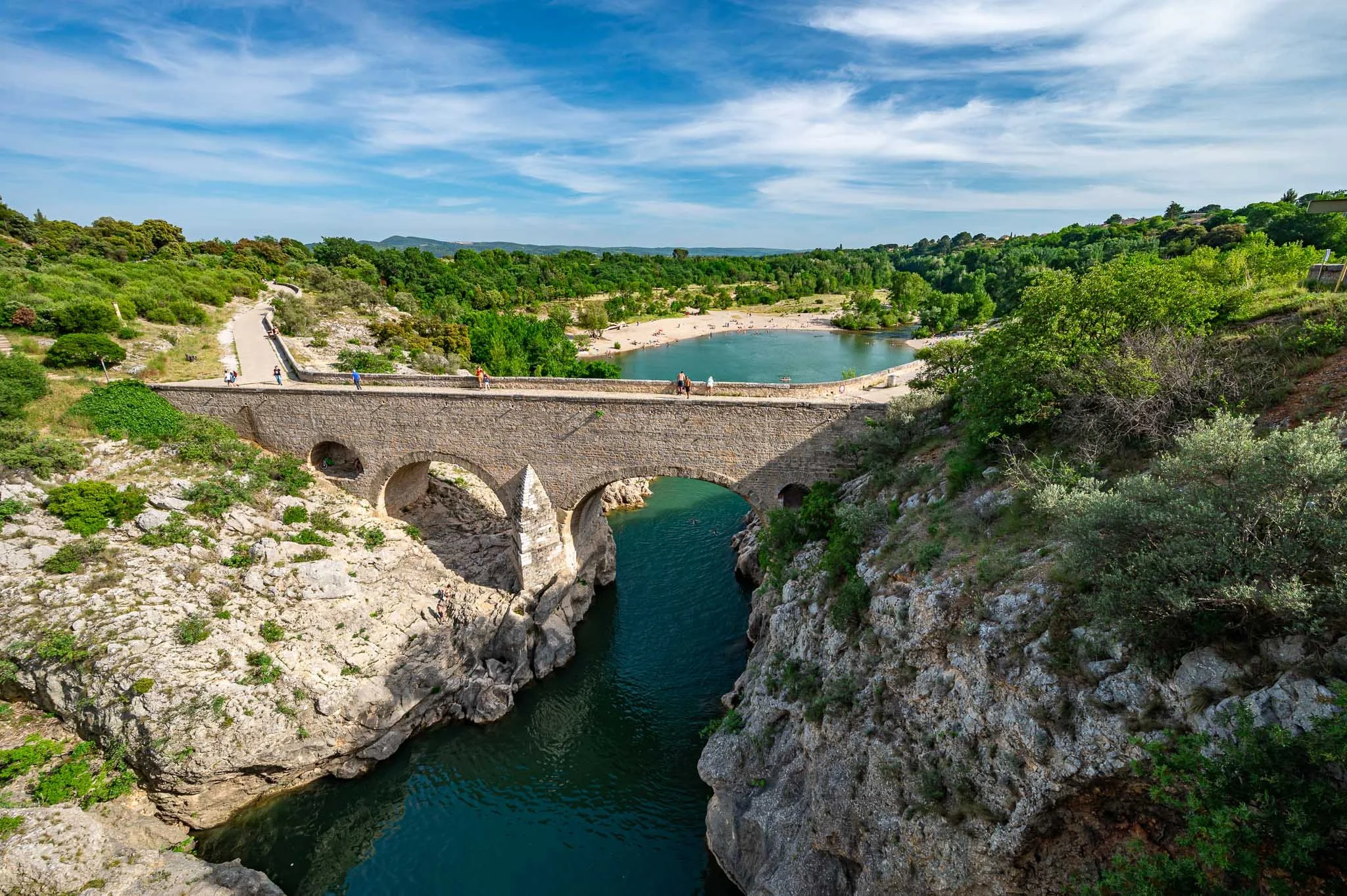
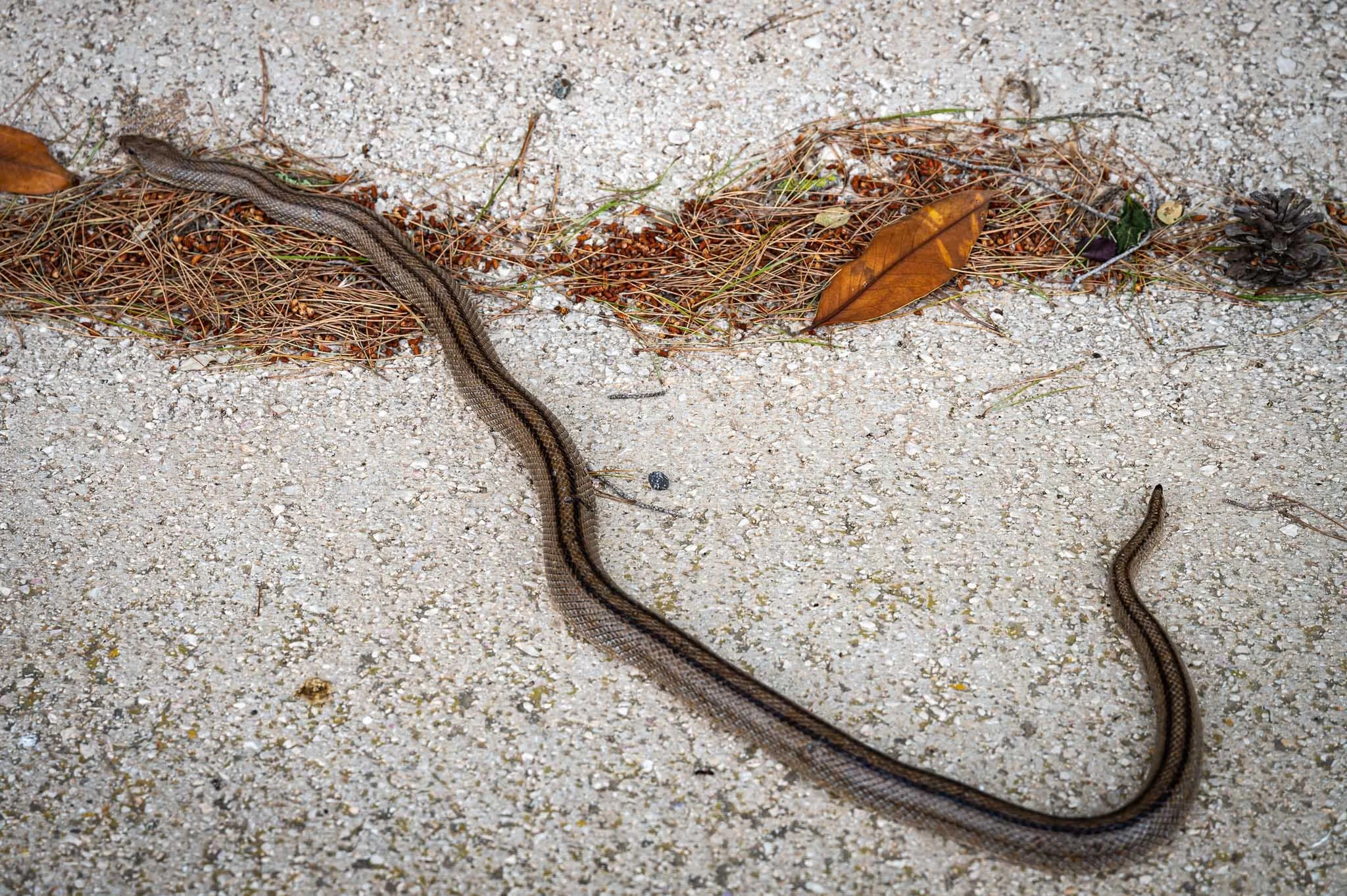
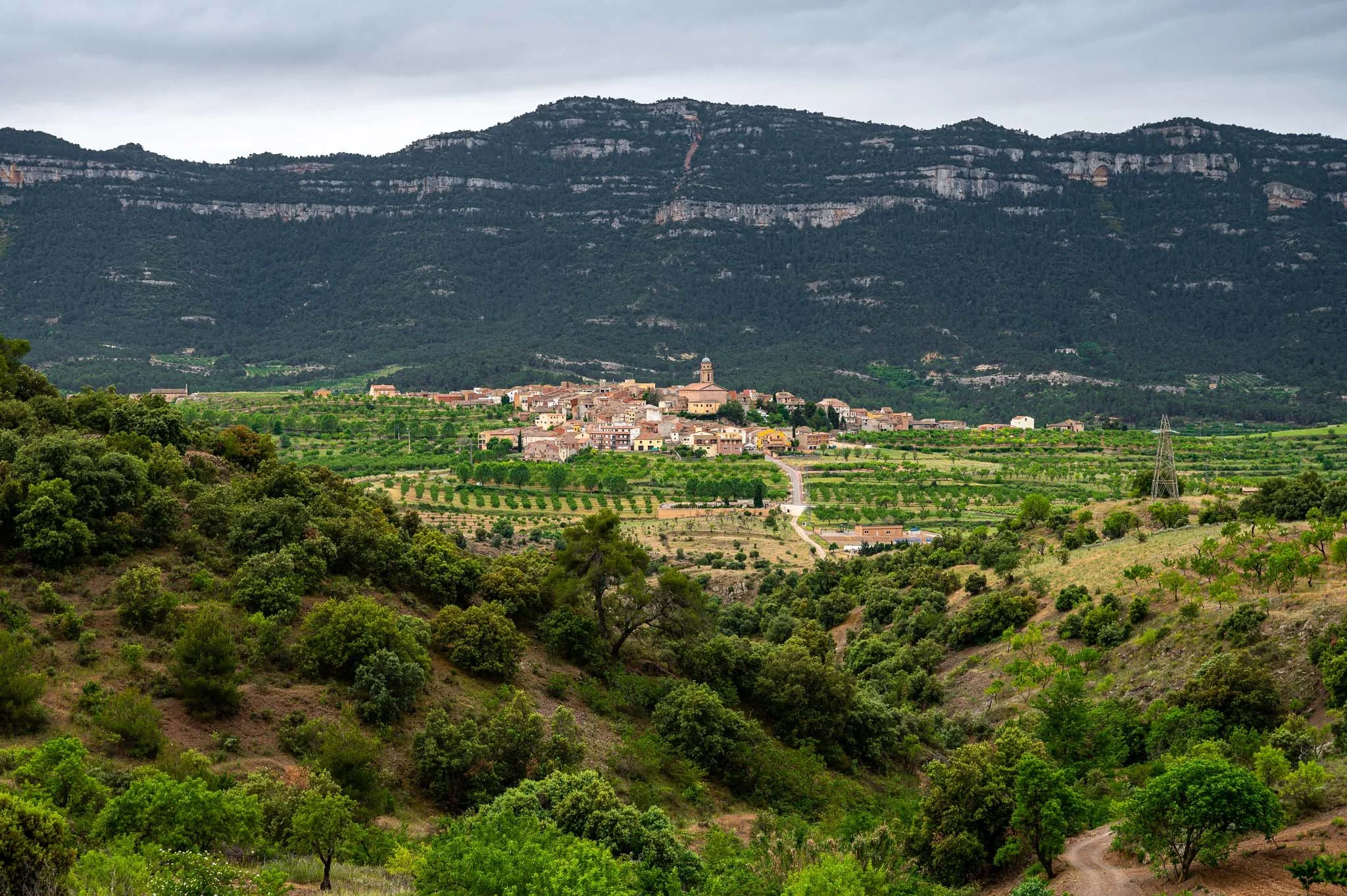
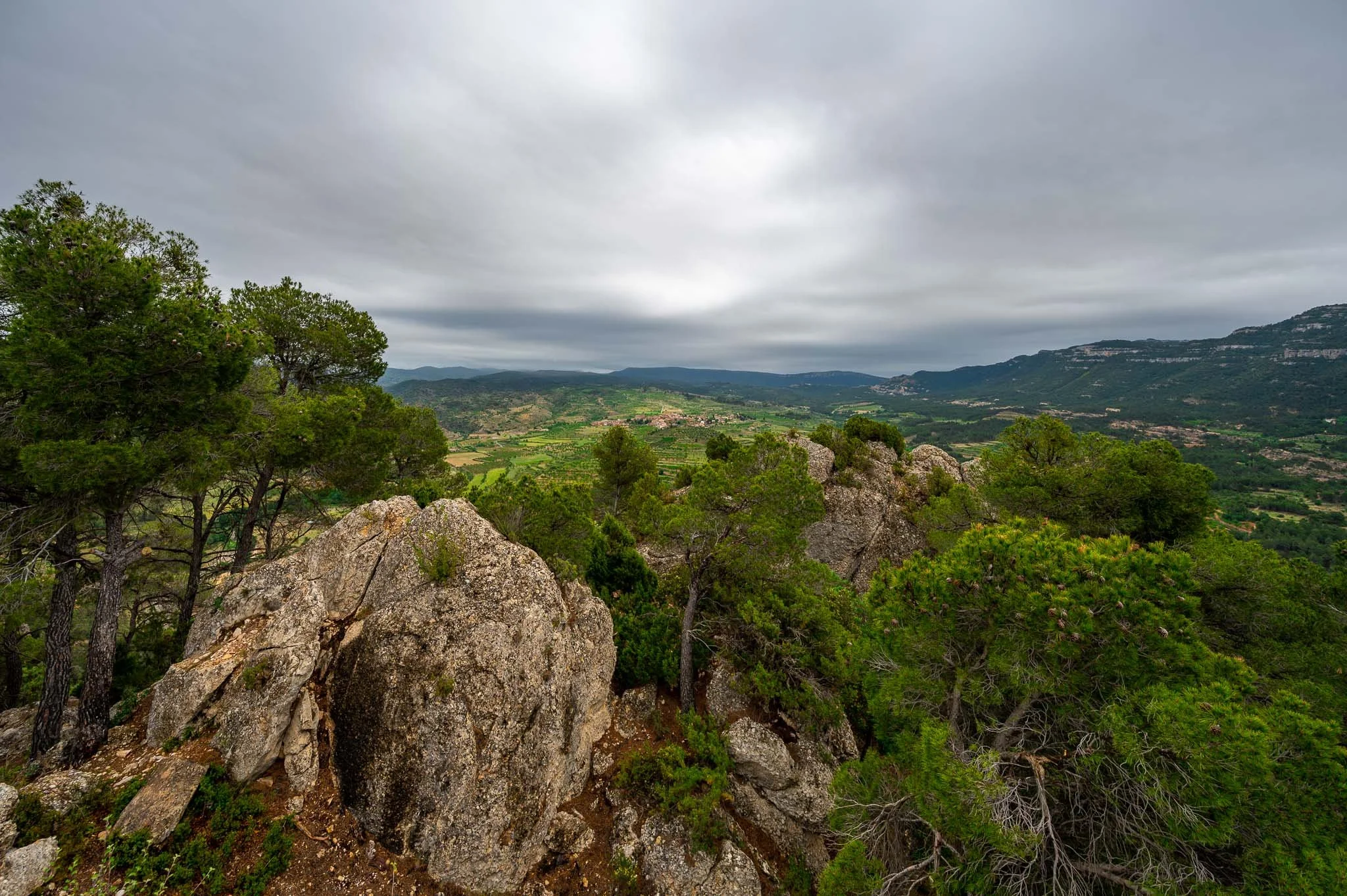
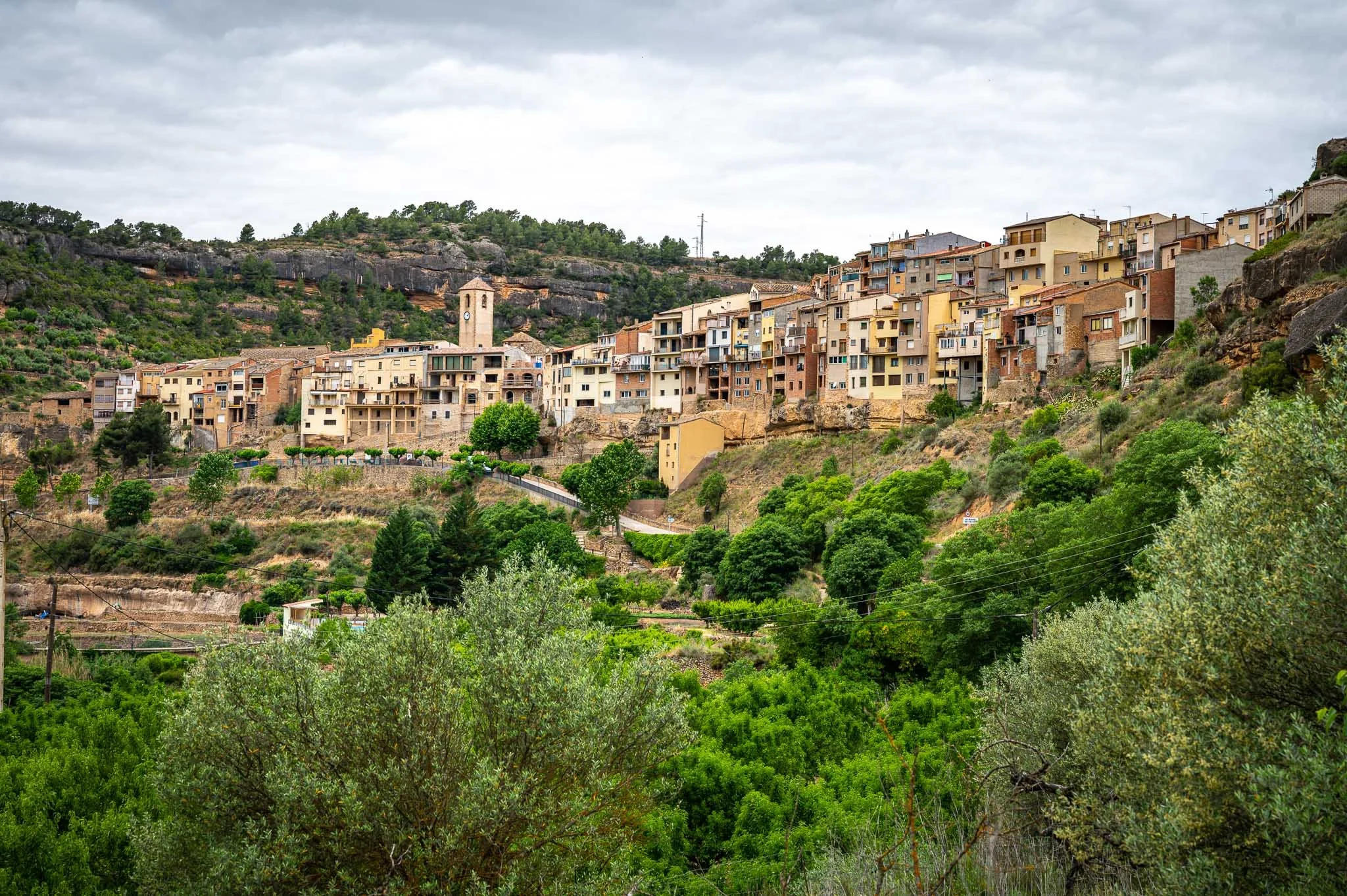



Spain
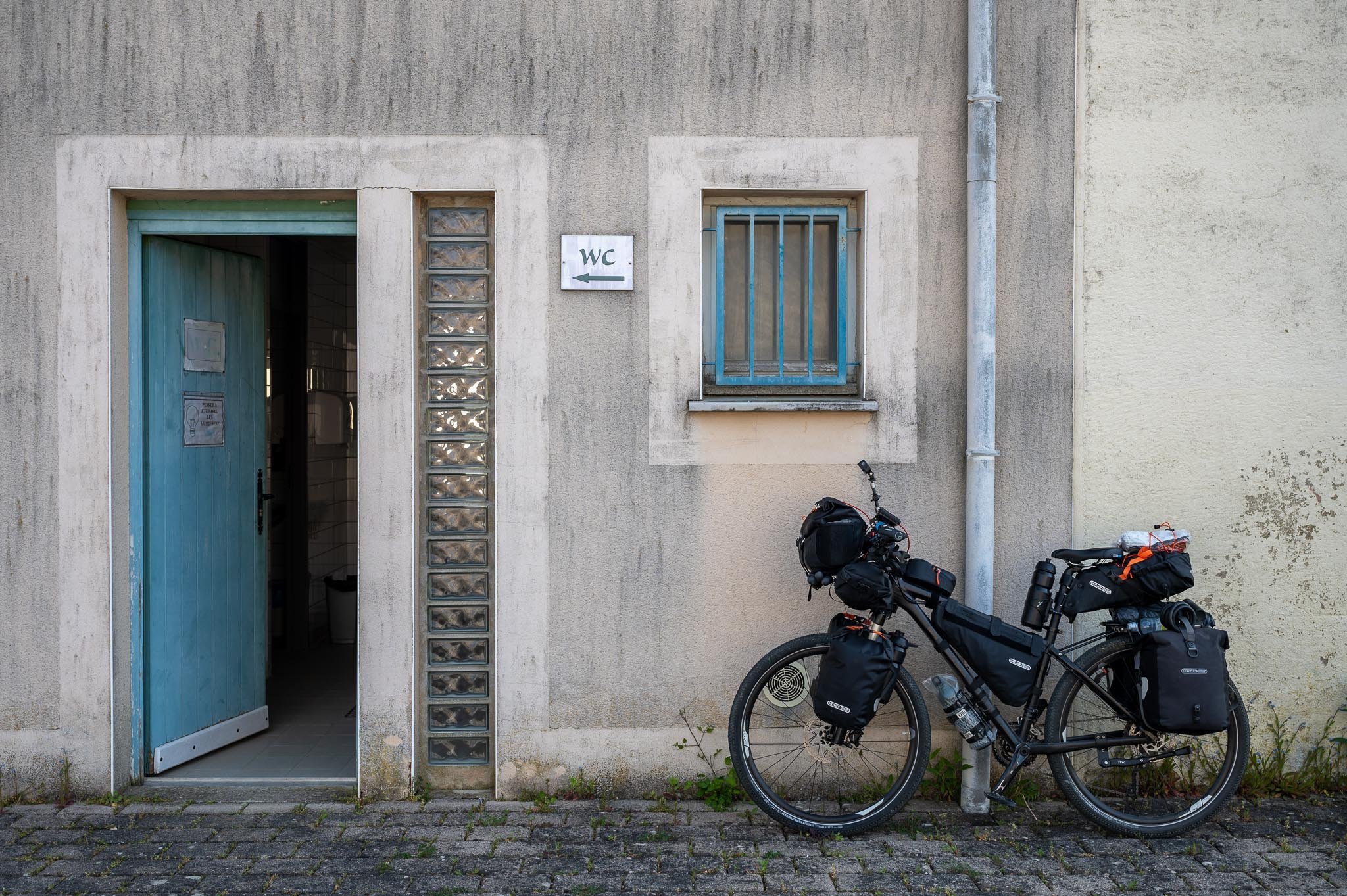
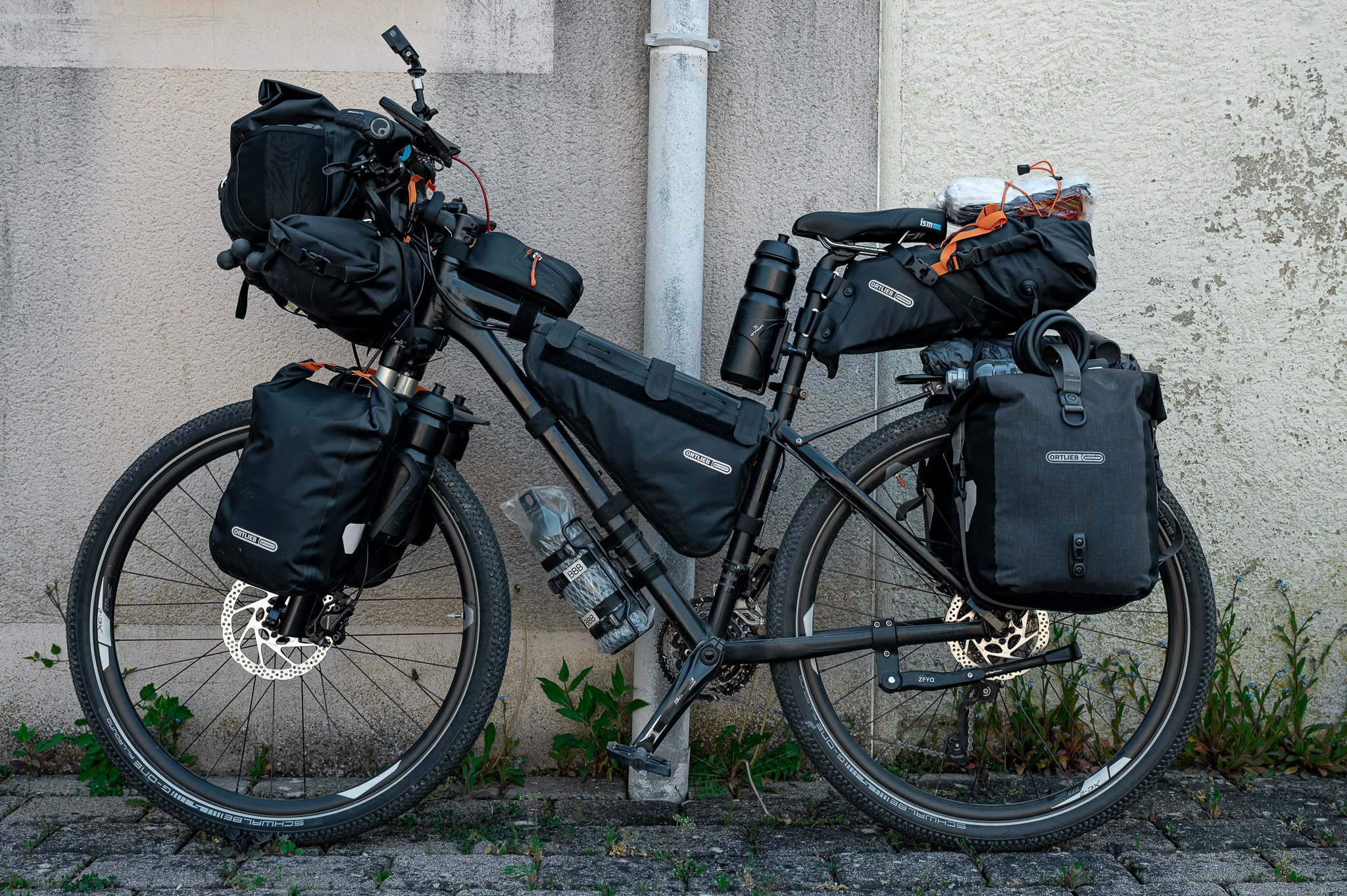
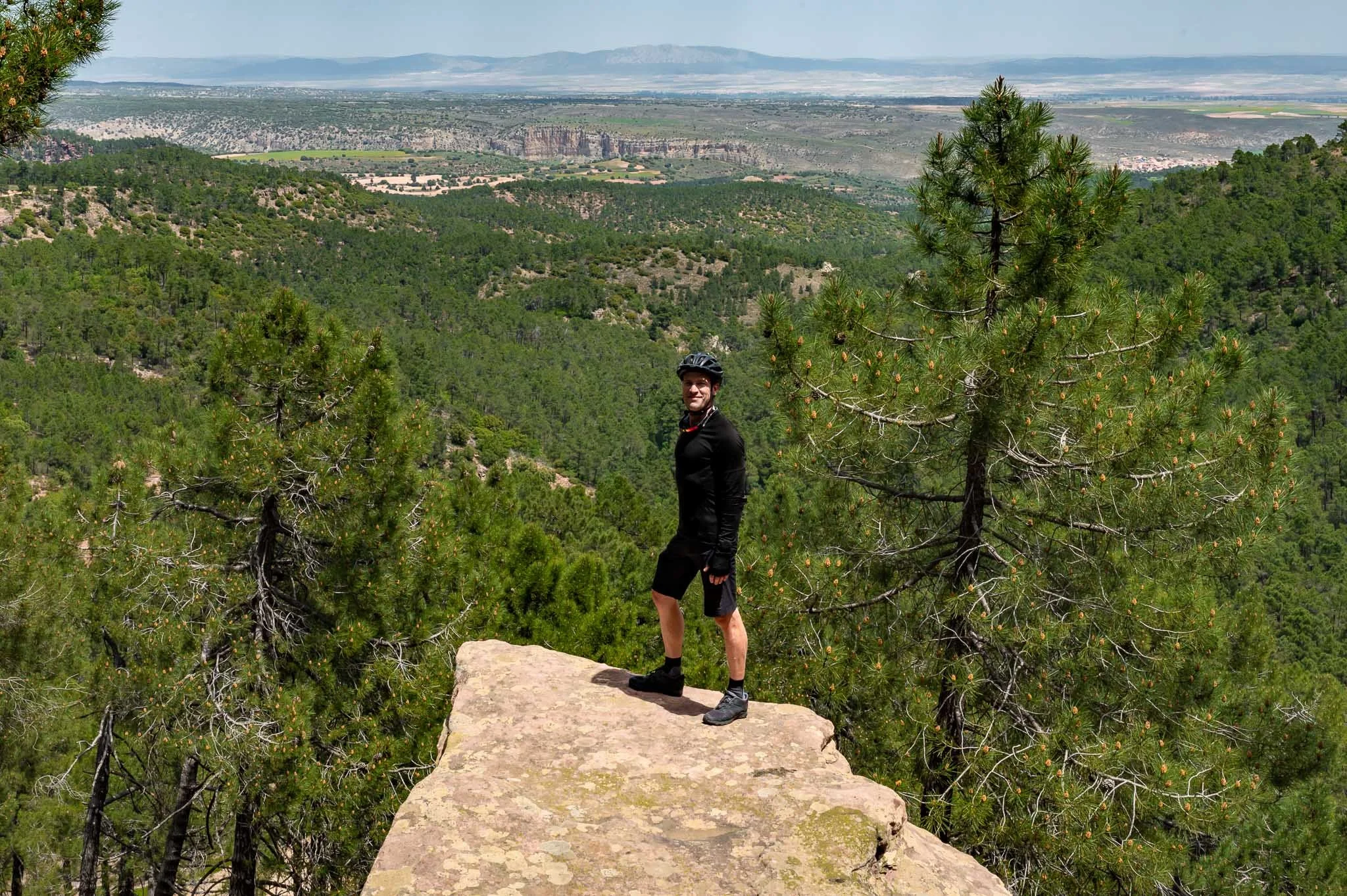
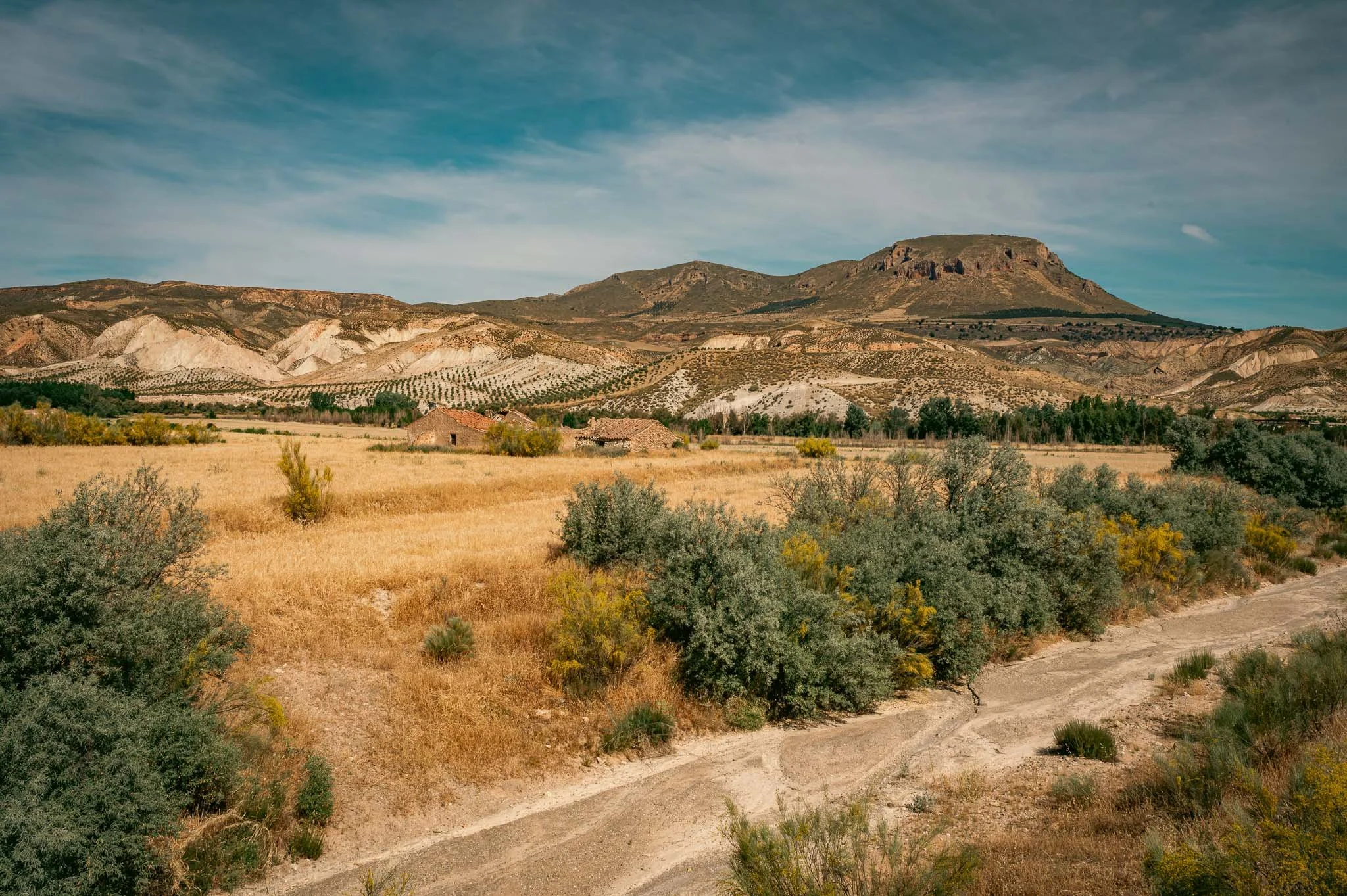
The daily rhythm of cycling and discovering new places has kept me busy, along with replanning my route and taking care of essential tasks like finding food, washing my clothes (the joy of wearing a freshly washed shirt for a full 5 minutes is truly rewarding), and bike maintenance. In the meantime, I have reached Cuenca, arriving here from Albarracín, a small town with medieval city walls in the hills of east-central Spain, to the northwest of Teruel. The area I passed through is known as the Montañas Vacías - the empty mountains -referring to the low population density, similar to Lapland or the Scottish Highlands. Yesterday, I spotted five large vultures, closely watching their territory from above.
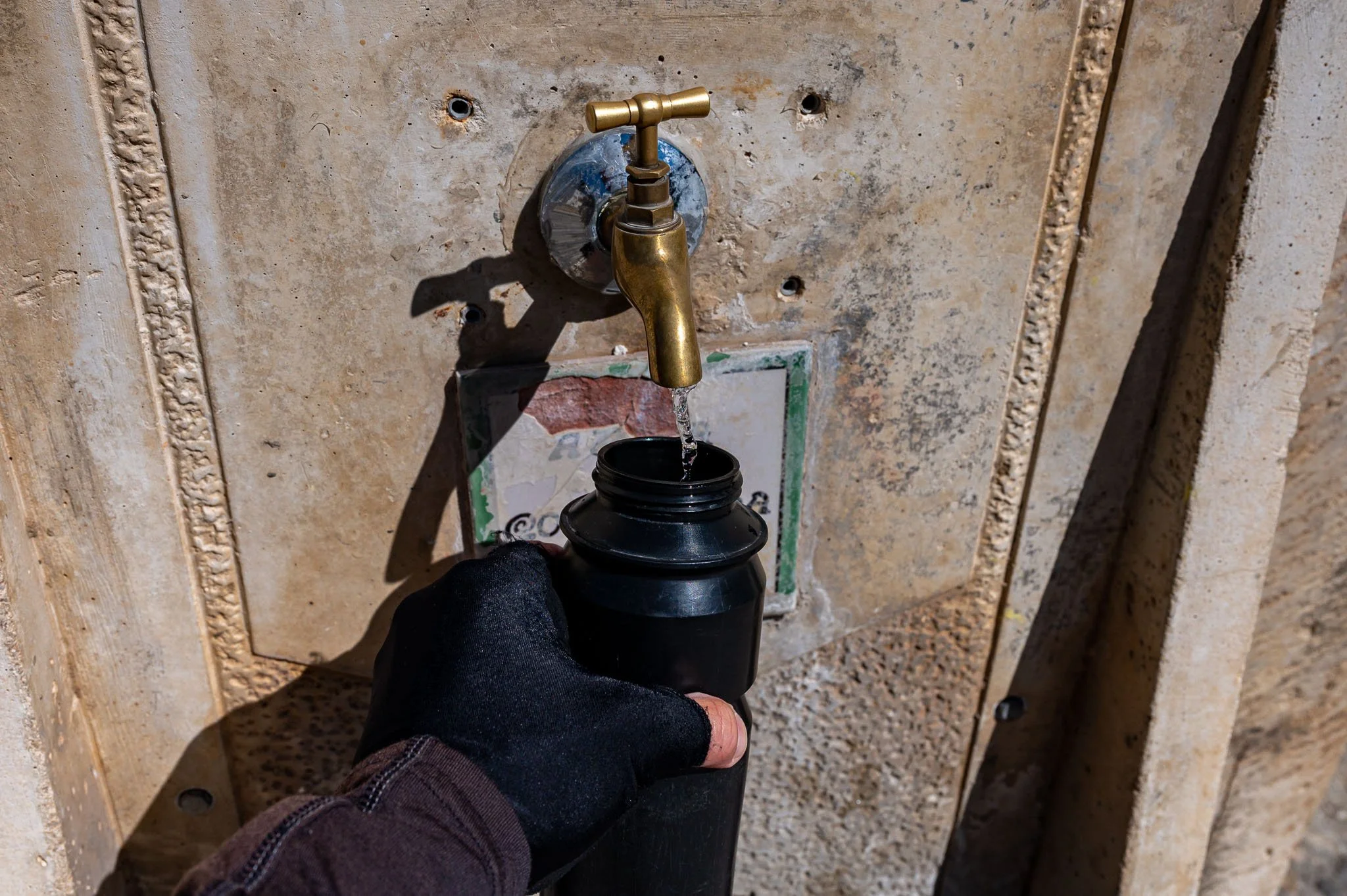
It's very hot. The only way to survive is by starting early, between 6-7 am (the cold, pre-sunrise rides are beautiful, with less harsh light), limiting my daily cycling distance, and ensuring I arrive at my destination by around 2 pm at the latest. And, most importantly, I make sure to refill my water bottles at every opportunity. I carry three large bottles, and in every village, my main priority is to look for the local 'fuente' - a water fountain with drinking water. I never leave a village without filling all my bottles in weather like this. Towns come back to life after 8 pm, and I've adapted to this (there's really no choice) by having evening meals after 9:30 pm.
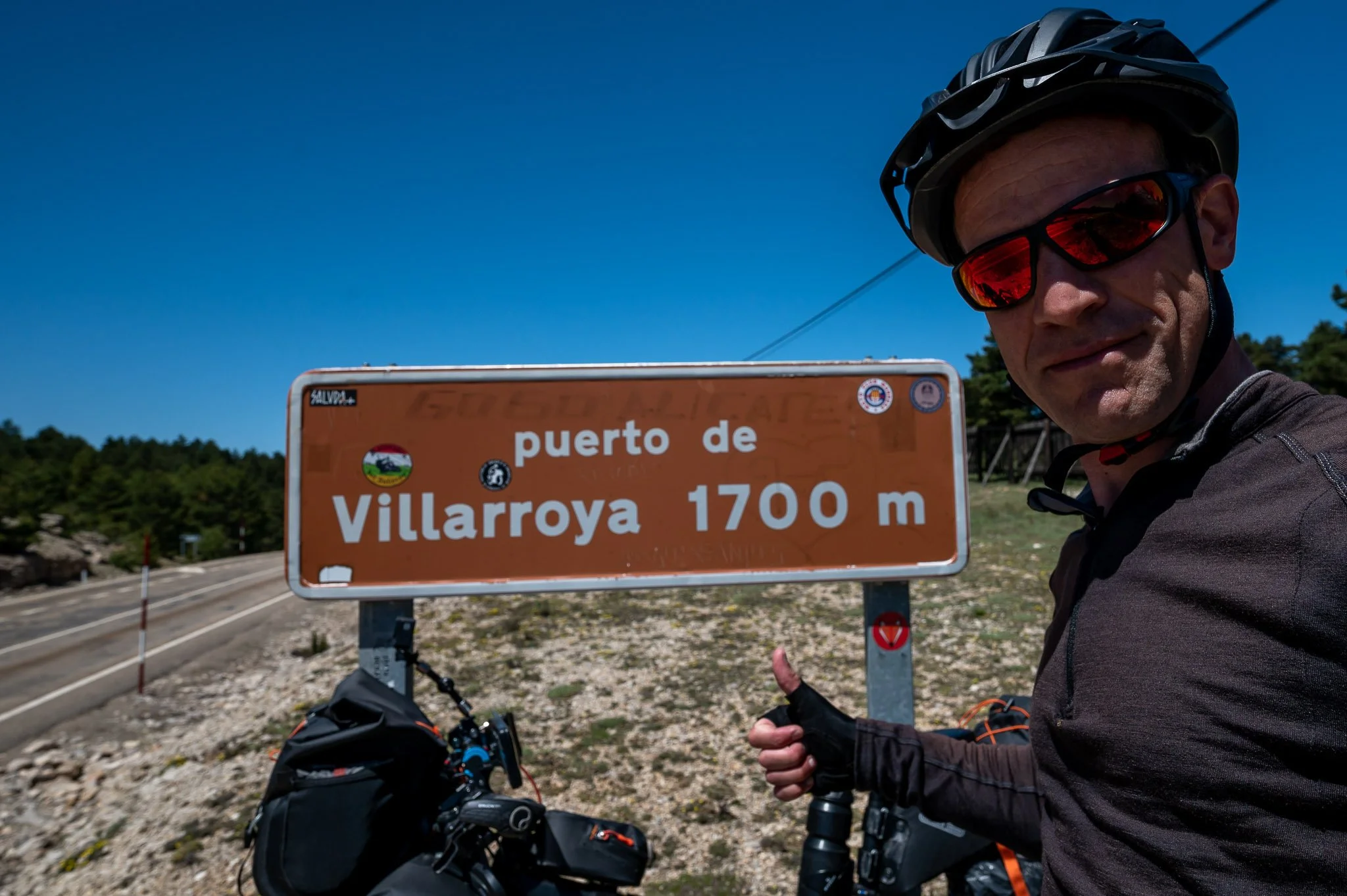
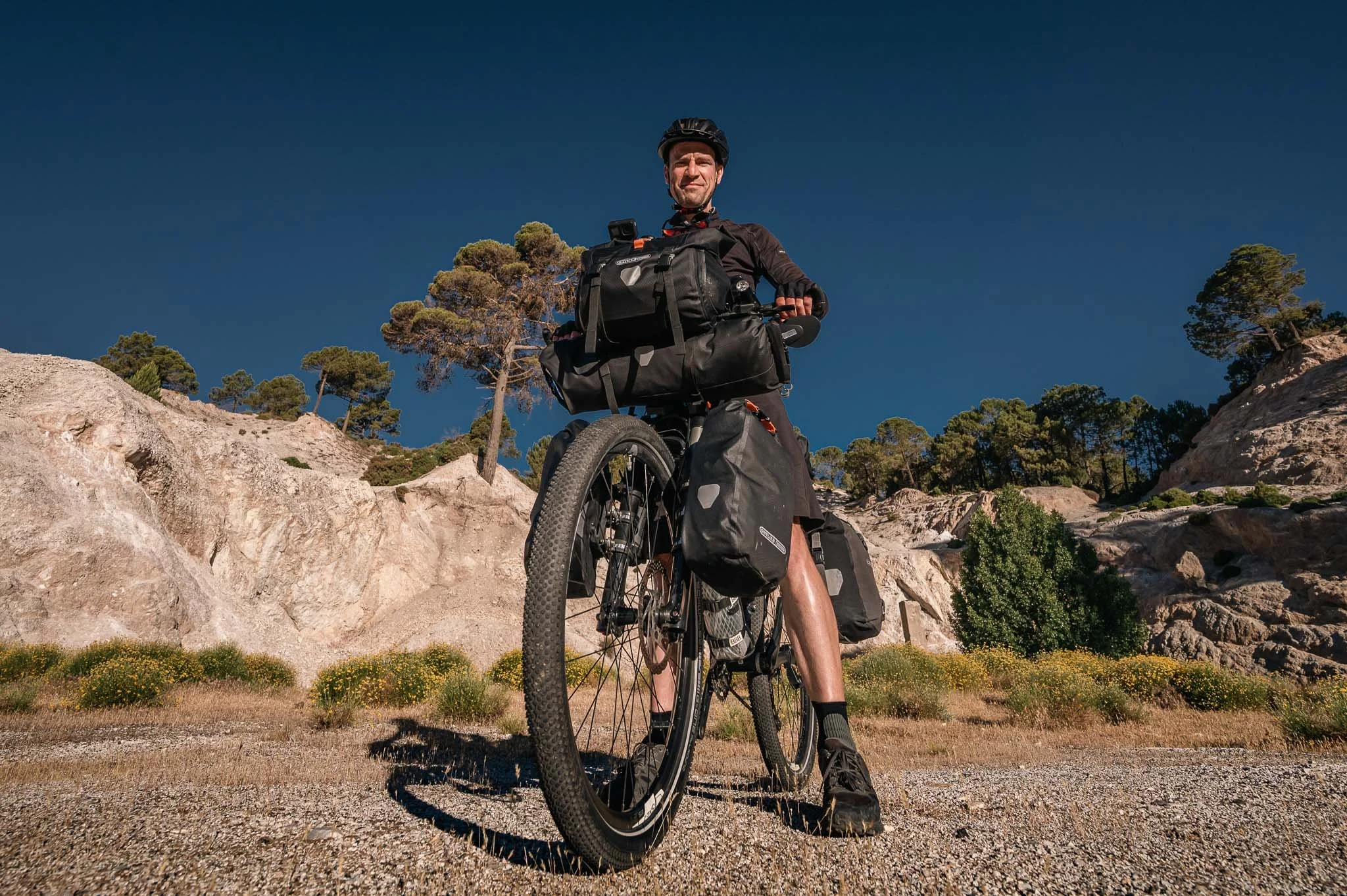
I'm now a full month into my journey and have cycled just over 2,500 km with almost 26,000 meters of elevation. The highest climb was to 1,700 meters of altitude, which brought me to desolate altiplano stretches with no shade. It's probably breakfast for experienced road cyclists, but it feels like quite an accomplishment with a well-loaded touring bike setup. Road cyclists look in total disbelief when they see me climb what they are descending.
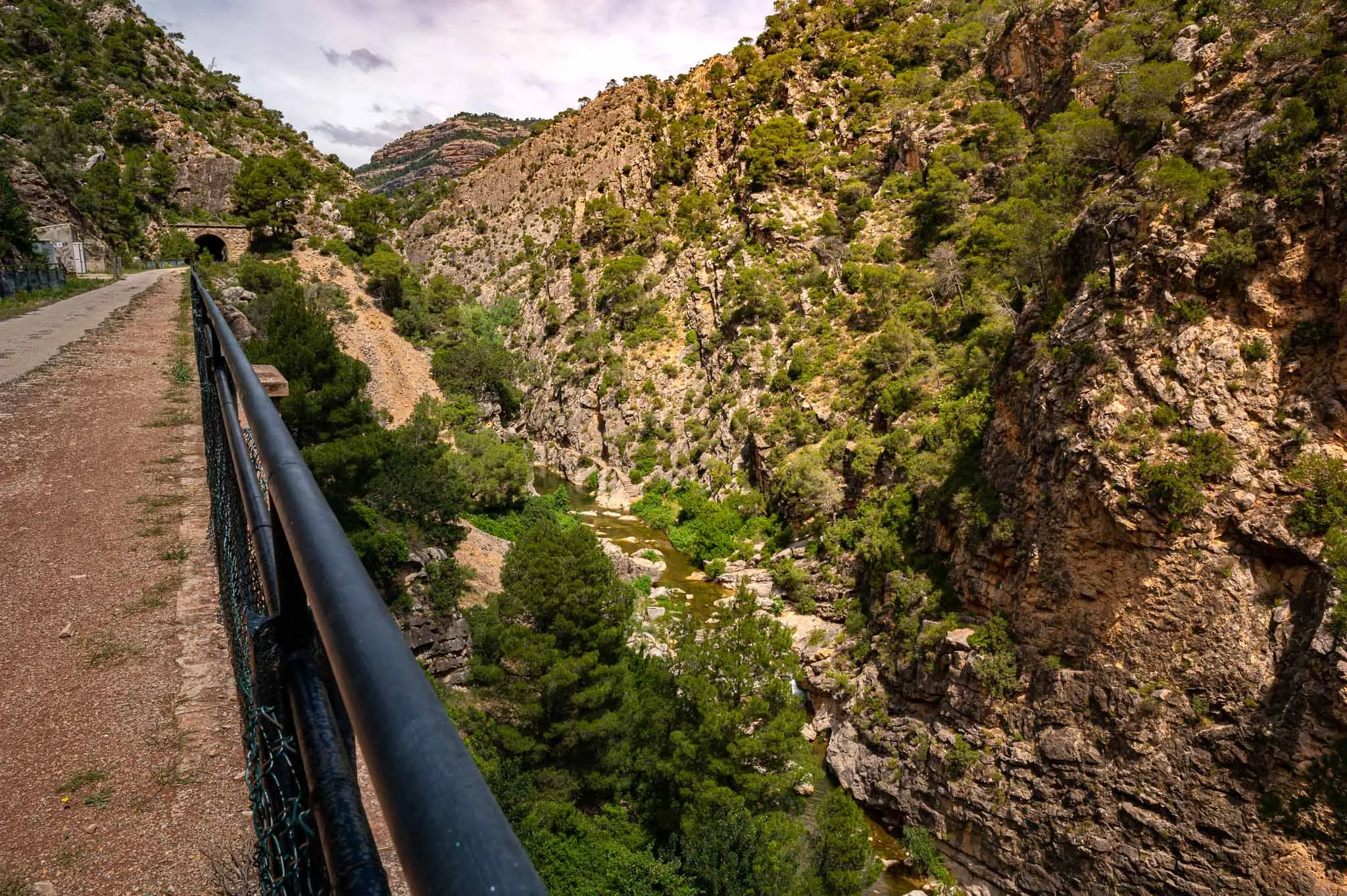
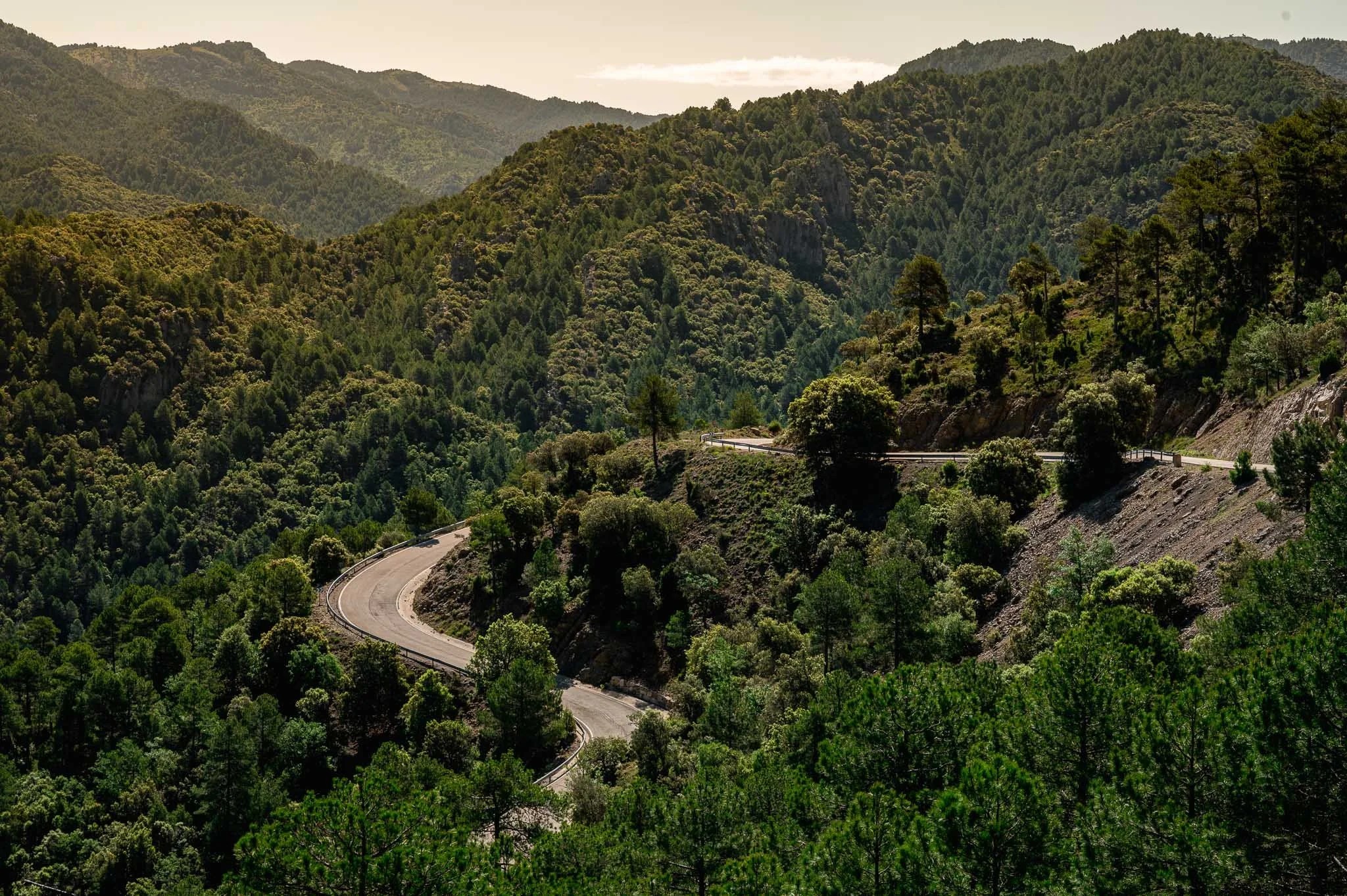
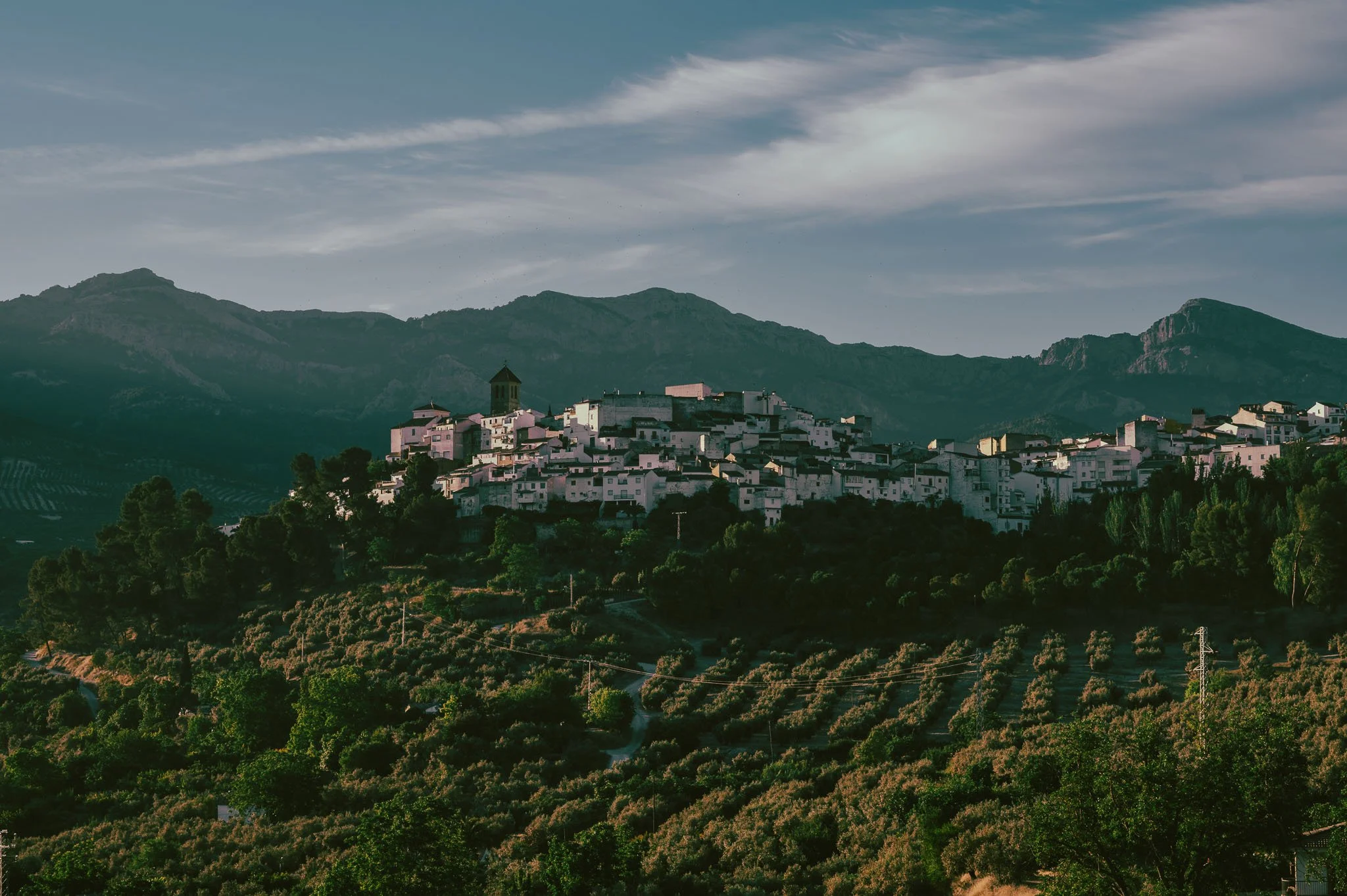
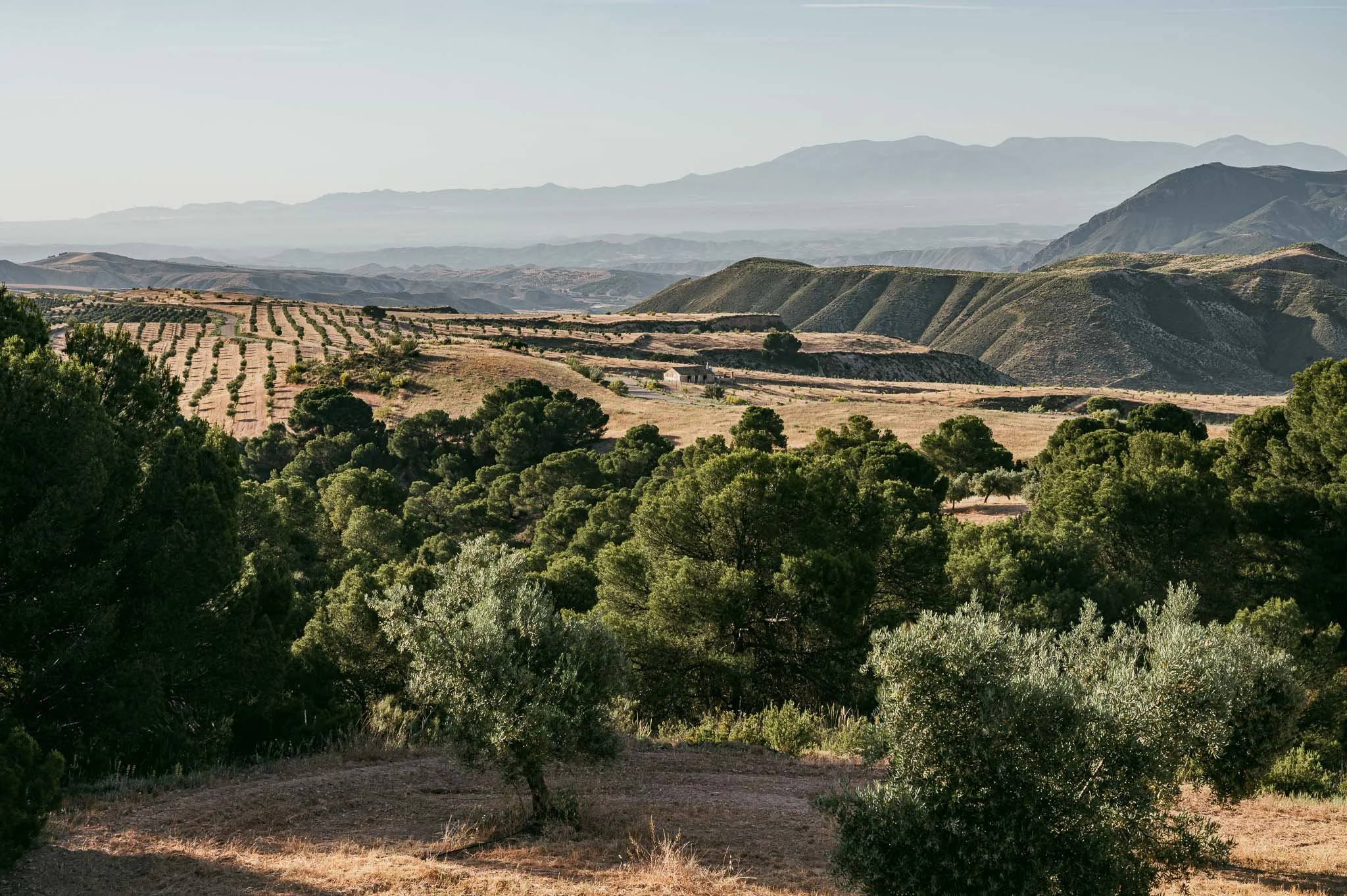
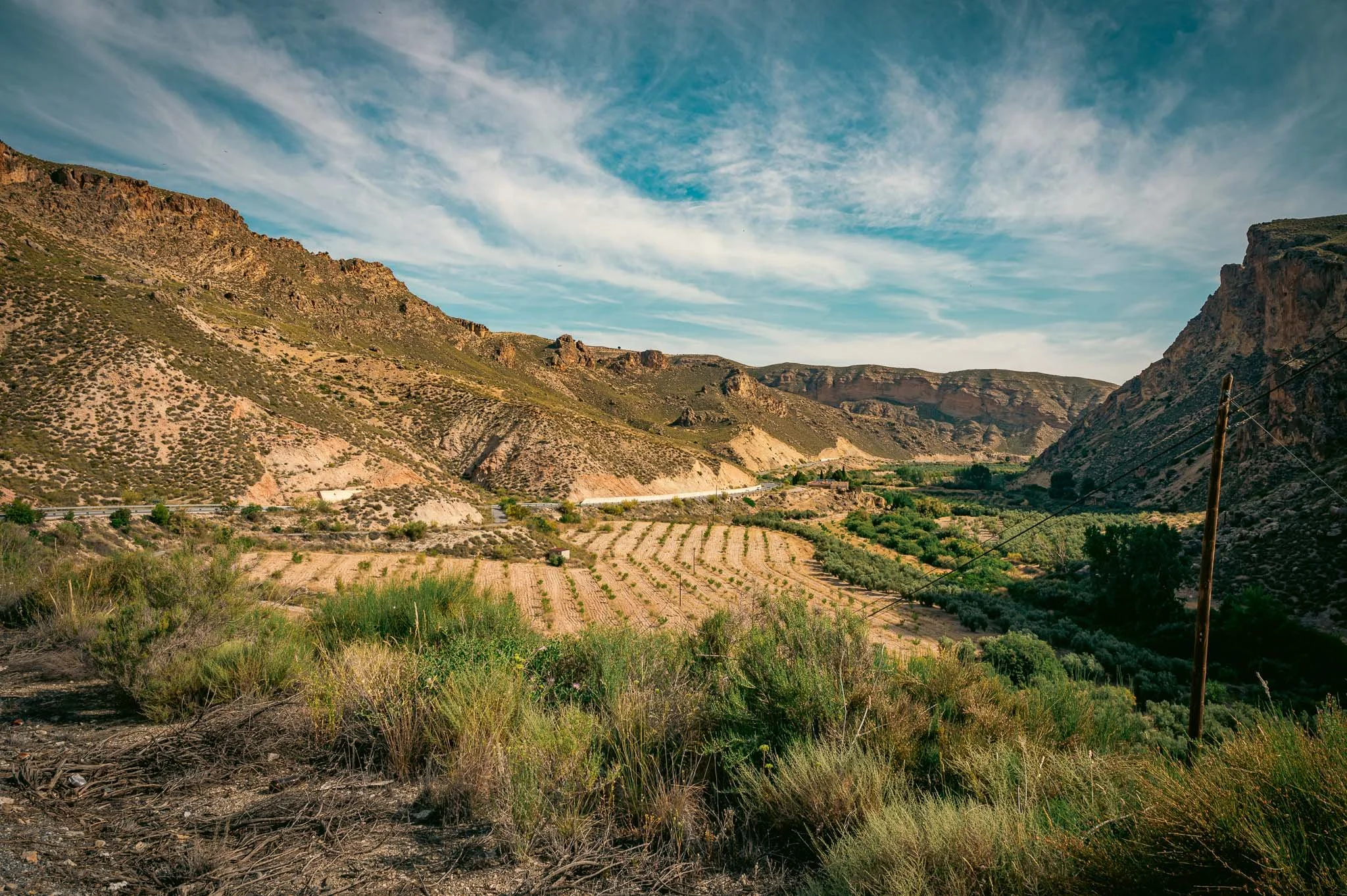
After crossing the Spanish border, my route led me from Girona inland through the impressive mountain ranges of Catalonia and Valencia, passing through beautiful, remote villages - places I didn't know anything about before starting this adventure. From here, I'll continue through the lower part of Don Quixote's La Mancha and enter Andalusia. From Seville, I’ll head into the Algarve region of Portugal to finally see some beaches again.
Overall, things are going well. I cycle up to 11 hours per day - although this has now been cut down for temperature reasons. I got a new set of tyres delivered in Teruel. Descents can reach speeds of up to 60 km/h, and braking combined with the heat wears out the tyres more quickly, especially at the rear.
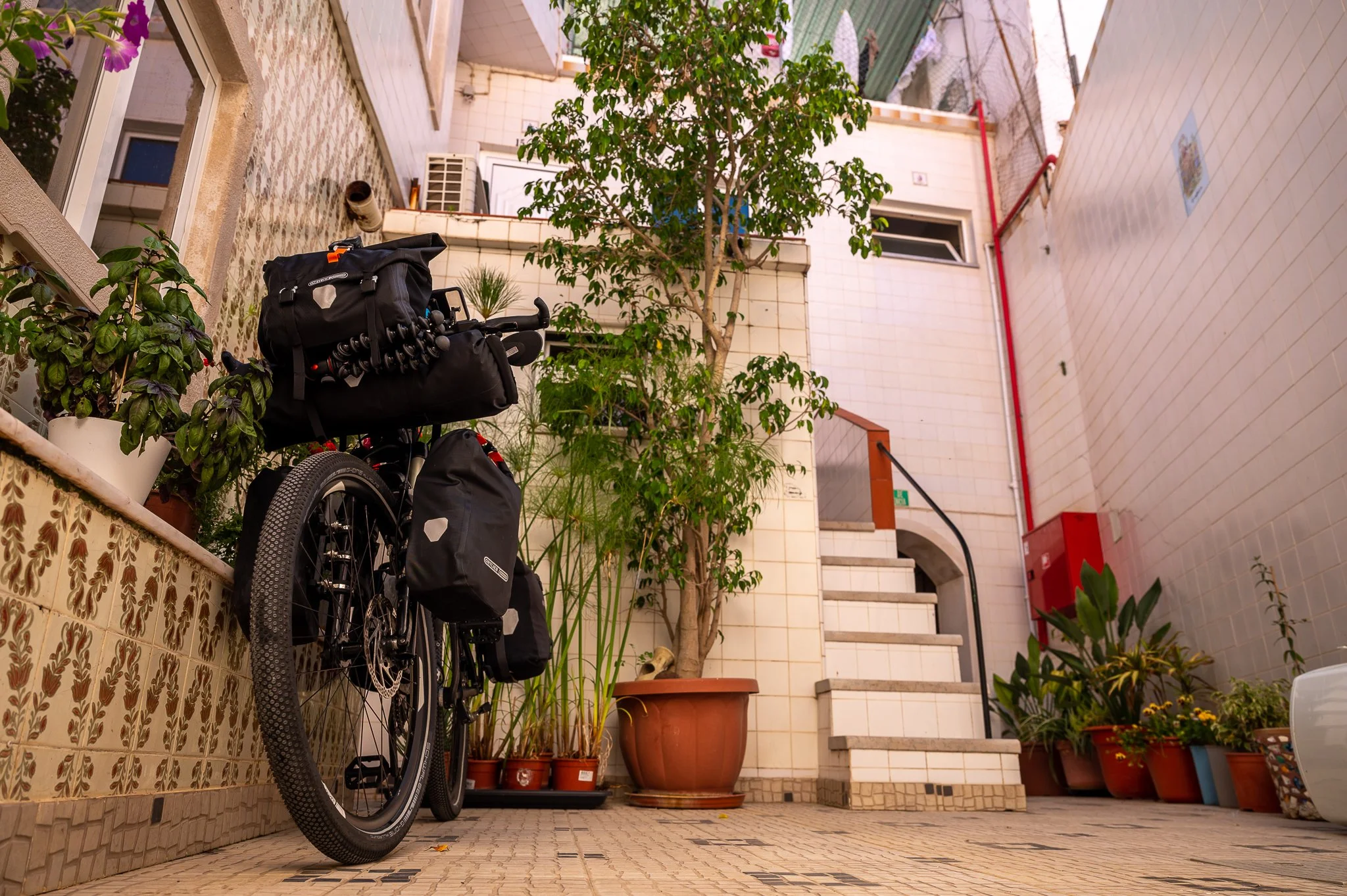
I’m doing a lot less camping than I hoped for. Campsites are sparse on my route, and some have simply not survived the past two years. ‘Hostals’ are a great alternative though and also much cooler. Spain is amazing, and the Spanish people are the most welcoming you can imagine. The food is incredible and very cheap. Aside from the occasional road cyclists on weekends, there are hardly any other bicycle tourists around, which makes riding a relatively lonely experience. I don’t mind that, but it’s something to consider for anyone planning a similar route.
I still have some distance to cover before reaching Portugal - probably another three weeks of cycling. I’ll probably pause there at some point and return later because temperatures will only continue to rise, making it unsafe to ride. Current weather conditions make it nearly impossible to ride, especially with rides involving multiple climbs up to 1,000 meters of elevation. The best way to survive is to start cycling at sunrise, around 6:30 am, and make sure to reach my (or any) destination by midday. After that, it’s all about finding shade for at least the next 8 hours. At 6 pm today, it was still 42°C in the full sun. Temperatures are expected to drop slightly later this week, so I’m rethinking my route and diverting to the coastline where temperatures are more bearable. I'm just not a big fan of coastal rides.
Other than that, the route and views are still amazing, as are the Spanish. One day, I stopped briefly to find five minutes of shade, and immediately someone approached me and pointed me to a nearby water point where I could refill my water bottles. At a local Decathlon store in my destination, they allowed me and my bike in, and I enjoyed 30 minutes of air-conditioned happiness. Reality hit hard once I stepped back outside.
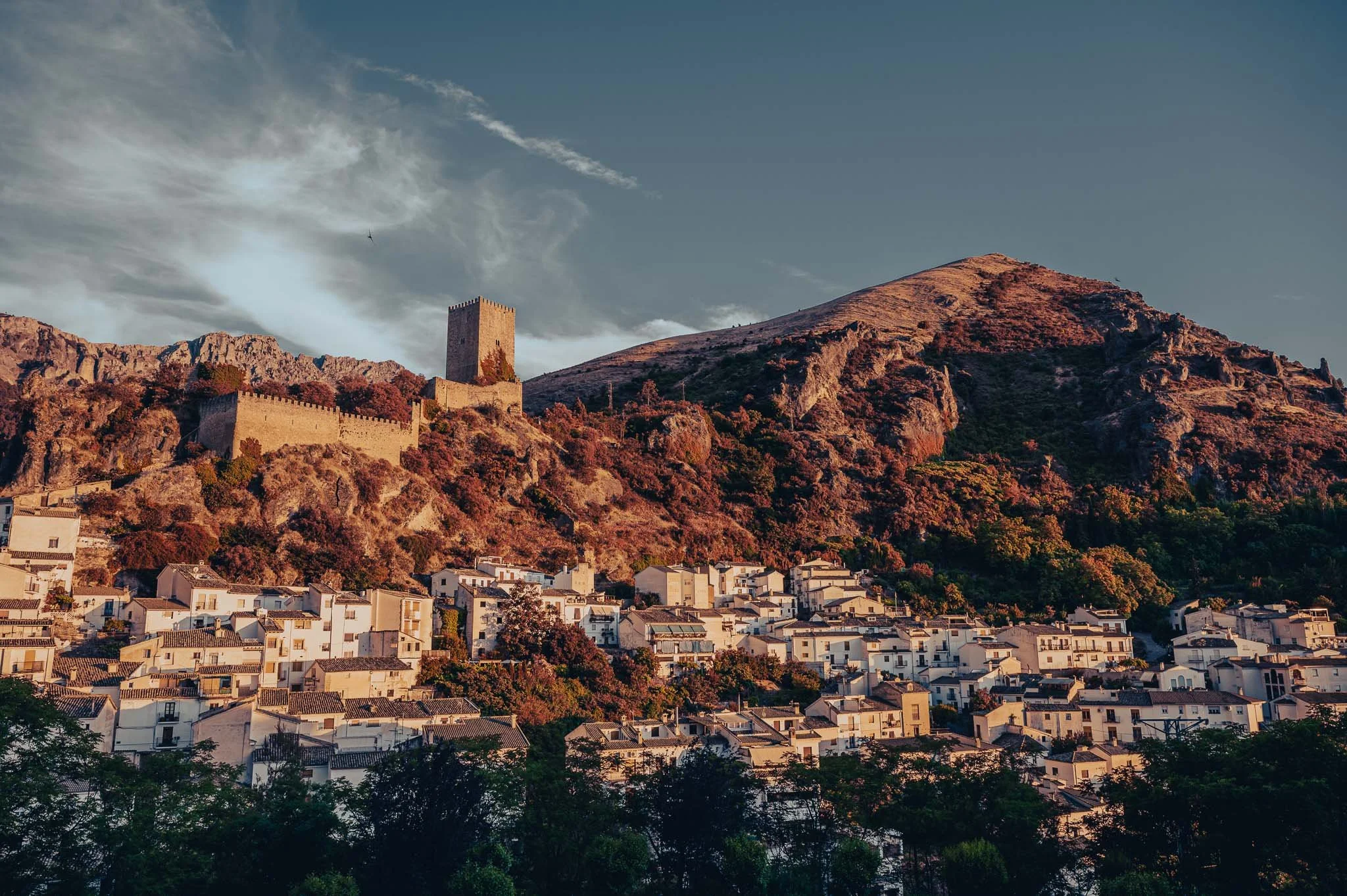
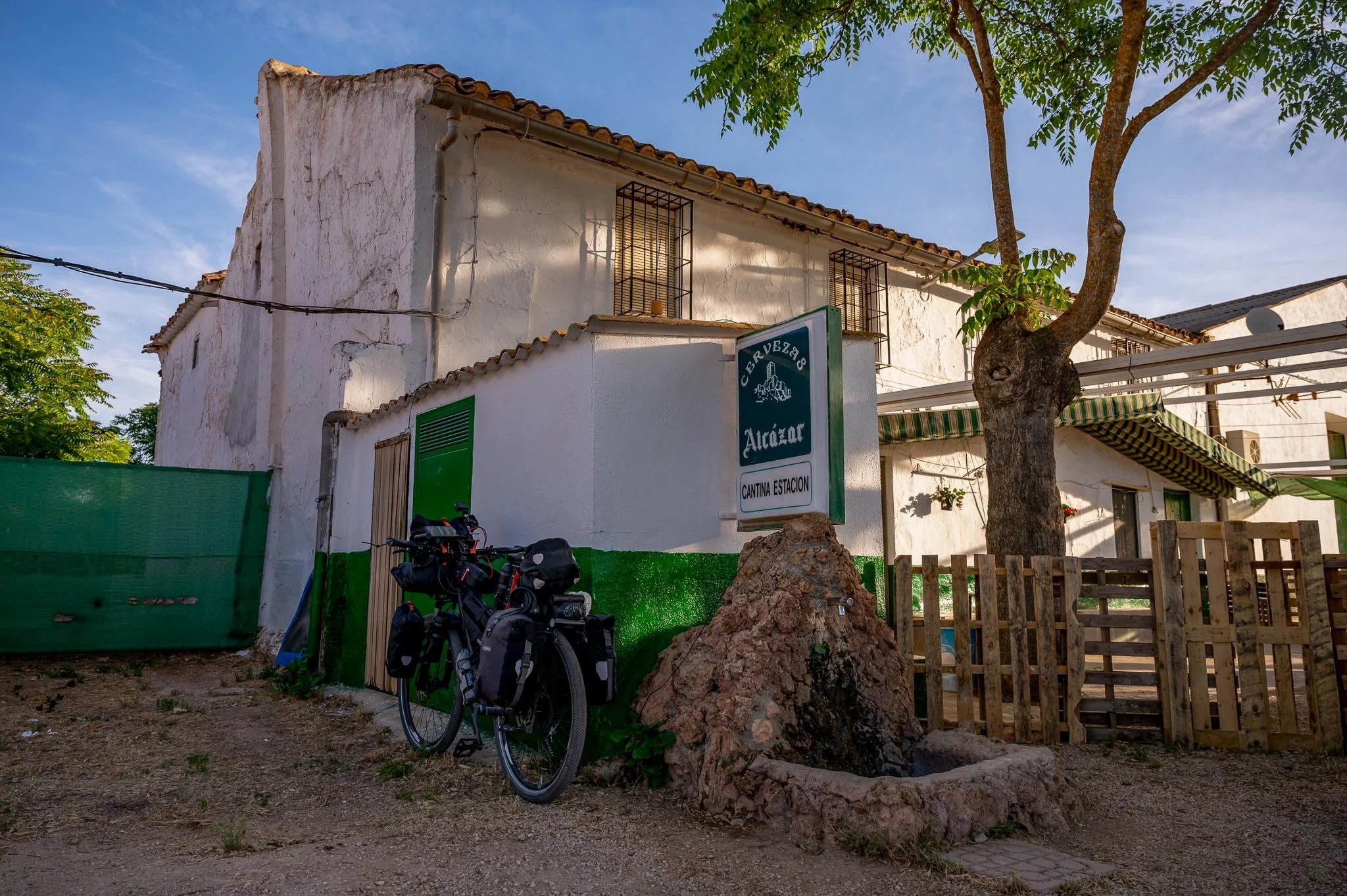
It’s still dark when I leave my ‘hostal’ in Cazorla. The owner is kind enough to wake up early to unlock the garage where my bike is stored. After my first descent and halfway down my first climb this morning, the first glimpses of sunlight appear from behind the mountains. The supermercado in Quesada is still closed, and I decide to make a stop in Huesa, the next town on my route. My destination for the day is Estación Cabra del Santo Cristo, a place with just a train station and a campground - the only option on my route to Purullena, so I need to stock up on food and refill my water bottles.
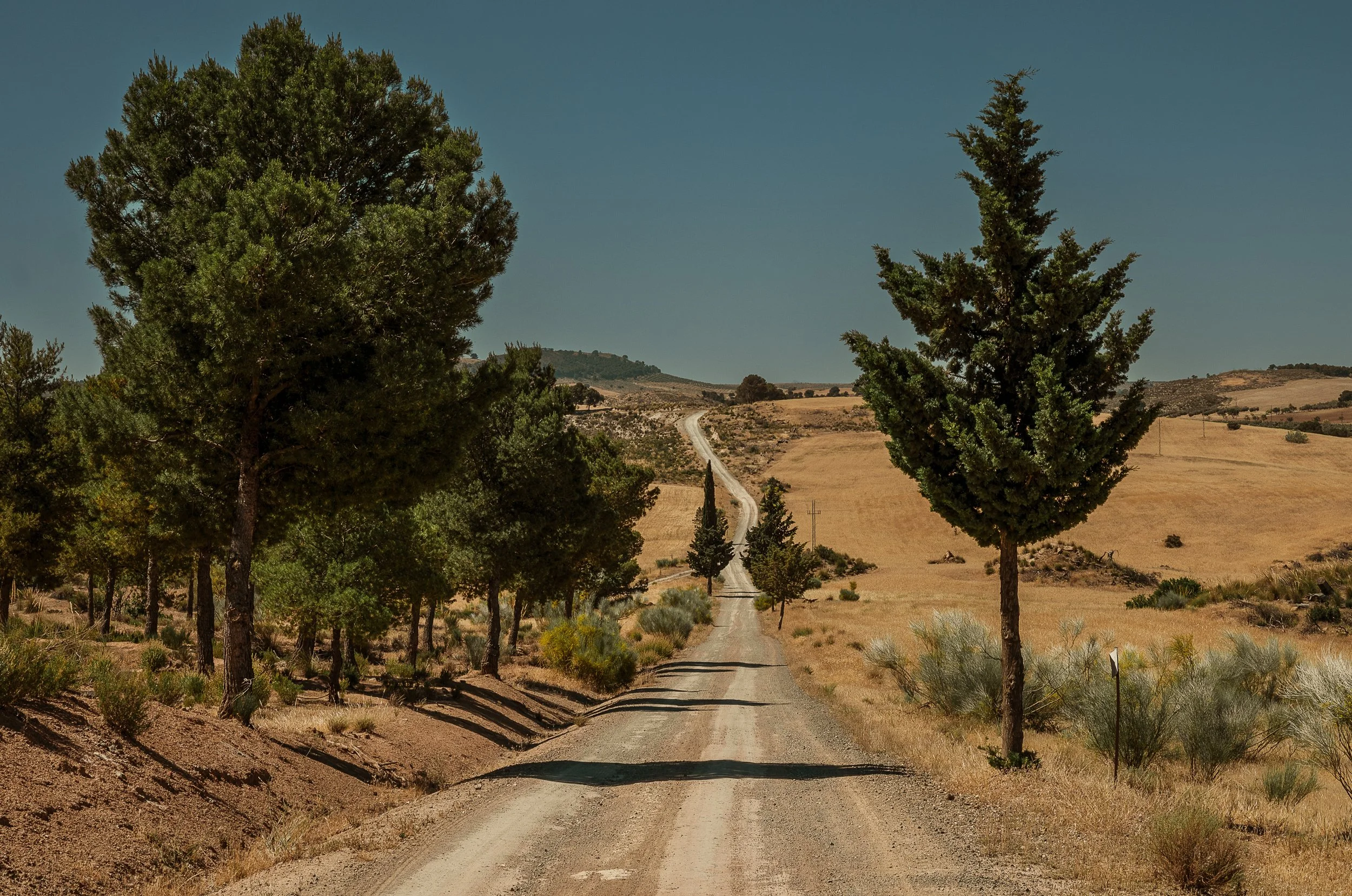
After Huesa lies a rough, steep off-road section, which turns out to be even more challenging than I expected. The stray dogs in the area are barely alive, and the dark look in their eyes scares me as if they are long dead.
The further south I ride, the hotter and drier it gets. The heat is unbearable, and I start to worry as I see my water supply rapidly decreasing. At 1:30 pm, I finally reach the campsite, but the gates are closed, and there’s no one around for miles. My water bottles are empty. It's 31°C, and it's getting hotter. I try the abandoned train station to find water but have no luck. The one train that stops here has long gone. There are a few houses and some fairground vehicles that often find their temporary home in deserted places like this. I spot a woman coming from one of the trailers, and when I ask for water, she points me to a tap hidden under a tree against the wall of an abandoned cafeteria. The water is cold, and I refill my bottles, relieved to have one less thing to worry about.
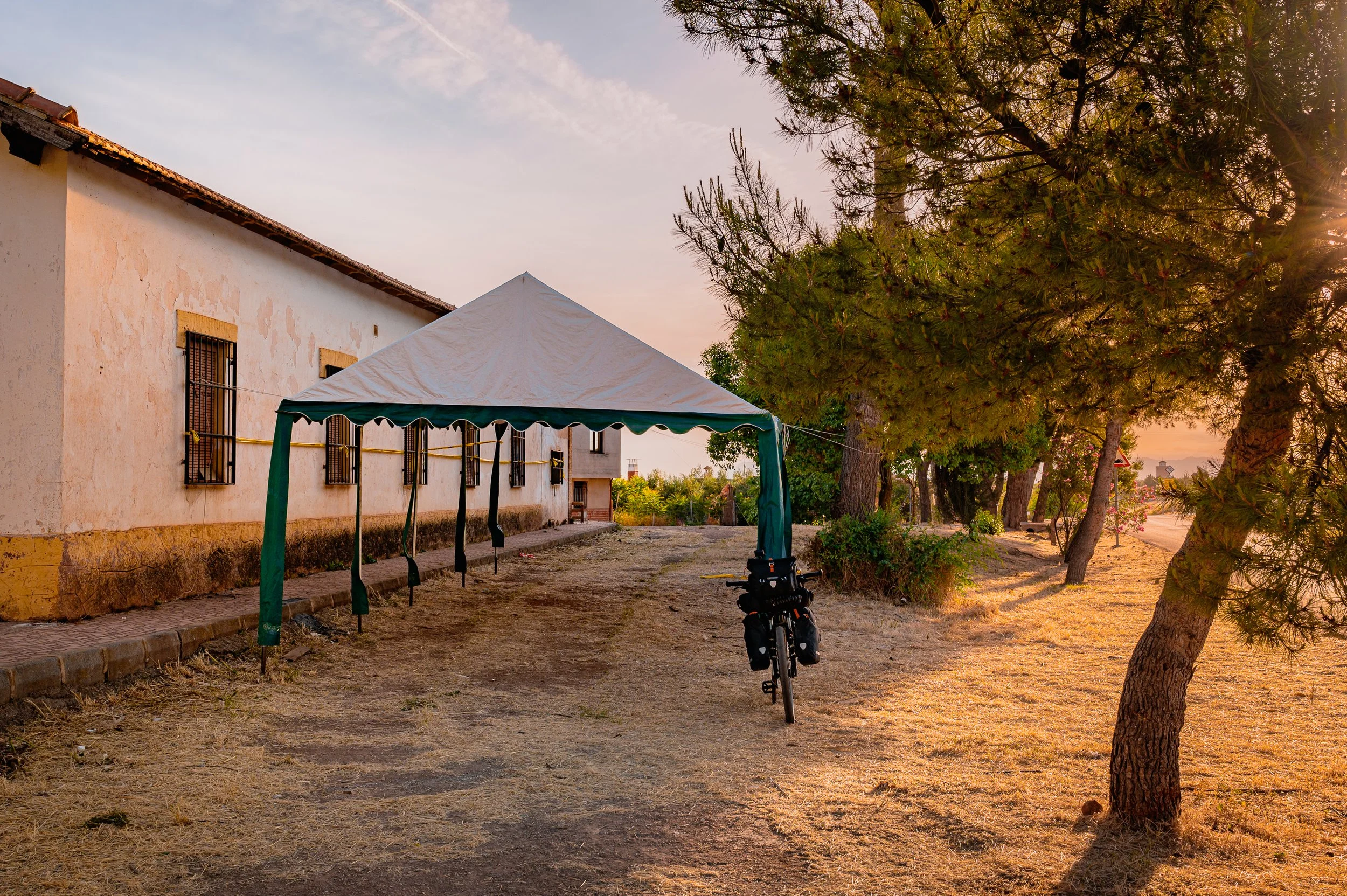
In front of the empty building opposite the train station, next to the main road, there’s a party tent creating a bit of shade. I later learn it's left behind from a cattle market, and I decide to pitch my tent underneath it and rest. There's no way I can continue the ride, so I might as well stay here for the night. With the supplies I got in Huesa and the fresh tap water, I manage to prepare a simple evening meal. In the end, the only thing I do miss is having a shower to rinse off the dust and sweat.
After a relatively good night's sleep, I continue my ride to Purullena, at the foot of Sierra Nevada. There's just a tiny bit of eternal snow left on the mountain slopes, and when I enter the village, I recognize the cave houses the place is known for. It’s a great sight, and I feel slightly bad that the one thing I look forward to is the shower in my ‘hostal’. Purullena is just another stopover, with a relatively short and beautiful ride to Granada, where I arrive the next day after being rewarded with a 30 km long, smooth descent straight into town. It feels good to be back in a more populated area, although I have to get used to the loud city noises again, having spent most of the past weeks in smaller villages. There will be more villages to come as I leave for Seville tomorrow. In the meantime, I stay alert for updates on the forest fires currently ravaging the south of Spain. Although I don’t plan to cross the area, I’m hoping my #GiantDetour route won’t be affected.
Seville
The streets of Seville start to come to life when I enter the city after exactly 50 days of cycling (42 net cycling days) since starting my bike ride from the Netherlands. After another early start at 5 am this morning, I decide to make a stop for a second breakfast at a local coffee shop. My daily intake of Napolitanas - Spain's equivalent of French chocolate croissants - is slightly worrying. They are rich and sweet and go so well with my deep love for Cortados, strong black coffee. I count myself lucky to burn around 4,000 calories per day and take another bite.
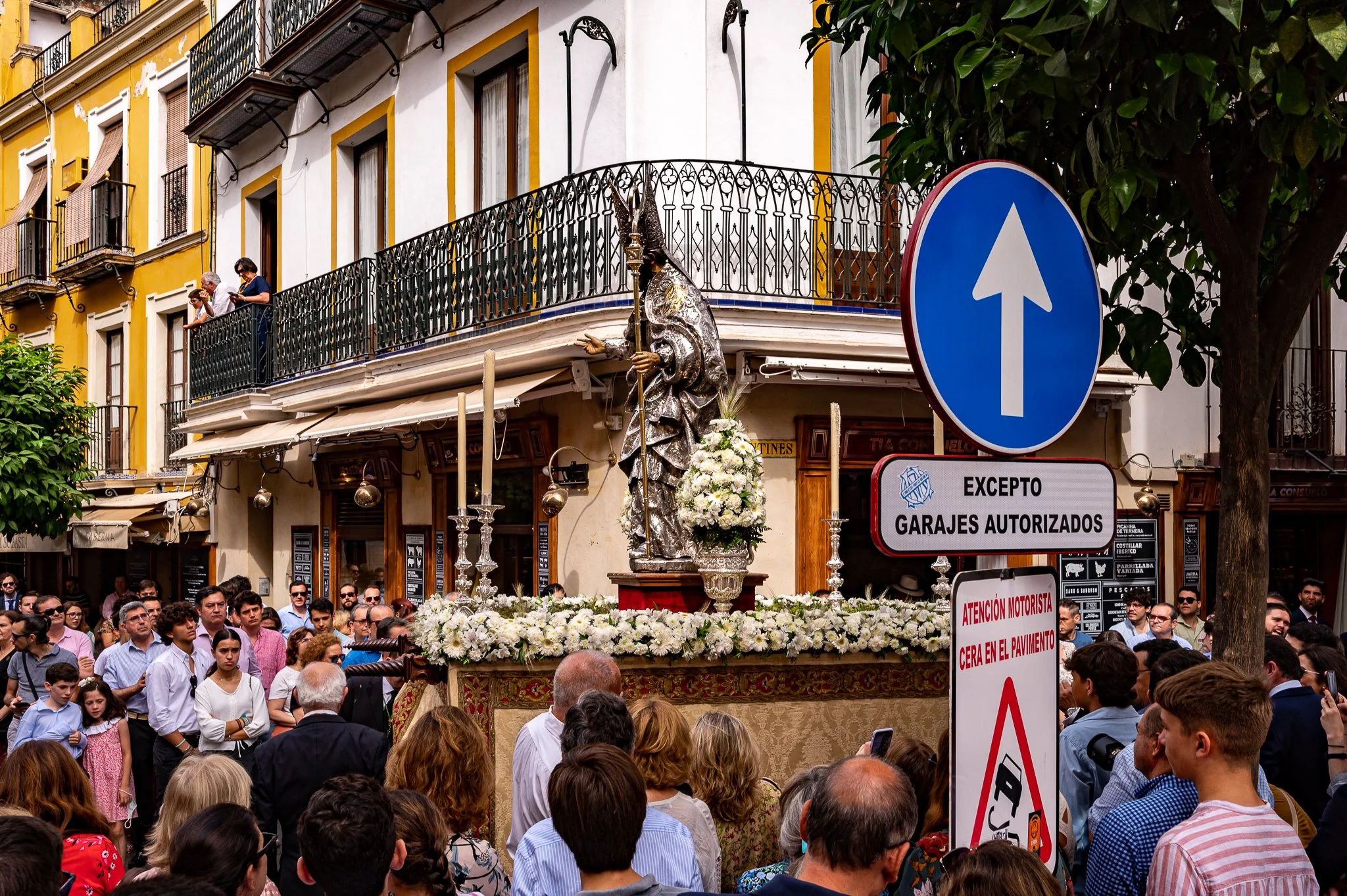
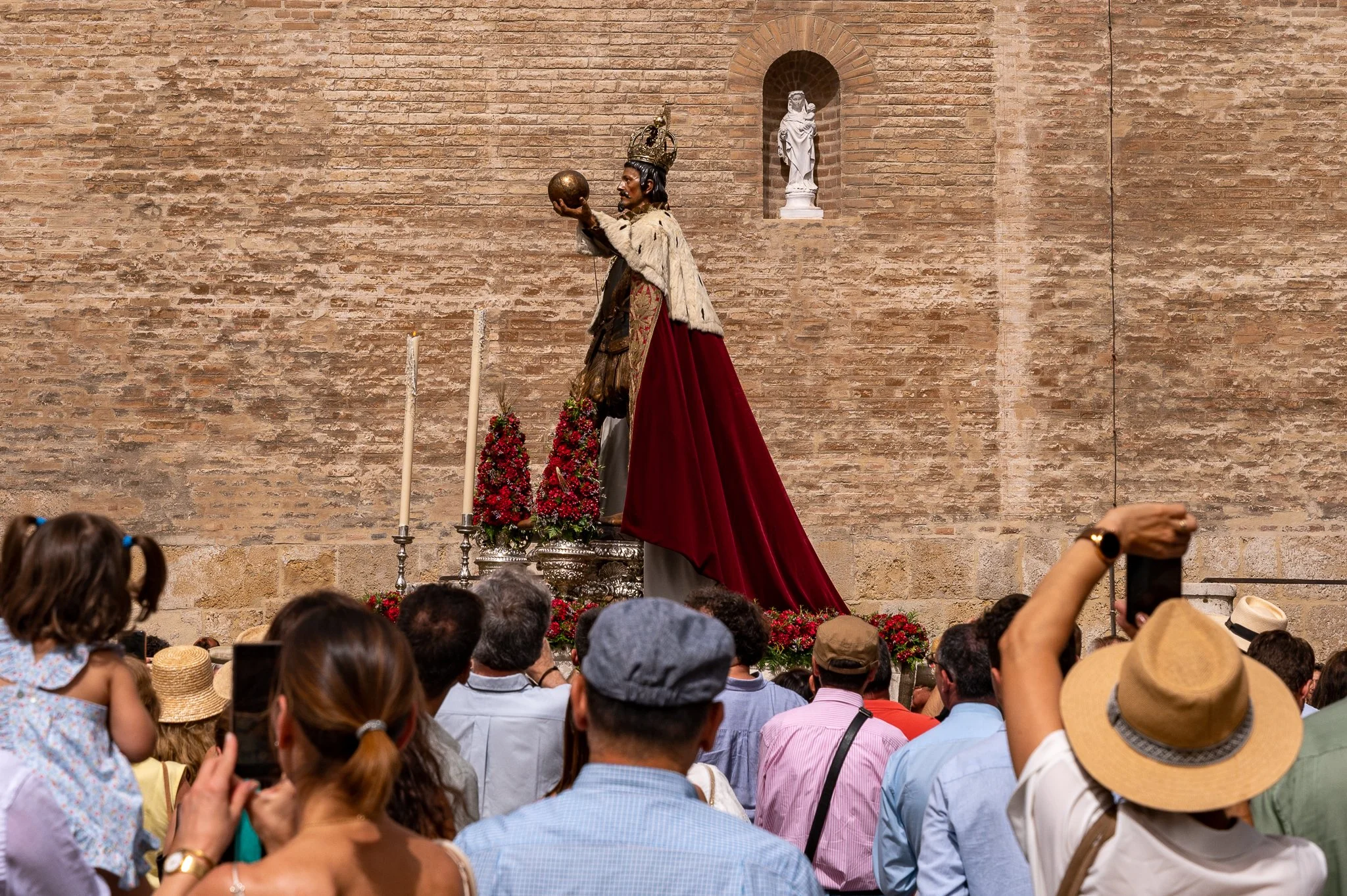
Today is one of the most important days of the year in Seville, as the city celebrates Corpus Christi, a religious festival dedicated to the sacrament of the Eucharist. The festivities involve a huge procession in the Cathedral area, and the streets fill up quickly. At the Setas de Sevilla, a large wooden umbrella and one of Seville's well-known landmarks, it is still relatively quiet, making it a perfect photo spot to capture my arrival.
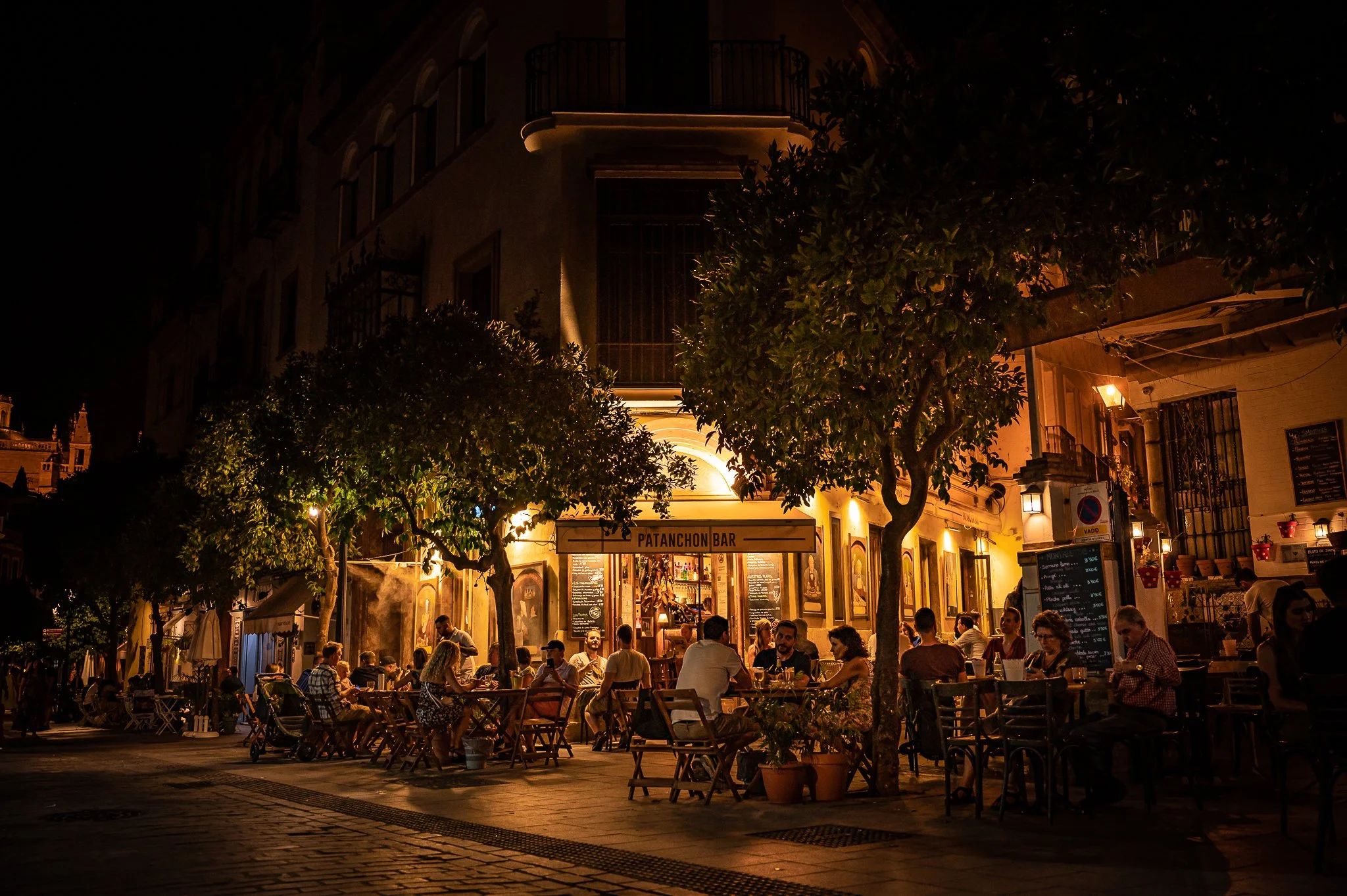
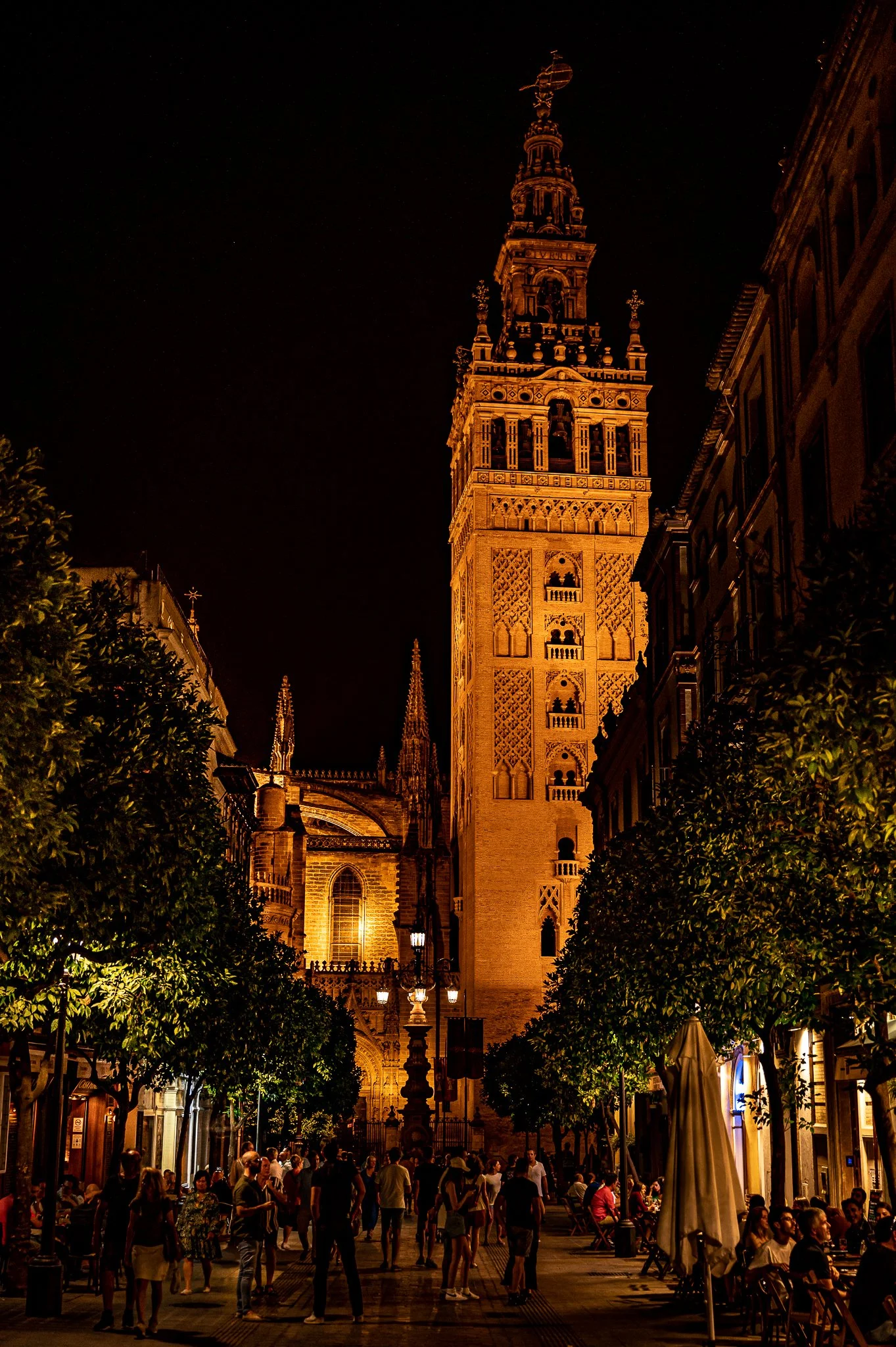
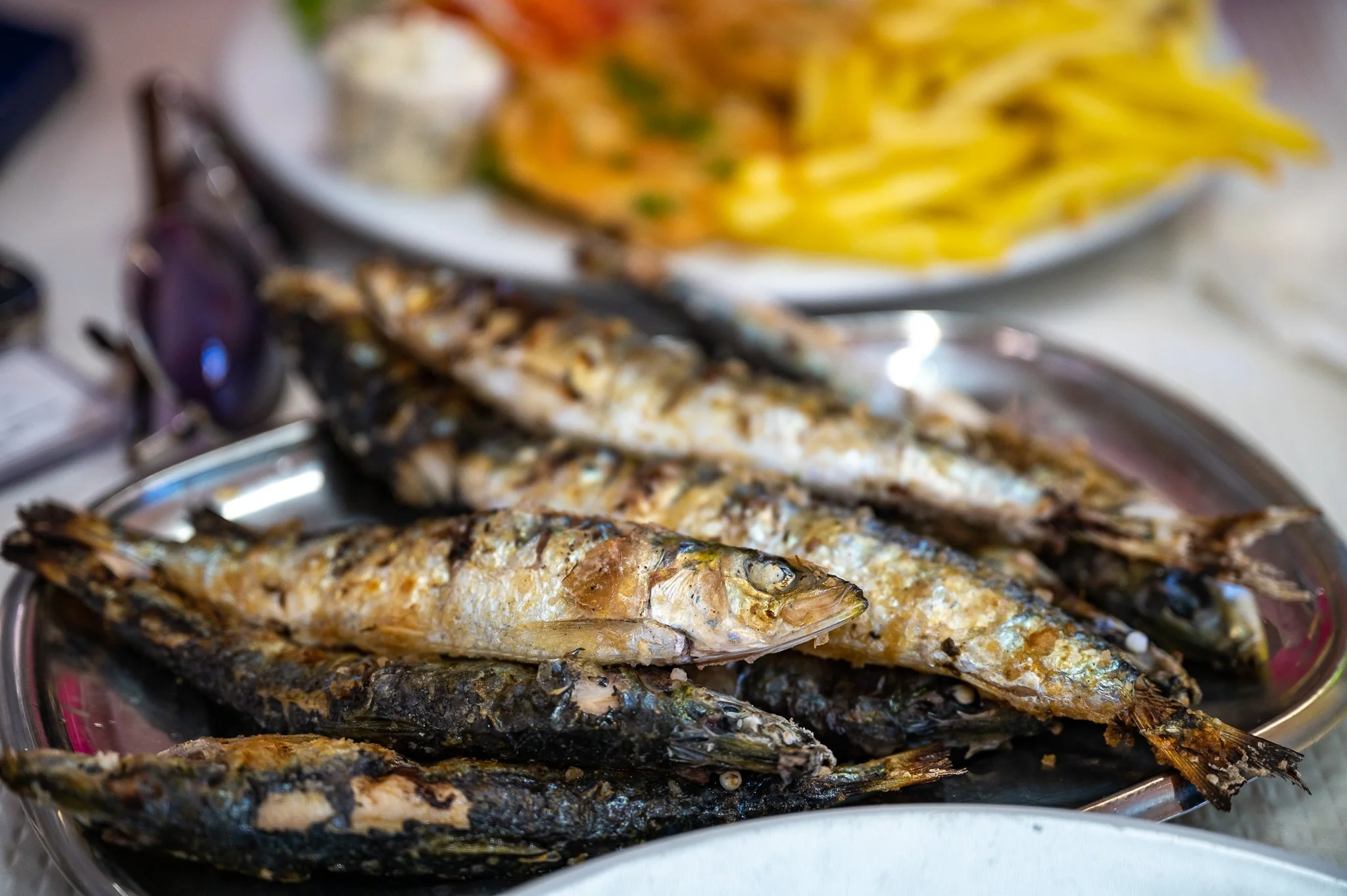
I love this place and could easily live here. Although it’s very hot during the day, the mornings and evenings are really pleasant for a stroll or bike ride. Like in other towns, electric scooters have found their way here as well, and it’s especially admirable to see how their female riders have developed a skill to gracefully balance their scooters over the cobbled streets. As soon as the sun starts to set slowly and people leave their houses again, Seville turns into an endless food fest. There’s food on every corner of the street, and even more in between those corners. During our last visit here in December, I fell completely in love with the tapas at Patachón in the Jewish quarter, literally a stone’s throw from the Cathedral of Seville. Although this area is filled with tourists, locals frequent the place as well. Comida para los Dioses - food for the gods, especially the Sardinas Ahumadas. Never leave Seville without trying those! Also, the seductive sweetness of the roasted garlic covering the Solomillo al whiskey makes a visit more than worth it.
I probably could have gotten here faster, in lower temperatures, but I had no reason to. My journeys are not about speed. And they shouldn’t be; there are simply too many things to enjoy along the way. Spain has immensely impressed me with its amazing scenery and endless rock formations. I’m blown away by the beauty of the country, and every turn in the road brought a surprise. The climbs can be fierce, but they’re worth every meter of elevation. Moreover, the friendliness and welcoming spirit of the Spanish have been a breath of fresh air, especially their effort to provide me with a secure place for my bike every single time.
The Algarve Region
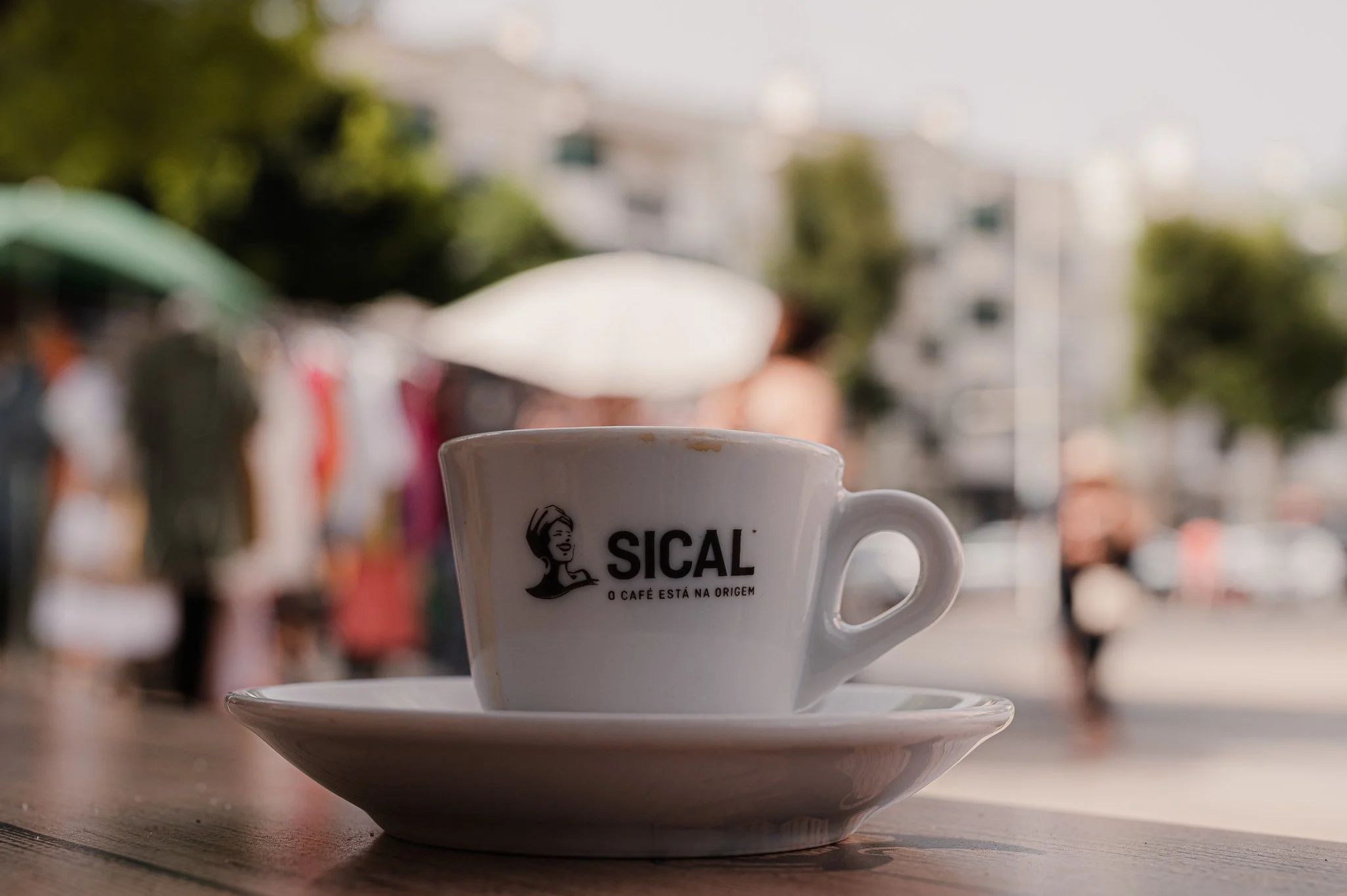
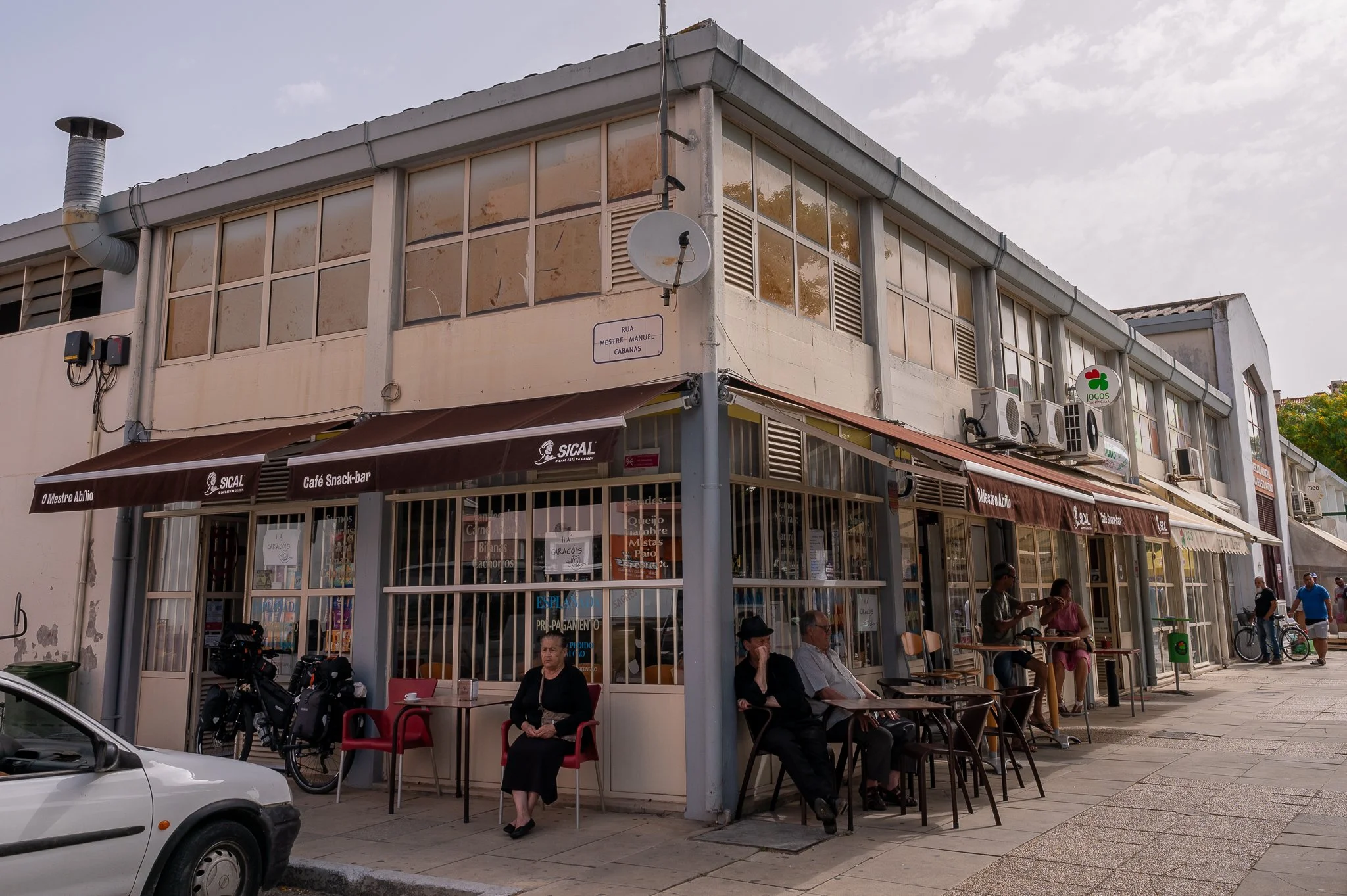
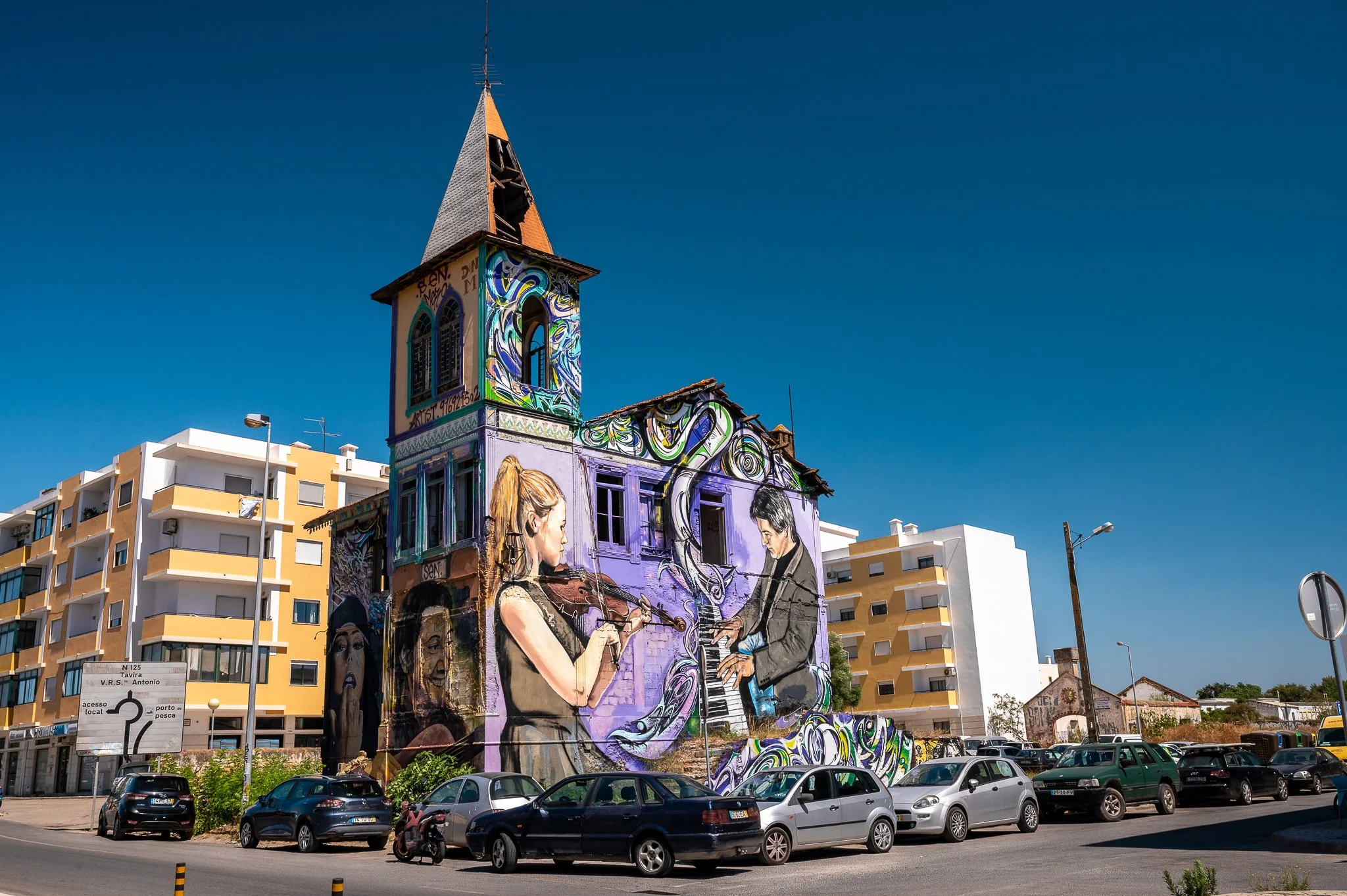
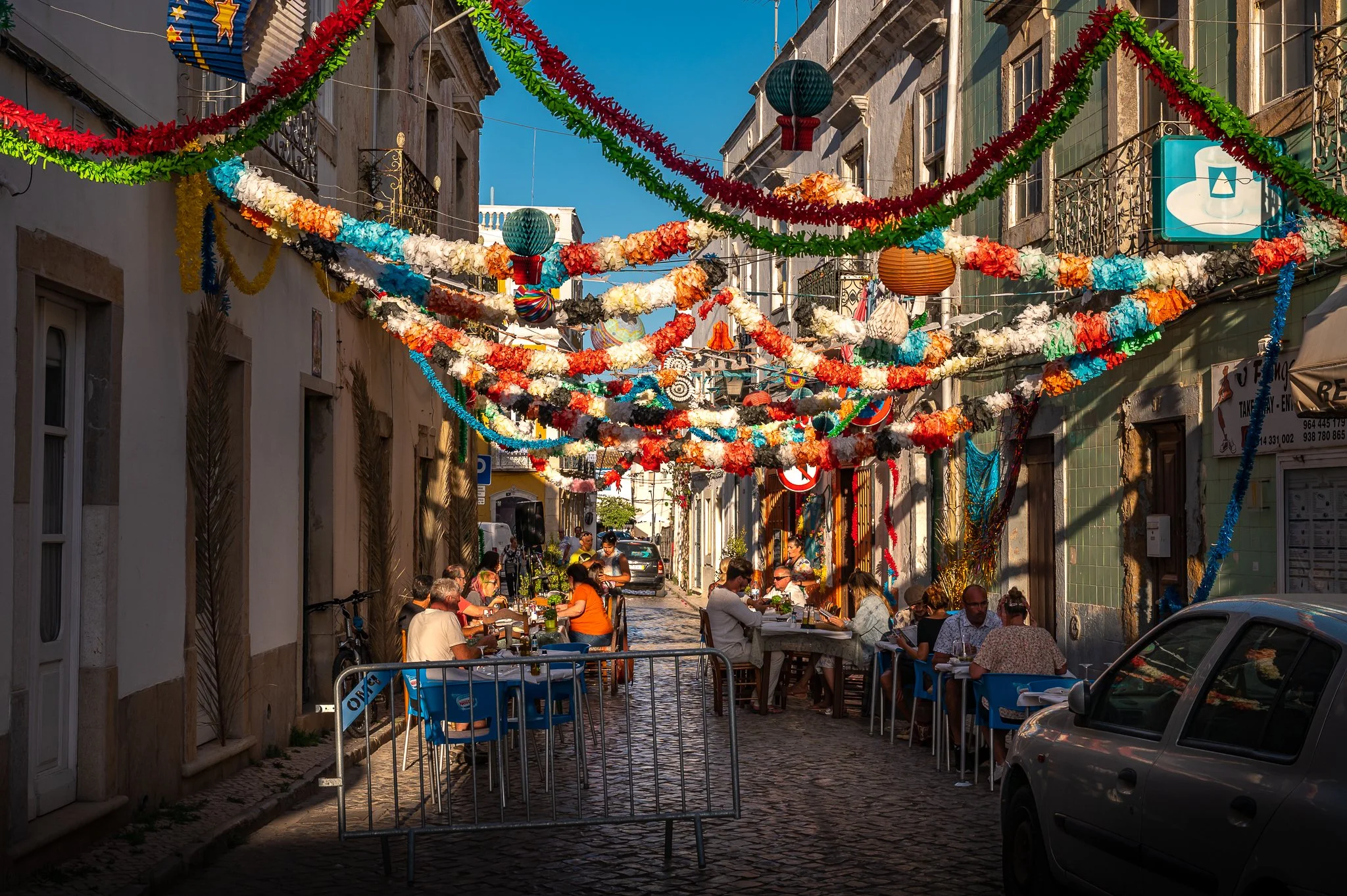
Leaving Seville, I have the luxury of a late start. Although I slightly regret not staying longer, I know I’ll be back, and Portugal is waiting. A long and dry stretch with poor road conditions and hardly any shade separates me from the Portuguese border. Cycling this section, although I initially planned to, would be madness in current temperatures. Instead, I’ve decided to take the morning train to Huelva, 100 km west. This is the last train station in Spain before entering Portugal. From Huelva, it’s another 50 km bike ride to the border crossing. In Ayamonte, I take the ferry to cross the Guadiana River, the natural border with Portugal. Entering Portugal is like entering an entirely new world, with its own habits, food, and the melodic sound of a new language. In Vila Real de Santa António, I sit down at a local bar and order a Bica - the Portuguese version of a cortado - to slowly transition and watch the day unfold, capturing life in Portugal. One of the reasons I love slow travel.
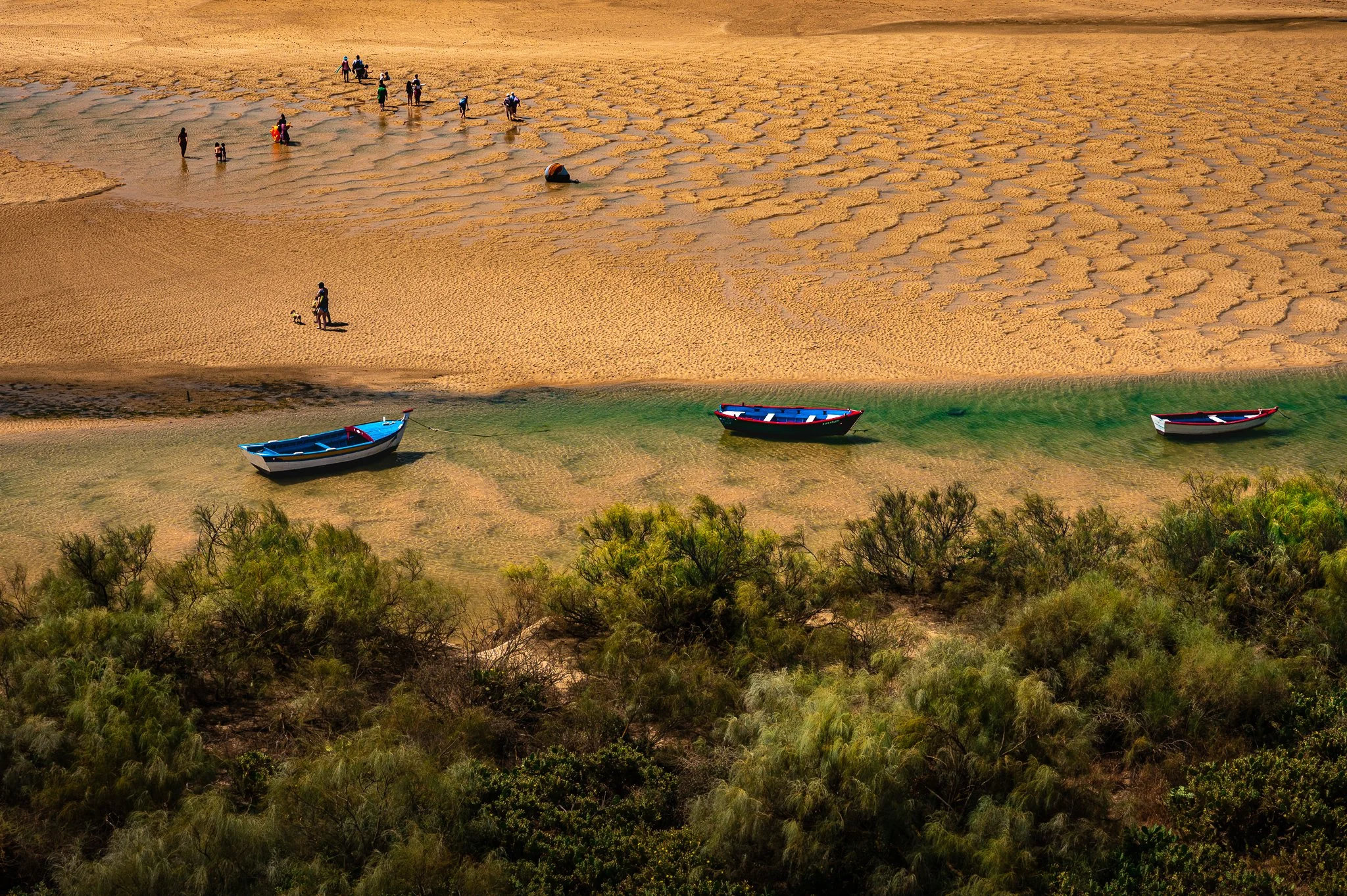
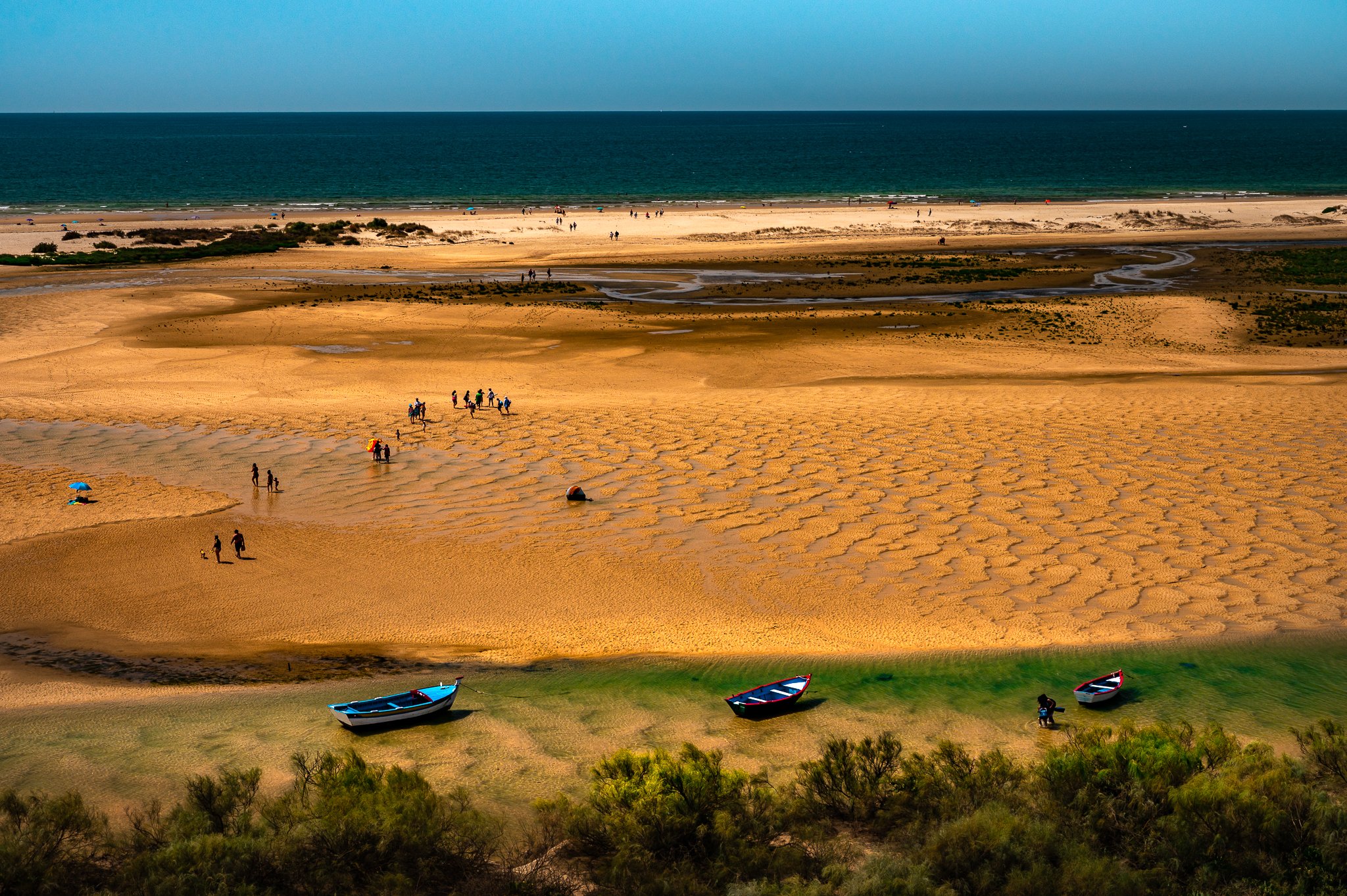
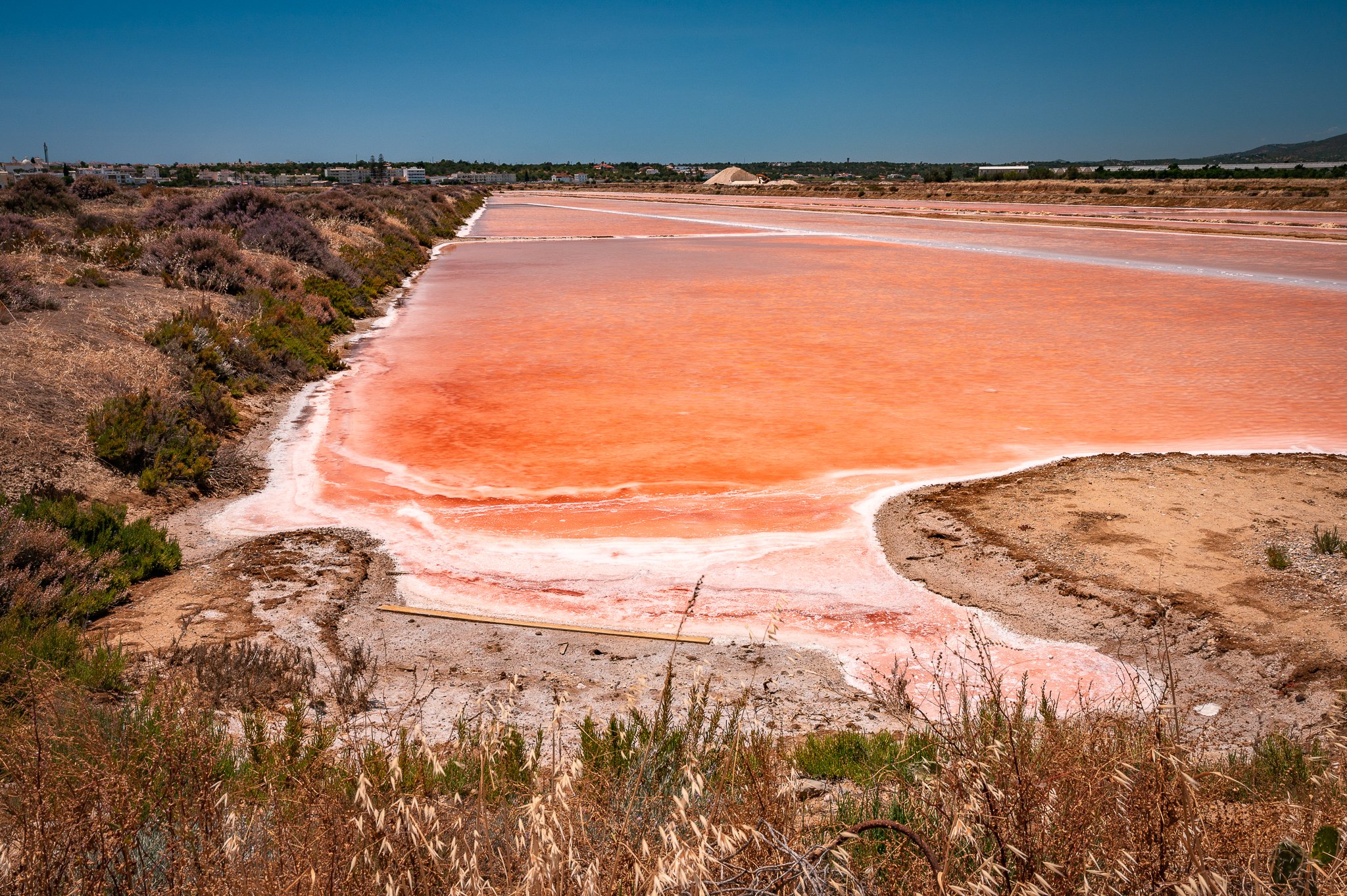
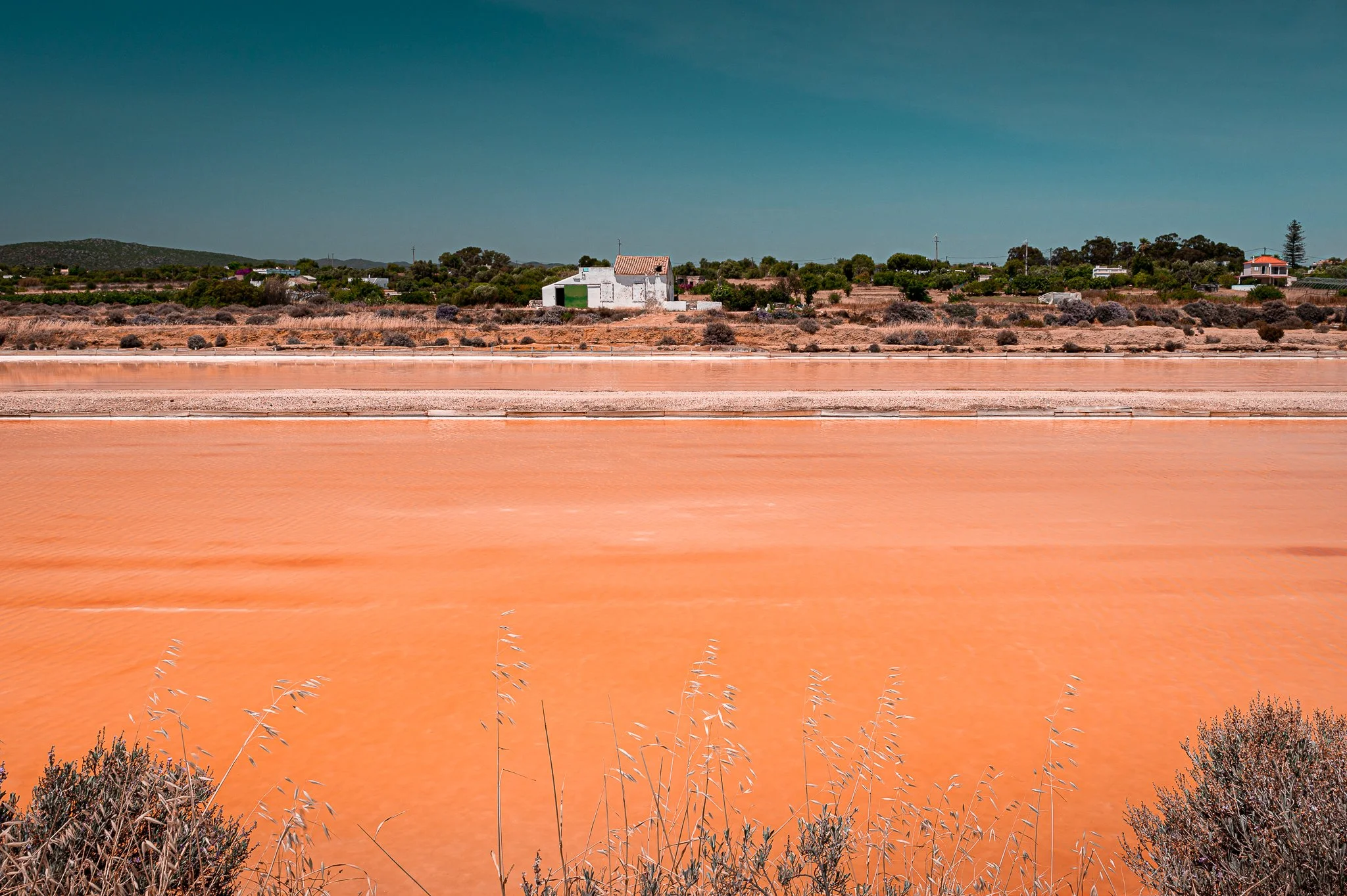
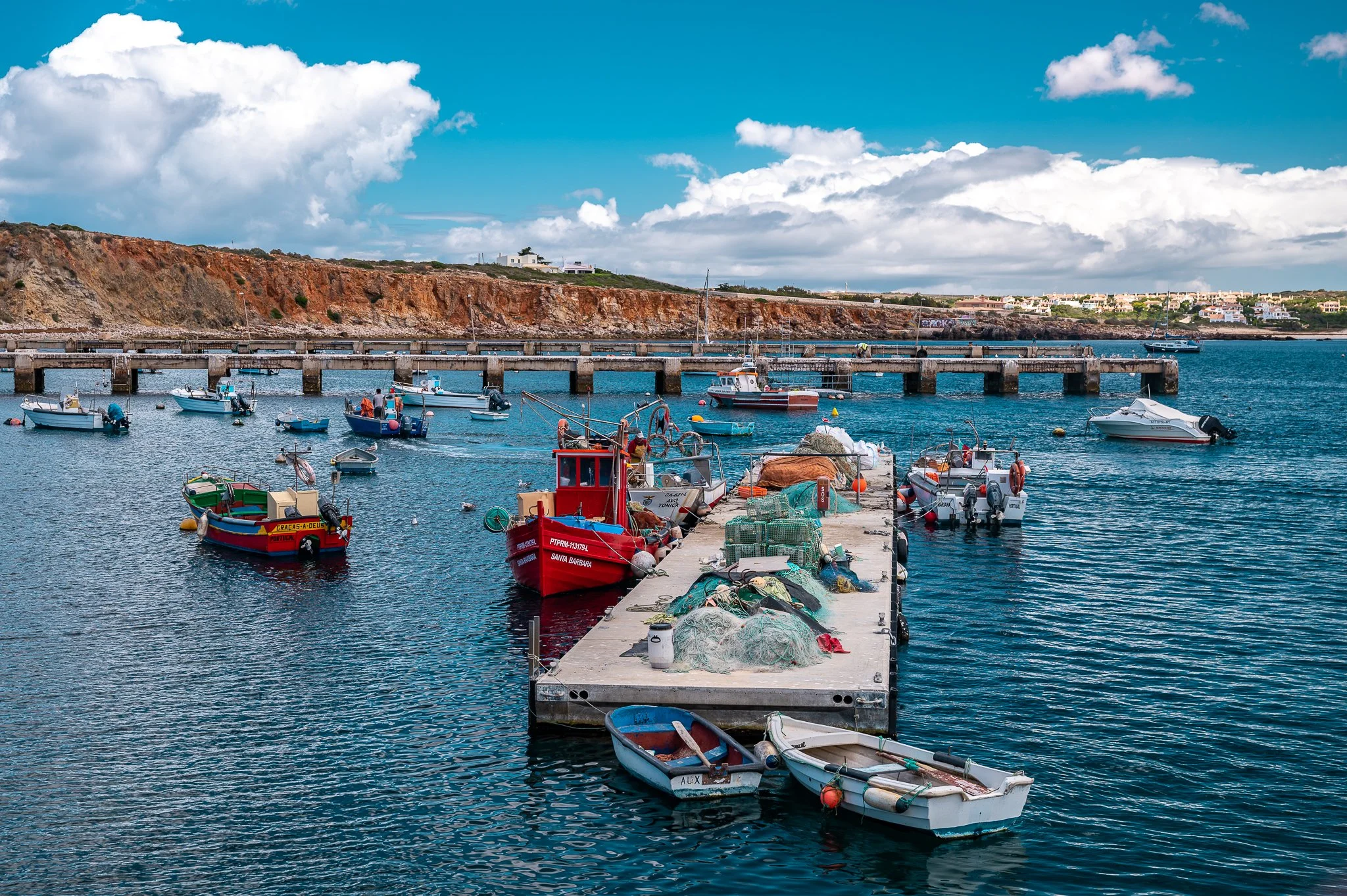
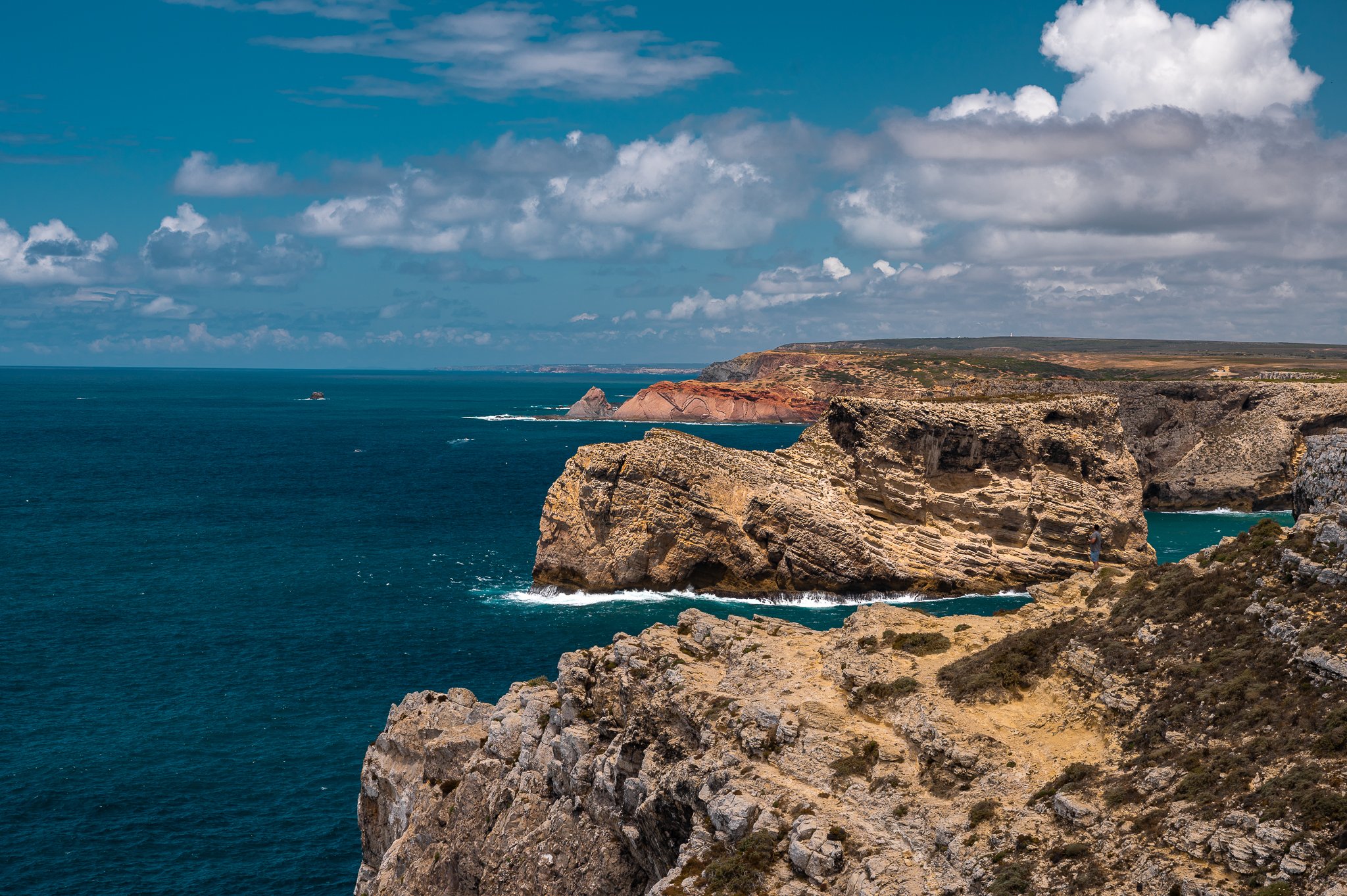
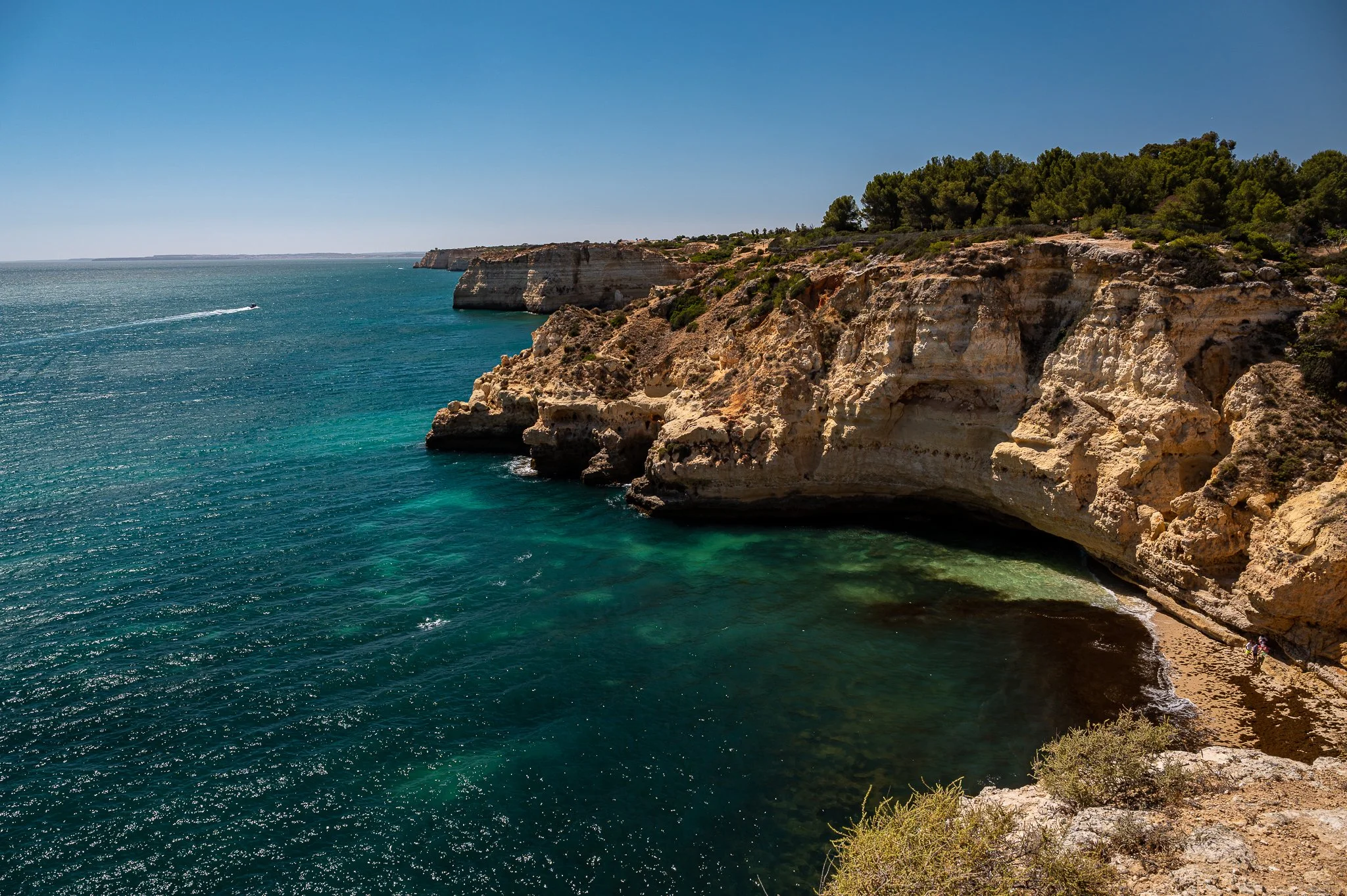
Finally, I arrive at the Atlantic coast, and in Cacela Velha, I overlook the wide, sandy plain exposed by low tide. The turquoise water is tempting, and the views are magnificent. After continuing through the white and pinkish-orange salt fields along the Portuguese coastline and an overnight stay in the fishing village of Olhão, I reach Faro Airport. Here, I’m joined by Maaike for a short summer break in the Algarve region. My arrival in Faro marks the end of an incredible 3,500 km bicycle journey, but it is also the beginning of another #GiantDetour that I’ve started to plot for a future moment. Spain has truly touched my heart, and I will be back to further explore this amazing country.